


Regulation of fibroblast-like synoviocyte transformation by transcription factors in arthritic diseases
- PMID: 30878552
- PMCID: PMC6557663
- DOI: 10.1016/j.bcp.2019.03.018
Regulation of fibroblast-like synoviocyte transformation by transcription factors in arthritic diseases
Abstract
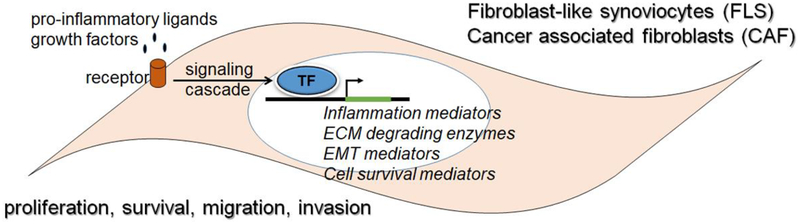
Inflammation in the synovium is known to mediate joint destruction in several forms of arthritis. Fibroblast-like synoviocytes (FLS) are cells that reside in the synovial lining of joints and are known to be key contributors to inflammation associated with arthritis. FLS are a major source of inflammatory cytokines and catabolic enzymes that promote joint degeneration. We now know that there exists a direct correlation between the signaling pathways that are activated by the pro-inflammatory molecules produced by the FLS, and the severity of joint degeneration in arthritis. Research focused on understanding the signaling pathways that are activated by these pro-inflammatory molecules has led to major advancements in the understanding of the joint pathology in arthritis. Transcription factors (TFs) that act as downstream mediators of the pro-inflammatory signaling cascades in various cell types have been reported to play an important role in inducing the deleterious transformation of the FLS. Interestingly, recent studies have started uncovering that several TFs that were previously reported to play role in embryonic development and cancer, but not known to have pronounced roles in tissue inflammation, can actually play crucial roles in the regulation of the pathological properties of the FLS. In this review, we will discuss reports that have been able to impart novel arthritogenic roles to TFs that are specialized in embryonic development. We also discuss the therapeutic potential of targeting these newly identified regulators of FLS transformation in the treatment of arthritis.
Keywords: Arthritis; Fibroblasts; Inflammation; Joint disease; Transcription factors.
Copyright © 2019 Elsevier Inc. All rights reserved.
Figures
References
Publication types
MeSH terms
Substances
Grants and funding
LinkOut - more resources
Full Text Sources
Medical
