


Inhibiting hydrogen sulfide production in umbilical stem cells reduces their protective effects during experimental necrotizing enterocolitis
- PMID: 30879750
- PMCID: PMC6545254
- DOI: 10.1016/j.jpedsurg.2019.02.037
Inhibiting hydrogen sulfide production in umbilical stem cells reduces their protective effects during experimental necrotizing enterocolitis
Abstract
Introduction: Umbilical mesenchymal stem cells (USC) have been shown to reduce illness in animal models of necrotizing enterocolitis (NEC), possibly through the paracrine release of hydrogen sulfide (H2S). We hypothesized that animals treated with USCs with inhibited H2S synthesis would exhibit more severe disease.
Methods: NEC was induced in five-day-old mouse pups by formula feeding and hypoxic and hypothermic stress. Experimental groups received intraperitoneal injection of either saline vehicle or 80,000cells/gram of one of the following cell types: USC, USCs with negative-control siRNA, or USCs with targeted siRNA inhibition of the H2S-producing enzymes. Pups were monitored by clinical assessment and after euthanasia, intestine and lung histologic injury were scored. Tissue was homogenized, and concentrations of IL-6, IL-10, and VEGF were determined by ELISA. For statistical analysis, p<0.05 was considered significant.
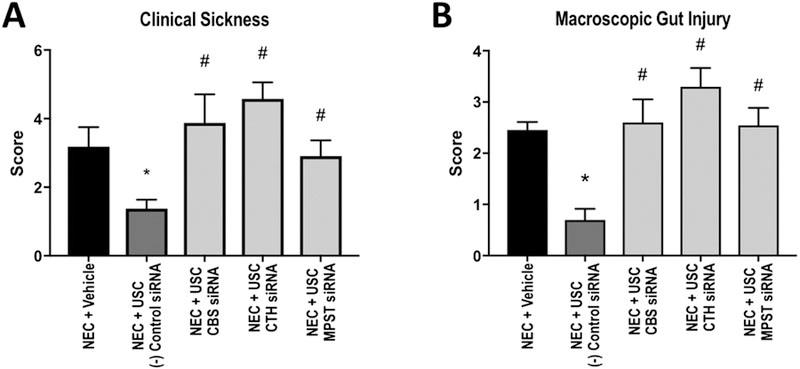
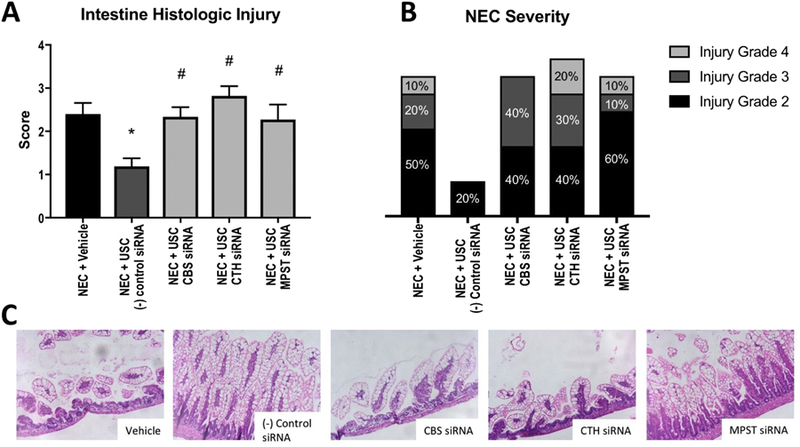
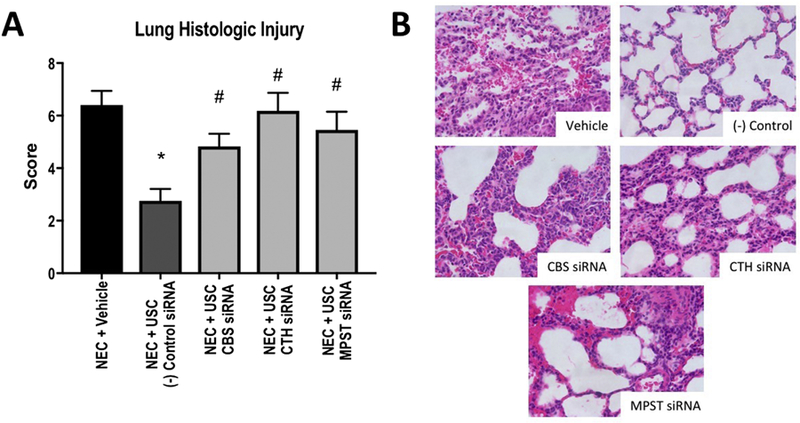
Results: Animals treated with negative-control siRNA USCs were significantly improved compared to vehicle. Clinical sickness scores as well as intestinal and lung histologic injury scores in the targeted siRNA groups were significantly worse when compared to the negative-control siRNA group. IL-6, IL-10, and VEGF had varying patterns of expression in the different groups.
Conclusion: Inhibition of H2S production in USCs reduces the beneficial effects of these cells during therapy in experimental NEC.
Level of evidence: Animal studies are typically described as "foundational evidence" without a true level assigned.
Type of study: Animal Study.
Keywords: Animal model; Hydrogen sulfide; Intestine; Necrotizing enterocolitis; Umbilical stromal cell.
Copyright © 2019 Elsevier Inc. All rights reserved.
Conflict of interest statement
Figures
References
-
- Lin HC, Wu SF, Underwood M. Necrotizing enterocolitis. The New England journal of medicine 2011;364(19):1878–9; author reply 9. - PubMed
MeSH terms
Substances
Grants and funding
LinkOut - more resources
Full Text Sources
Research Materials
