


Improving health-promoting self-care in family carers of people with dementia: a review of interventions
- PMID: 30880932
- PMCID: PMC6402440
- DOI: 10.2147/CIA.S190610
Improving health-promoting self-care in family carers of people with dementia: a review of interventions
Abstract
Background: Providing care for a family member with dementia can leave little time for carers to look after their own health needs, which makes them more susceptible to mental and physical health problems. This scoping review aimed to explore potential health benefits of interventions aimed at improving health-promoting self-care in family carers of people with dementia.
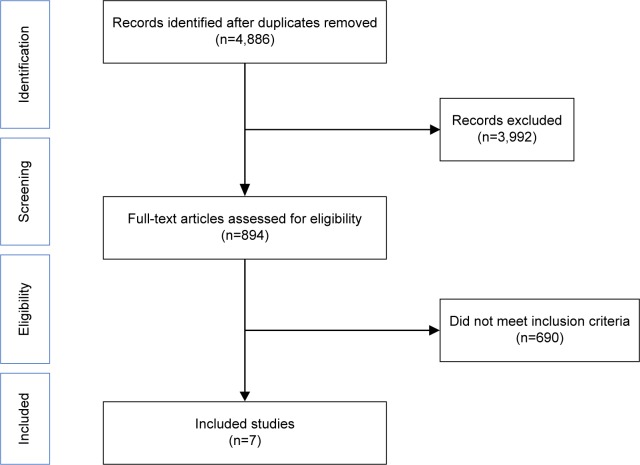
Methods: A scoping review was carried out using Arksey and O'Malley's methodological framework. EMBASE, MEDLINE, PsycINFO and Google Scholar were consulted. Original and peer-reviewed research published in English up to April 2017 were included. Publications were selected by two reviewers independently. Eight experts from several countries provided extra relevant information, which was triangulated with the review results. A narrative approach was used to describe and discuss the review findings.
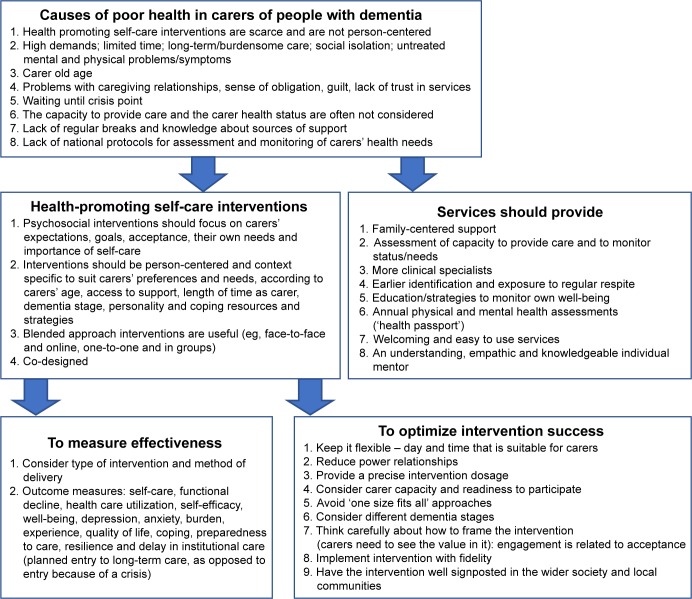
Results: Seven interventions were identified. These were highly heterogeneous in content, method of delivery, and outcome measures. None was specifically focused on improving and evaluating health-promoting self-care, instead they often focused on health promotion and healthy lifestyle (eg, physical activity). Some of the multi-component interventions included "self-care" as a domain, but none used a specific measure of health-promoting self-care, so we were unable to affirm that the improvements found in the interventions were due to an improvement in this area. Interventions helped reduce carer depression and burden and increased quality of life, positive affect, and physical activity. The expert panel recommended to consider carers' preparedness and capacity to adhere to self-care practices, as well as carers' age and culture. Future interventions should be context specific, flexible, and person-centered.
Conclusion: Psychosocial interventions may improve health-promoting self-care behavior, but more research is needed to establish efficacy. Interventions should be flexible, use a person-centered approach, be implemented with fidelity and use the right dosage.
Keywords: Alzheimer’s disease; carers; dementia; health promotion; psychosocial interventions; scoping review; self-care.
Conflict of interest statement
Disclosure The authors report no conflicts of interest in this work.
Figures
References
-
- Luchesi BM, Degani GC, Brígola AG, Pavarini SCI, Marques S. Evaluation of depressive symptoms in older caregivers. Arch Clin Psychiatry. 2015;42(2):45–51.
Publication types
MeSH terms
LinkOut - more resources
Full Text Sources
Medical
Miscellaneous
