


Treatment-resistant prurigo nodularis: challenges and solutions
- PMID: 30881076
- PMCID: PMC6400231
- DOI: 10.2147/CCID.S188070
Treatment-resistant prurigo nodularis: challenges and solutions
Abstract
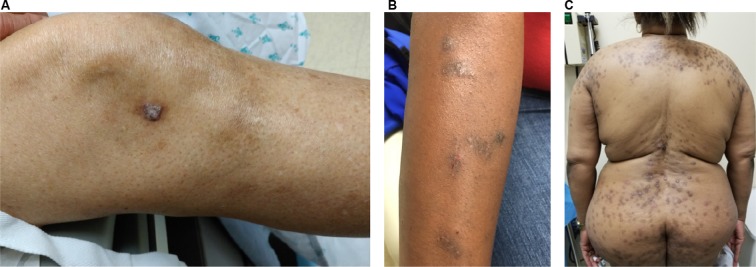
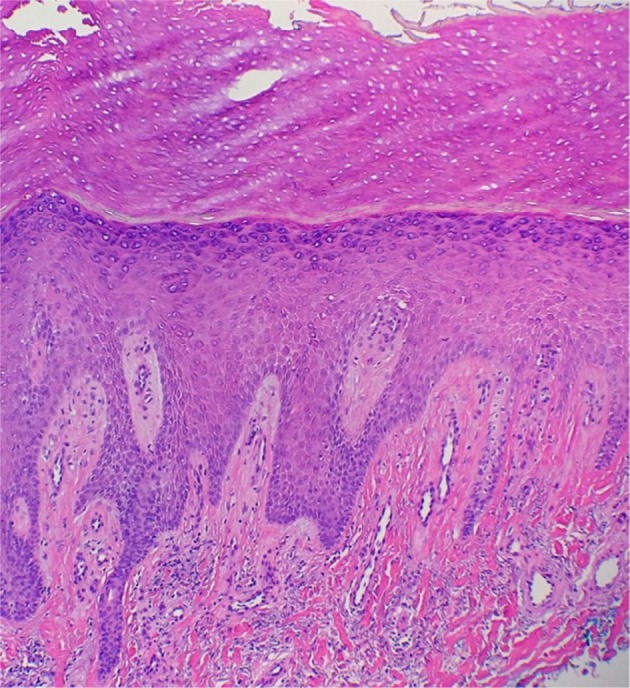
Prurigo nodualris (PN) is a chronic condition with highly pruritic, hyperkeratotic papules or nodules arising in the setting of chronic pruritus. While PN may serve as a phenotypic presentation of several underlying conditions such as atopic dermatitis, chronic kidney disease-related pruritus, and neurological diseases, it represents a distinct clinical entity that may persist despite the removal of the underlying cause, if one is identified. Neuronal proliferation, eosinophils, mast cells, and small-fiber neuropathy play a role in the production of pruritus in PN, although the exact mechanism has not yet been established. Identifying an underlying cause, if present, is essential to prevent recurrence of PN. Due to often present comorbidities, treatment is typically multimodal with utilization of topical and systemic therapies. We performed a PubMed/MEDLINE search for PN and present a review of recent developments in the treatment of PN. Treatment typically relies on the use of topical or intralesional steroids, though more severe or recalcitrant cases often necessitate the use of phototherapy or systemic immunosuppressives. Thalidomide and lenalidomide can both be used in severe cases; however, their toxicity profile makes them less favorable. Opioid receptor antagonists and neurokinin-1 receptor antagonists represent two novel families of therapeutic agents which may effectively treat PN with a lower toxicity profile than thalidomide or lenalidomide.
Keywords: atopic dermatitis; chronic prurigo; neurokinin 1; pruritus; thalidomide.
Conflict of interest statement
Disclosure The authors report no conflicts of interest in this work.
Figures
References
-
- Zeidler C, Ständer S. The pathogenesis of Prurigo nodularis--’Super-Itch’ in exploration. Eur J Pain. 2016;20(1):37–40. - PubMed
-
- Iking A, Grundmann S, Chatzigeorgakidis E, Phan NQ, Klein D, Ständer S. Prurigo as a symptom of atopic and non-atopic diseases: aetiological survey in a consecutive cohort of 108 patients. J Eur Acad Dermatol Venereol. 2013;27(5):550–557. - PubMed
-
- Winhoven SM, Gawkrodger DJ. Nodular prurigo: metabolic diseases are a common association. Clin Exp Dermatol. 2007;32(2):224–225. - PubMed
-
- Rowland Payne CM, Wilkinson JD, Mckee PH, Jurecka W, Black MM. Nodular prurigo – a clinicopathological study of 46 patients. Br J Dermatol. 1985;113(4):431–439. - PubMed
-
- Vaidya DC, Schwartz RA. Prurigo nodularis: a benign dermatosis derived from a persistent pruritus. Acta Dermatovenerol Croat. 2008;16(1):38–44. - PubMed
Publication types
LinkOut - more resources
Full Text Sources
Other Literature Sources
