


Multi-Sensorimotor Training Improves Proprioception and Balance in Subacute Stroke Patients: A Randomized Controlled Pilot Trial
- PMID: 30881333
- PMCID: PMC6407432
- DOI: 10.3389/fneur.2019.00157
Multi-Sensorimotor Training Improves Proprioception and Balance in Subacute Stroke Patients: A Randomized Controlled Pilot Trial
Abstract
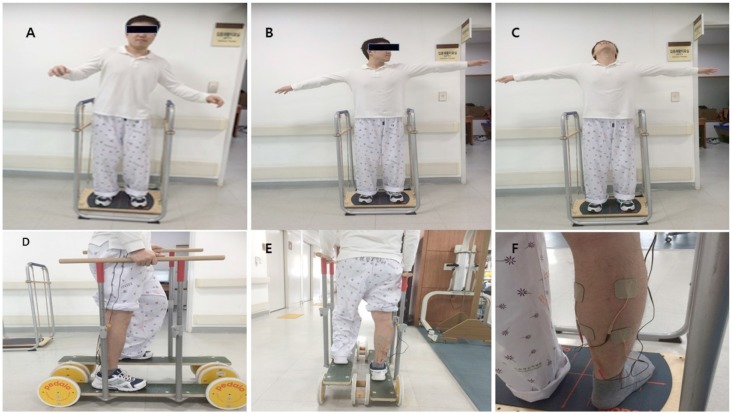
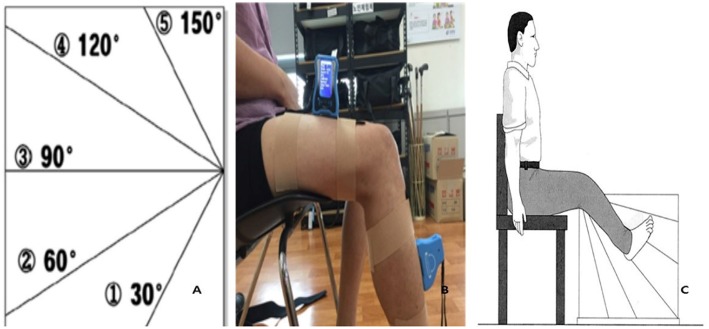
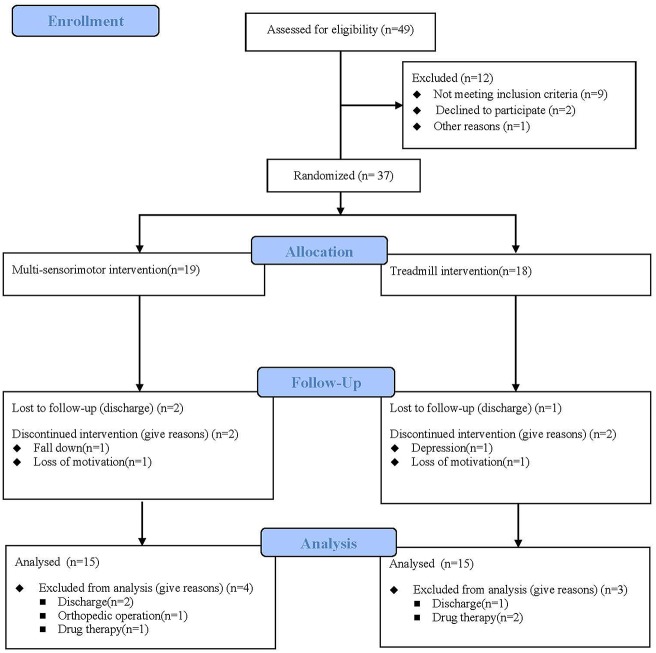
Introduction: The objective was to determine whether advanced rehabilitation therapy combined with conventional rehabilitation therapy consisting of sensorimotor exercises would be superior to usual treadmill training for proprioception variation and balance ability in subacute stroke patients. Methods: Thirty subjects (post-stroke time period: 3.96 ± 1.19 months) were randomly assigned to either a multi-sensorimotor training group (n = 19) or a treadmill training group (n = 18). Both groups first performed conventional physical therapy for 30 min, after which the multi-sensorimotor training group performed multi-sensorimotor training for 30 min, and the treadmill training group performed treadmill gait training for 30 min. Both groups performed the therapeutic interventions 5 days per week for 8 weeks. The primary outcome (proprioception variation) was evaluated using an acryl panel and electrogoniometer. The secondary outcome (balance ability) was measured using the Biodex Balance system before intervention and after 8 weeks. Results: The multi-sensorimotor training and treadmill training groups showed significant improvement in proprioception variation and balance (overall, A-P and M-L) (all P < 0.05). In particular, the multi-sensorimotor training group showed more significant differences in proprioception variation (P = 0.002) and anterior-posterior (A-P) balance ability (P = 0.033) than the treadmill training group. Conclusions: The multi-sensorimotor training program performed on multiple types of sensory input had a beneficial effect on proprioception sense in the paretic lower limb and A-P balance. A large-scale randomized controlled study is needed to prove the effect of this training. Clinical Trial Registration: https://cris.nih.go.kr/cris/, identifier KCT0003097.
Keywords: balance; hemiplegia; proprioception; sensorimotor training; stroke.
Figures
References
LinkOut - more resources
Full Text Sources
