


HDAC Inhibitors: Therapeutic Potential in Fibrosis-Associated Human Diseases
- PMID: 30884785
- PMCID: PMC6471162
- DOI: 10.3390/ijms20061329
HDAC Inhibitors: Therapeutic Potential in Fibrosis-Associated Human Diseases
Abstract
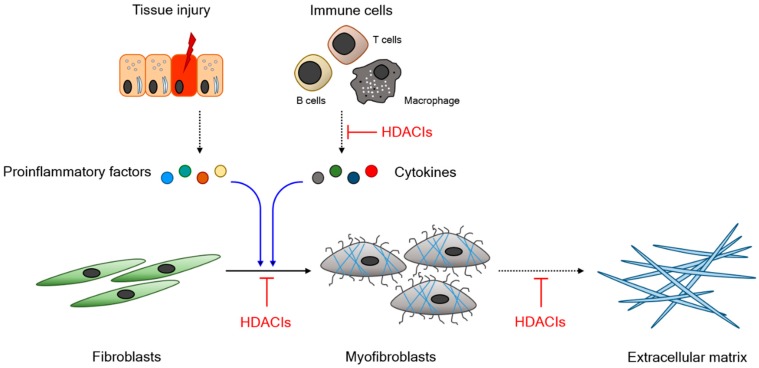
Fibrosis is characterized by excessive deposition of the extracellular matrix and develops because of fibroblast differentiation during the process of inflammation. Various cytokines stimulate resident fibroblasts, which differentiate into myofibroblasts. Myofibroblasts actively synthesize an excessive amount of extracellular matrix, which indicates pathologic fibrosis. Although initial fibrosis is a physiologic response, the accumulated fibrous material causes failure of normal organ function. Cardiac fibrosis interferes with proper diastole, whereas pulmonary fibrosis results in chronic hypoxia; liver cirrhosis induces portal hypertension, and overgrowth of fibroblasts in the conjunctiva is a major cause of glaucoma surgical failure. Recently, several reports have clearly demonstrated the functional relevance of certain types of histone deacetylases (HDACs) in various kinds of fibrosis and the successful alleviation of the condition in animal models using HDAC inhibitors. In this review, we discuss the therapeutic potential of HDAC inhibitors in fibrosis-associated human diseases using results obtained from animal models.
Keywords: HDAC; HDAC inhibitor; fibrosis; therapeutics.
Conflict of interest statement
The authors declare no conflicts of interest.
Figures
References
-
- Kisseleva T., Cong M., Paik Y., Scholten D., Jiang C., Benner C., Iwaisako K., Moore-Morris T., Scott B., Tsukamoto H., et al. Myofibroblasts revert to an inactive phenotype during regression of liver fibrosis. Proc. Nat. Acad. Sic. USA. 2012;109:9448–9453. doi: 10.1073/pnas.1201840109. - DOI - PMC - PubMed
Publication types
MeSH terms
Substances
Grants and funding
LinkOut - more resources
Full Text Sources
Other Literature Sources
