Recipient Area
- PMID: 30886474
- PMCID: PMC6371721
- DOI: 10.4103/JCAS.JCAS_124_18
Recipient Area
Abstract
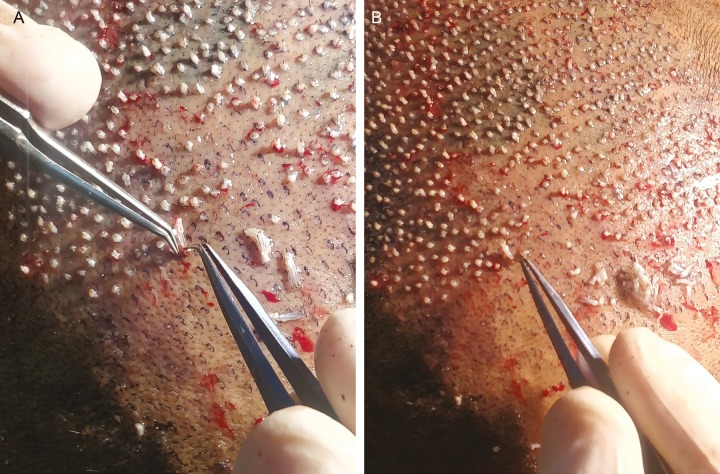
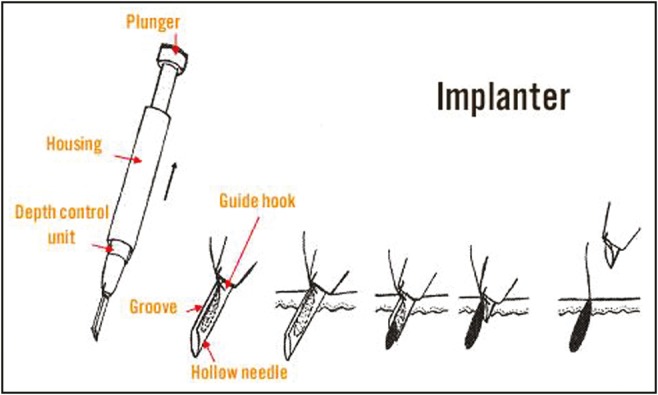
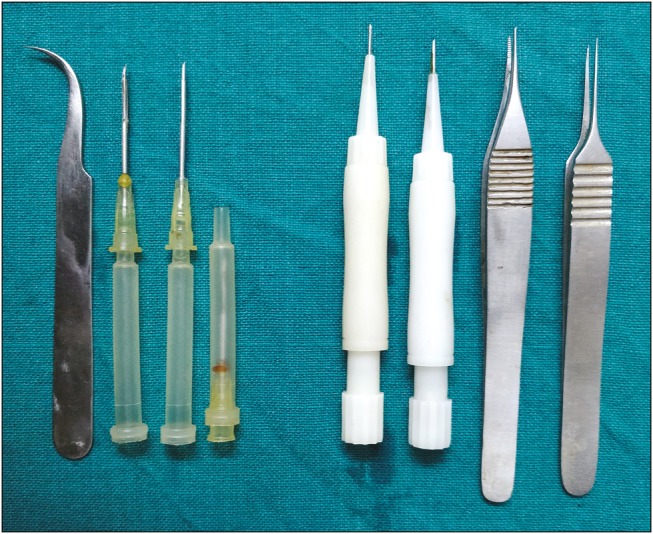
Recipient area is the canvas in a hair transplant surgery, where the surgeon can truly display his artistic creativity and deliver an aesthetic masterpiece, after all hair transplantation is as much about art as science. There are four main steps in dealing with the recipient area. Marking the hairline and estimation of grafts is the most important steps to give a natural look. There are multiple anatomical markers that need to be addressed while drawing a hairline. The second step is the anesthesia and it should be as painless as possible. This is followed by implantation, which can be achieved by various techniques. There are multiple technicalities to be considered while implanting, such as density, angle, and direction. Once implantation is done, the final step is appropriate postoperative care. Each of these steps has been discussed in detail in this chapter.
Keywords: Hair transplant; hairline design; implantation of grafts; recipient area.
Conflict of interest statement
There are no conflicts of interest.
Figures
References
-
- Rose PT, Parsley WM. The science of hairline design. In: Haber RS, Stough DB, editors. Procedures in cosmetic dermatology. Hair transplantation. Philadelphia, PA: Elsevier Saunders; 2006. pp. 55–72.
-
- Shapiro R. Creating a natural hairline in one session using a systemic approach and modern principles of hairline design. Int J Cosm Surg Aesthetic Dermatol. 2001;3:89–99.
-
- Unger W. Chapter 6A. Hairline zone. In: Unger W, Shapiro R, editors. Hair transplantation. 5th ed. New York: Informa; 2011. pp. 133–40.
-
- Chang SC. Estimation of number of grafts and donor area. Hair Transplant Forum Int. 2001;11:101–3.
-
- Unger WP. Density issue in hair transplantation. Dermatol Surg. 1998;24:297. - PubMed