


Adverse event profiles of solvent-based and nanoparticle albumin-bound paclitaxel formulations using the Food and Drug Administration Adverse Event Reporting System
- PMID: 30886713
- PMCID: PMC6413422
- DOI: 10.1177/2050312119836011
Adverse event profiles of solvent-based and nanoparticle albumin-bound paclitaxel formulations using the Food and Drug Administration Adverse Event Reporting System
Abstract
Objectives: Paclitaxel is a highly effective antitumor agent with notable adverse events, including hypersensitivity reactions, peripheral neuropathy, arthralgia, myalgias, and neutropenia. Solvent-based paclitaxel causes severe allergic, hypersensitivity, and anaphylactic reactions. Nanoparticle albumin-bound paclitaxel was recently developed and provides an advantage over solvent-based paclitaxel in avoiding solvent/surfactant-related adverse events. The aim of this study was to assess the adverse event profiles of solvent-based paclitaxel and nanoparticle albumin-bound paclitaxel formulations using data from the spontaneous adverse event reporting system of the US Food and Drug Administration Adverse Event Reporting System database.
Methods: This study relied on Medical Dictionary for Regulatory Activities preferred terms and standardized queries, and calculated the reporting ratio and reporting odds ratios of paclitaxel formulations.
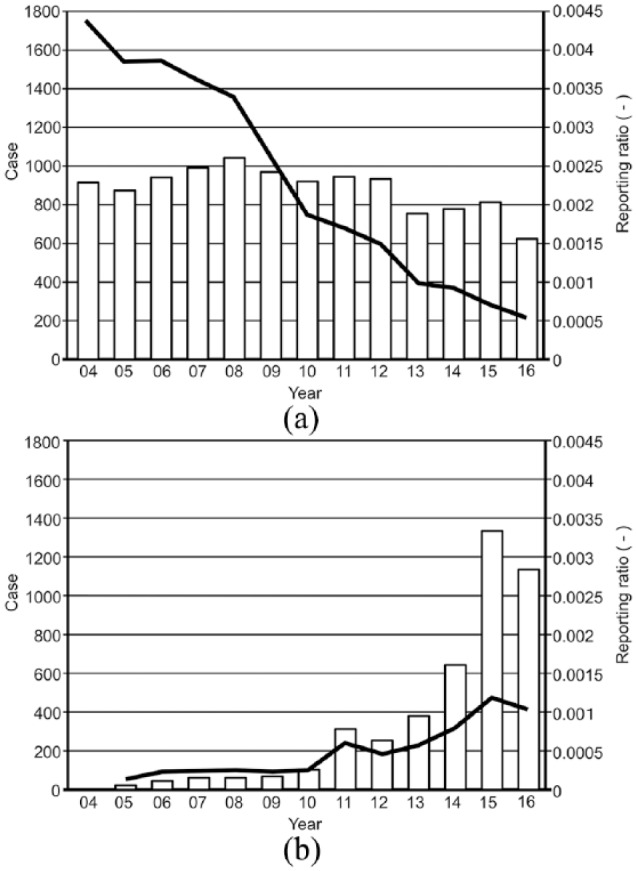
Results: Of 8,867,135 reports recorded in the US Food and Drug Administration Adverse Event Reporting System database from January 2004 to December 2016, 3469 and 4447 adverse events corresponded to solvent-based paclitaxel and nanoparticle albumin-bound paclitaxel, respectively. Reporting odds ratios (95% confidence interval) for anaphylactic reaction (standardized MedDRA query code: 20000021) associated with the use of solvent-based paclitaxel and nanoparticle albumin-bound paclitaxel were 1.69 (1.56-1.84) and 0.75 (0.68-0.83), respectively. Reporting odds ratio signal for anaphylactic reaction was not detected for nanoparticle albumin-bound paclitaxel. Reporting odds ratios (95% confidence interval) for acute renal failure (standardized MedDRA query code: 20000003) associated with the use of solvent-based paclitaxel and nanoparticle albumin-bound paclitaxel were 0.75 (0.58-0.98) and 1.60 (1.37-1.89), respectively.
Conclusion: This is the first study to evaluate the adverse event profile of nanoparticle albumin-bound paclitaxel using US Food and Drug Administration Adverse Event Reporting System data. Considering that the US Food and Drug Administration Adverse Event Reporting System database does not allow to infer causality or risk ranking, the different reporting frequencies of anaphylactic reaction and acute renal failure between solvent-based paclitaxel and nanoparticle albumin-bound paclitaxel must be further investigated via analytical observational research.
Keywords: Abraxane; Food and Drug Administration Adverse Event Reporting System; Paclitaxel; Taxol.
Conflict of interest statement
Declaration of conflicting interests: The author(s) declared no potential conflicts of interest with respect to the research, authorship, and/or publication of this article.
Figures
References
-
- Wani MC, Taylor HL, Wall ME, et al. Plant antitumor agents. VI. Isolation and structure of taxol, a novel antileukemic and antitumor agent from Taxus brevifolia. J Am Chem Soc 1971; 93: 2325–2327. - PubMed
-
- Rowinsky EK, Donehower RC. Paclitaxel (taxol). N Engl J Med 1995; 332: 1004–1014. - PubMed
-
- Crown J, O’Leary M. The taxanes: an update. Lancet 2000; 355: 1176–1178. - PubMed
-
- Socinski MA. Single-agent paclitaxel in the treatment of advanced non-small cell lung cancer. Oncologist 1999; 4: 408–416. - PubMed
-
- Hawkins MJ, Soon-Shiong P, Desai N. Protein nanoparticles as drug carriers in clinical medicine. Adv Drug Deliv Rev 2008; 60(8): 876–885. - PubMed
LinkOut - more resources
Full Text Sources
