Energy metabolism in cachexia
- PMID: 30890538
- PMCID: PMC6446208
- DOI: 10.15252/embr.201847258
Energy metabolism in cachexia
Abstract
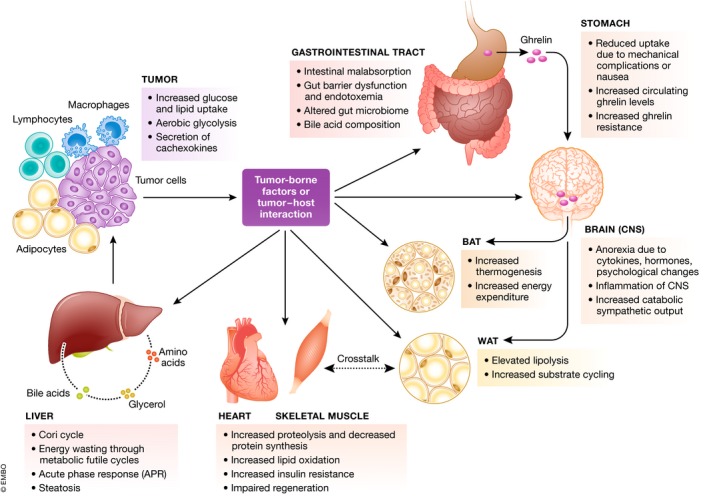
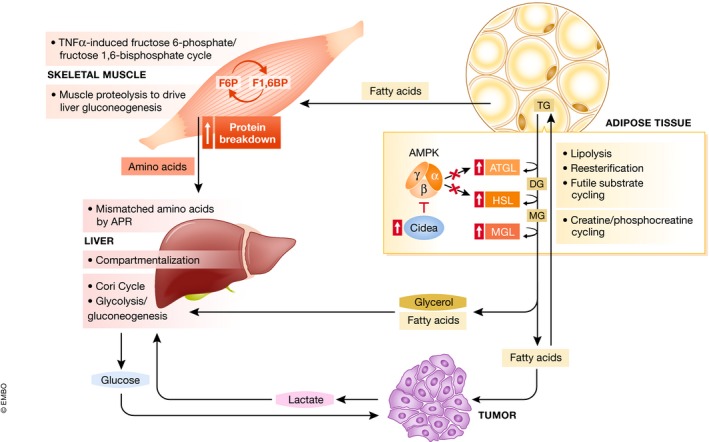
Cachexia is a wasting disorder that accompanies many chronic diseases including cancer and results from an imbalance of energy requirements and energy uptake. In cancer cachexia, tumor-secreted factors and/or tumor-host interactions cause this imbalance, leading to loss of adipose tissue and skeletal and cardiac muscle, which weakens the body. In this review, we discuss how energy enters the body and is utilized by the different organs, including the gut, liver, adipose tissue, and muscle, and how these organs contribute to the energy wasting observed in cachexia. We also discuss futile cycles both between the organs and within the cells, which are often used to fine-tune energy supply under physiologic conditions. Ultimately, understanding the complex interplay of pathologic energy-wasting circuits in cachexia can bring us closer to identifying effective treatment strategies for this devastating wasting disease.
Keywords: adipose tissue; cachexia; inflammation; liver; skeletal muscle.
© 2019 The Authors.
Conflict of interest statement
The authors declare that they have no conflict of interest.
Figures
References
-
- Monitto CL, Berkowitz D, Lee KM, Pin S, Li D, Breslow M, O'Malley B, Schiller M (2001) Differential gene expression in a murine model of cancer cachexia. Am J Physiol Endocrinol Metab 281: E289–E297 - PubMed
Publication types
MeSH terms
LinkOut - more resources
Full Text Sources