


Birth seasonality and risk of autism spectrum disorder
- PMID: 30891686
- PMCID: PMC6602987
- DOI: 10.1007/s10654-019-00506-5
Birth seasonality and risk of autism spectrum disorder
Abstract
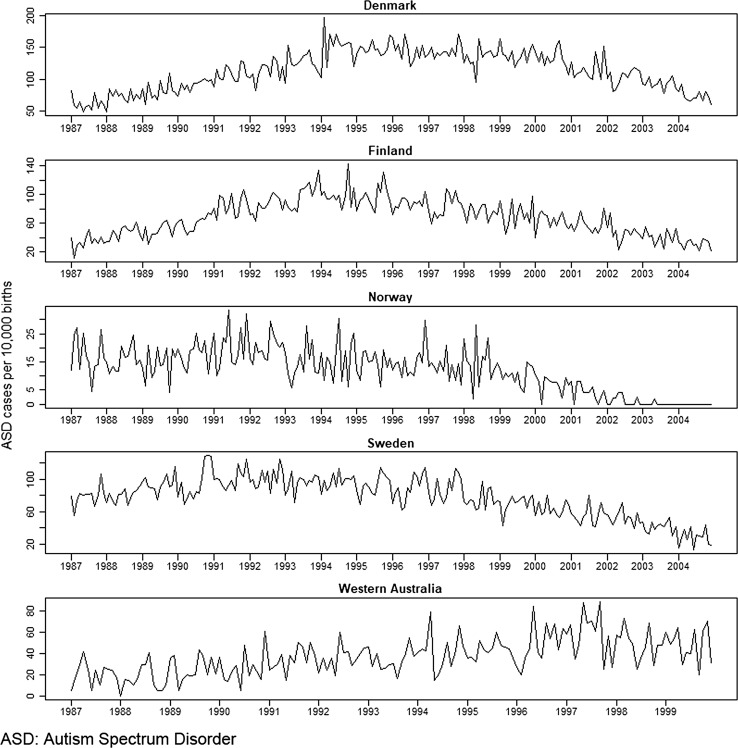
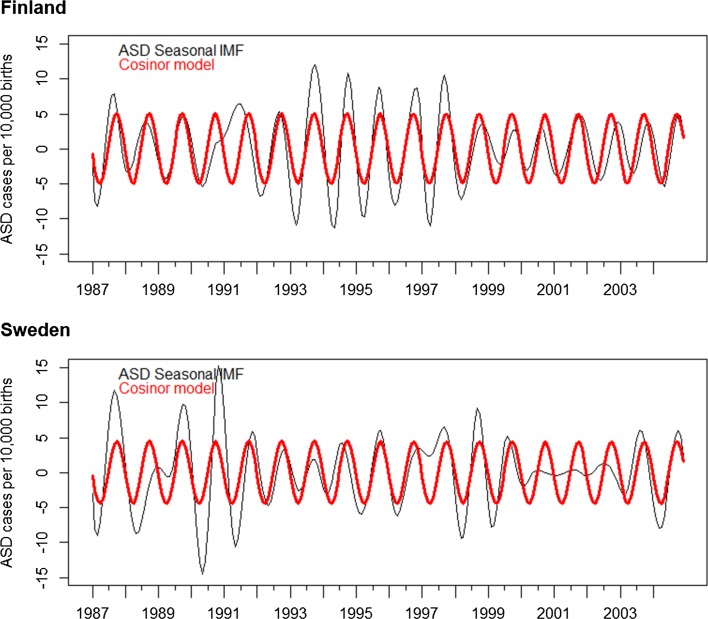
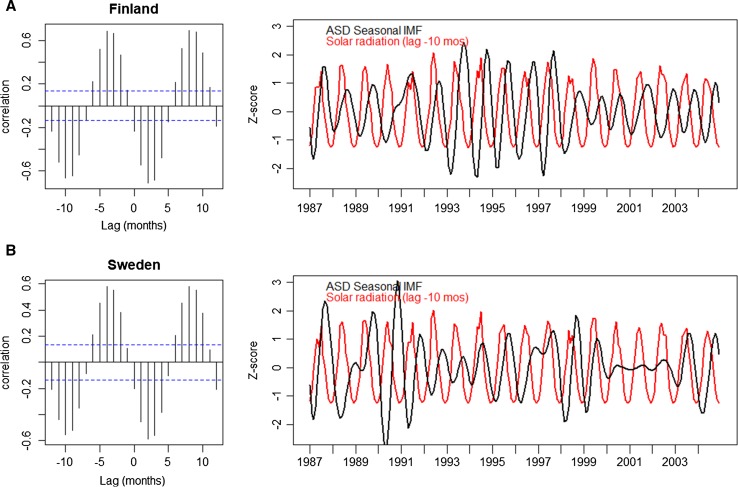
Season of birth has been hypothesized to be a risk factor for autism spectrum disorder (ASD). However, the evidence has been mixed and limited due to methodological challenges. We examine ASD birth trends for 5,464,628 births across 5 countries. ASD birth prevalence data were obtained from the International Collaboration for Autism Registry Epidemiology database, including children born in Denmark, Finland, Norway, Sweden, and Western Australia. Empirical mode decomposition and cosinor modeling were used to assess seasonality. We show seasonal variation in ASD births for the countries of Finland and Sweden. There was a modest increase in risk for children born in the fall and a modest decrease in risk for children born in the spring. Solar radiation levels around conception and the postnatal period were inversely correlated with seasonal trends in ASD risk. In the first multinational study of birth seasonality of ASD, there was evidence supporting the presence of seasonal trends in Finland and Sweden. The observations that risk was highest for fall births (i.e., conceived in the winter) and lowest for spring births (i.e., conceived in the summer), and sunlight levels during critical neurodevelopmental periods explained much of the seasonal trends, are consistent with the hypothesis that a seasonally fluctuating risk factor may influence risk of ASD.
Keywords: Autism; Empirical mode decomposition; Epidemiology; Seasonality.
Conflict of interest statement
The authors declare they have no conflict of interest.
Figures
References
MeSH terms
Grants and funding
LinkOut - more resources
Full Text Sources
Medical
