


A comparative analysis of prophylactic antimicrobial use in long-term care facilities in Ireland, 2013 and 2016
- PMID: 30892182
- PMCID: PMC6425550
- DOI: 10.2807/1560-7917.ES.2019.24.11.1800102
A comparative analysis of prophylactic antimicrobial use in long-term care facilities in Ireland, 2013 and 2016
Abstract
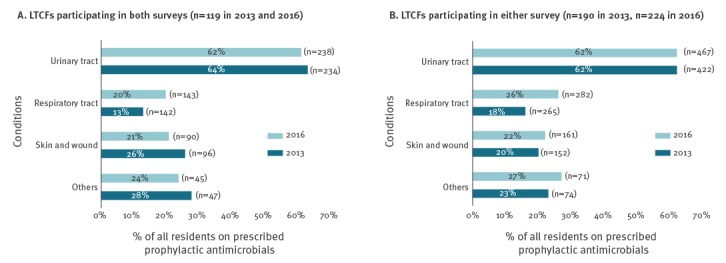
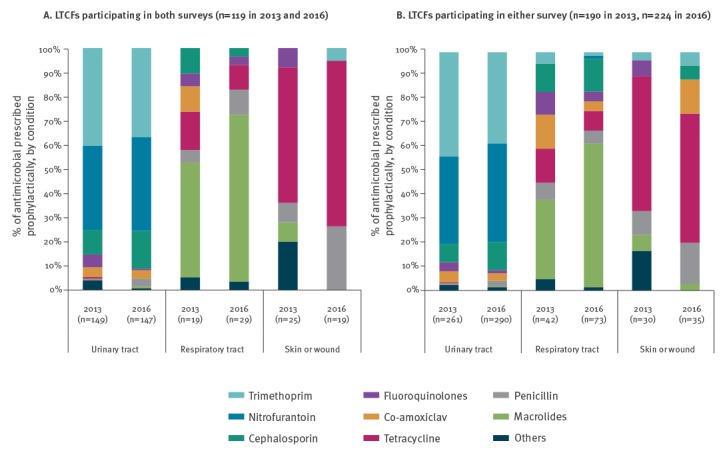
BackgroundLong-term care facilities (LTCFs) are important locations of antimicrobial consumption. Of particular concern is inappropriate prescribing of prophylactic antimicrobials. AimWe aimed to explore factors related to antimicrobial prophylaxis in LTCFs in Ireland. MethodsThe point prevalence surveys of Healthcare-Associated Infections in Long-Term Care Facilities (HALT) were performed in Ireland in May 2013 and 2016. Data were collected on facility (type and stewardship initiatives) and resident characteristics (age, sex, antimicrobial and indication) for those meeting the surveillance definition for a HAI and/or prescribed an antimicrobial. ResultsIn 2013, 9,318 residents (in 190 LTCFs) and in 2016, 10,044 residents (in 224 LTCFs) were included. Of the 10% of residents prescribed antimicrobials, 40% were on prophylaxis, most of which was to prevent urinary tract infection. The main prophylactic agents were: nitrofurantoin (39%) and trimethoprim (41%) for urinary tract (UT); macrolides (47%) for respiratory tract and macrolides and tetracycline (56%) for skin or wounds. More than 50% of the prophylaxis was prescribed in intellectual disability facilities and around 40% in nursing homes. Prophylaxis was recorded more often for females, residents living in LTCFs for more than 1 year and residents with a urinary catheter. No difference in prophylactic prescribing was observed when comparing LTCFs participating and not participating in both years. ConclusionsForty per cent of antimicrobial prescriptions in Irish LTCFs were prophylactic. This practice is not consistent with national antimicrobial prescribing guidelines. Addressing inappropriate prophylaxis prescribing in Irish LTCFs should be a key objective of antimicrobial stewardship initiatives.
Keywords: antimicrobial; long-term care facilities, HALT; prescribing; prophylaxis.
Conflict of interest statement
Figures
References
-
- World Health Organization (WHO). Antimicrobial resistance: global report on surveillance 2014. Geneva: WHO; Apr 2014. Available from: https://www.who.int/drugresistance/documents/surveillancereport/en/
-
- European Centre for Disease Prevention and Control (ECDC). Point prevalence survey of health care-associated infections and antimicrobial use in European long-term care facilities. April–May 2013. Stockholm: ECDC; 2014. Available from: https://ecdc.europa.eu/en/publications-data/point-prevalence-survey-heal...
-
- European Centre for Disease Prevention and Control (ECDC). Point prevalence survey of healthcare-associated infections and antimicrobial use in European long-term care facilities. May–September 2010. Stockholm: ECDC; 2010. Available from: https://ecdc.europa.eu/en/publications-data/point-prevalence-survey-heal...
-
- Ricchizzi E, Latour K, Kärki T, Buttazzi R, Jans B, Moro ML, et al. Antimicrobial use in European long-term care facilities: results from the third point prevalence survey of healthcare-associated infections and antimicrobial use, 2016 to 2017. Euro Surveill. 2018;23(46):1800394. 10.2807/1560-7917.ES.2018.23.46.1800394 - DOI - PMC - PubMed
-
- Health Protection Surveillance Centre (HPSC). Point prevalence survey of healthcare‐associated infections & antimicrobial use in long‐term care facilities (HALT): May 2013. National report 2013. Dublin: HPSC; Mar 2014. Available from: https://www.hpsc.ie/a-z/microbiologyantimicrobialresistance/infectioncon...
Publication types
MeSH terms
Substances
LinkOut - more resources
Full Text Sources
Medical