The Diagnosis and Treatment of Acute Dislocation of the Acromioclavicular Joint
- PMID: 30892184
- PMCID: PMC6435864
- DOI: 10.3238/arztebl.2019.0089
The Diagnosis and Treatment of Acute Dislocation of the Acromioclavicular Joint
Abstract
Background: The acromioclavicular joint (ACJ) is one of the more common sites of shoulder girdle injury, accounting for 4-12% of all such injuries, with an incidence of 3-4 cases per 100 000 persons per year in the general population. Current topics of debate include the proper standard diagnostic evaluation, the indications for surgery, and the best operative method.
Methods: This review is based on publications retrieved by a selective literature search.
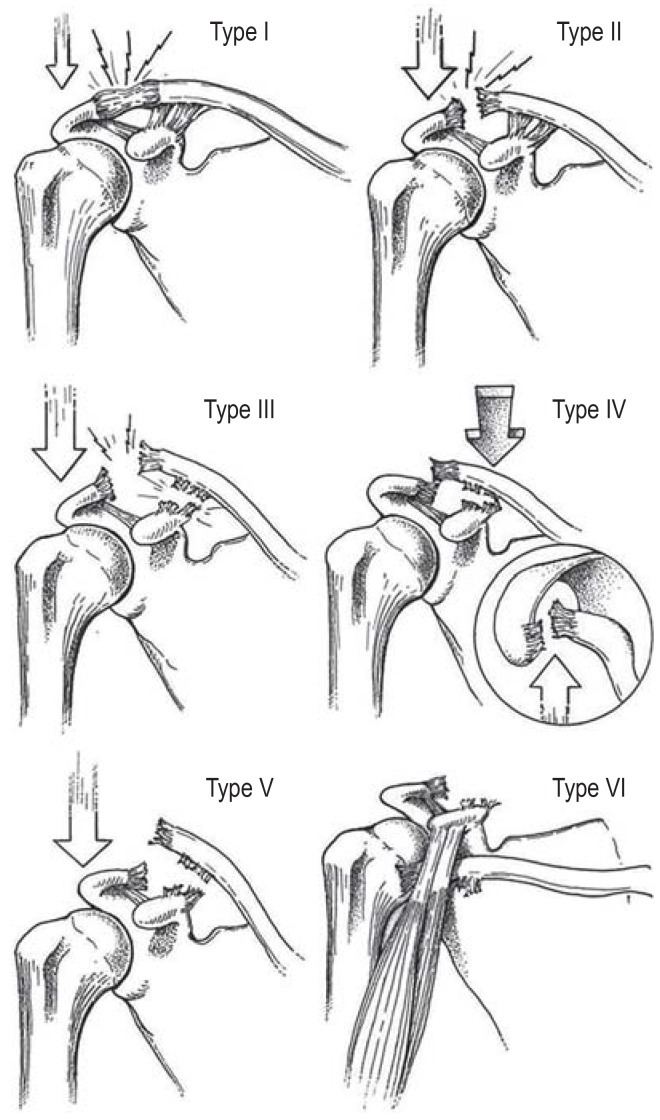
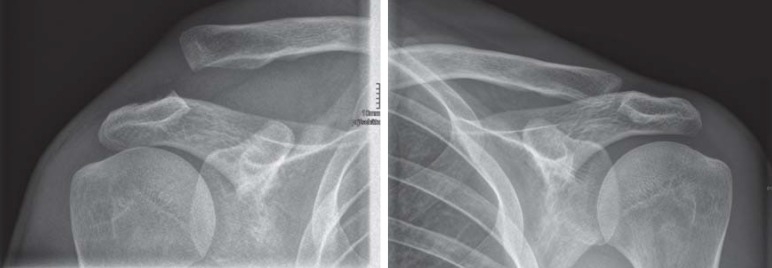
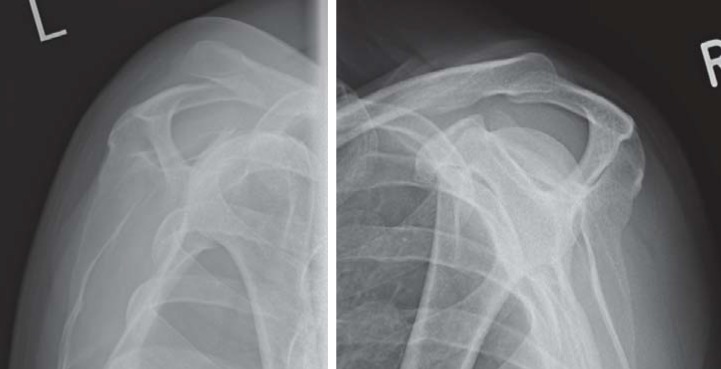
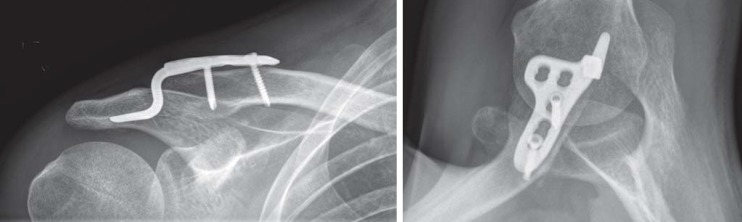
Results: Mechanical trauma of the ACG can tear the ligamentous apparatus that holds the acromion, clavicle, and coracoid process together. Different interventions are indicated depending on the nature of the injury. In recent years, the horizontal component of the instability has received more attention, in addition to its vertical component. Persistent instability can lead to chronic, painful limitation of shoulder function, particularly with respect to working above the head. Surgical stabilization is therefore recommended for high-grade instability of Rockwood types IV and V. Modern reconstruction techniques enable selective vertical and horizontal treatment of the instability and have been found superior to traditional methods, particularly in young athletes. Arthroscopic techniques are advantageous because they are less invasive, do not require removal of implanted material, and afford the opportunity to diagnose any accompanying lesions definitively and to treat them if necessary. Surgery for acute injuries should be performed within three weeks of the trauma. For chronic injuries, additional tendon augmentation is now considered standard treatment.
Conclusion: High-grade ACJ instability is a complex and significant injury of the shoulder girdle that can cause persistent pain and functional impairment. The state of the evidence regarding its optimal treatment is weak. Large-scale, prospective, randomized comparative studies are needed in order to define a clear standard of treatment.
Figures
References
-
- Nordqvist A, Petersson CJ. Incidence and causes of shoulder girdle injuries in an urban population. J Shoulder Elbow Surg. 1995;4:107–112. - PubMed
-
- Allman FL Jr. Fractures and ligamentous injuries of the clavicle and its articulation. J Bone Joint Surg Am. 1967;49:774–784. - PubMed
-
- Kraus N, Scheibel M. [Injuries of the acromioclavicular joint in athletes] Chirurg. 2014;85:854–863. - PubMed
-
- Kocher MS, Feagin JA Jr. Shoulder injuries during alpine skiing. Am J Sports Med. 1996;24:665–669. - PubMed
-
- Feucht MJ, Braun S. Imhoff A, Feucht MJ, editors. AC-Gelenk-Stabilisierung (akut) Atlas sportorthopädisch-sporttraumatologische Operationen. Berlin Heidelberg: Springer. 2013:17–21.
MeSH terms
LinkOut - more resources
Full Text Sources
Medical