


The influence of raw milk exposures on Rift Valley fever virus transmission
- PMID: 30893298
- PMCID: PMC6443189
- DOI: 10.1371/journal.pntd.0007258
The influence of raw milk exposures on Rift Valley fever virus transmission
Abstract
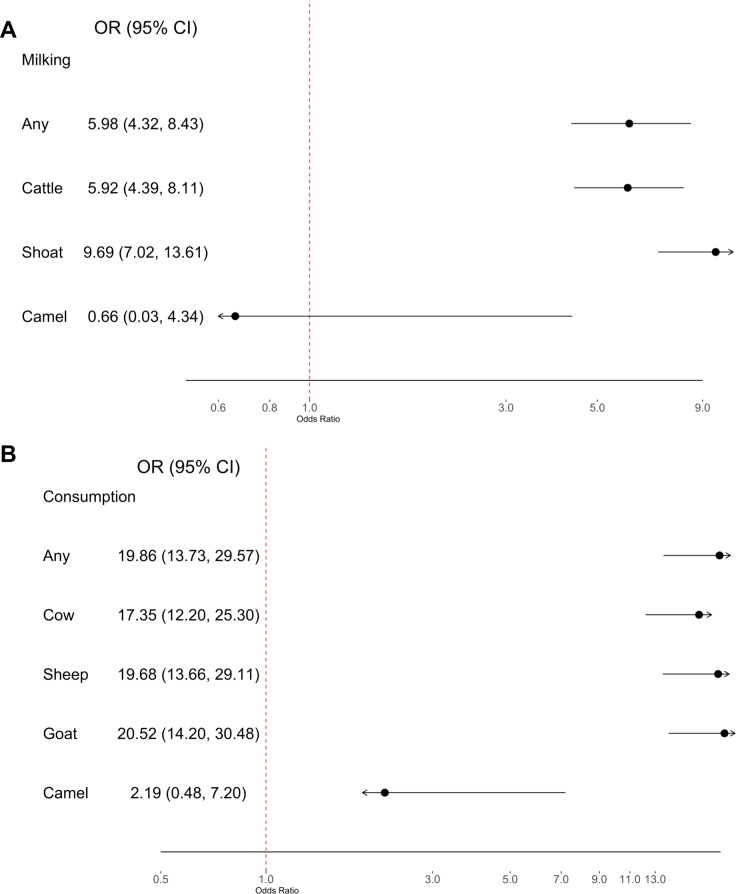
Rift Valley fever virus (RVFV) is a zoonotic phlebovirus that can be transmitted to humans or livestock by mosquitoes or through direct contact with contaminated bodily fluids and tissues. Exposure to bodily fluids and tissues varies by types of behaviors engaged for occupational tasks, homestead responsibilities, or use in dietary or therapeutic capacities. While previous studies have included milk exposures in their analyses, their primary focus on livestock exposures has been on animal handling, breeding, and slaughter. We analyzed data from multiple field surveys in Kenya with the aim of associating RVFV infection to raw milk exposures from common animal species. Of those with evidence of prior RVFV infection by serology (n = 267), 77.2% engaged in milking livestock compared to 32.0% for 3,956 co-local seronegative individuals (p < 0.001), and 86.5% of seropositive individuals consumed raw milk compared to 33.4% seronegative individuals (p < 0.001). Individuals who milked and also consumed raw milk had greater odds of RVFV exposure than individuals whose only contact to raw milk was through milking. Increased risks were associated with exposure to milk sourced from cows (p < 0.001), sheep (p < 0.001), and goats (p < 0.001), but not camels (p = 0.98 for consuming, p = 0.21 for milking). Our data suggest that exposure to raw milk may contribute to a significant number of cases of RVFV, especially during outbreaks and in endemic areas, and that some animal species may be associated with a higher risk for RVFV exposure. Livestock trade is regulated to limit RVFV spread from endemic areas, yet further interventions designed to fully understand the risk of RVFV exposure from raw milk are imperative.
Conflict of interest statement
The authors have declared that no competing interests exist.
Figures
References
-
- ViralZone. Phlebovirus: SIB Swiss Institute of Bioinformatics; 2018 [Available from: https://viralzone.expasy.org/252.
-
- Isaacson M. Viral hemorrhagic fever hazards for travelers in Africa. Clin Infect Dis. 2001;33:1701–12. - PubMed
MeSH terms
LinkOut - more resources
Full Text Sources
Medical
