


Nanostructured Materials for Food Applications: Spectroscopy, Microscopy and Physical Properties
- PMID: 30893761
- PMCID: PMC6466241
- DOI: 10.3390/bioengineering6010026
Nanostructured Materials for Food Applications: Spectroscopy, Microscopy and Physical Properties
Abstract
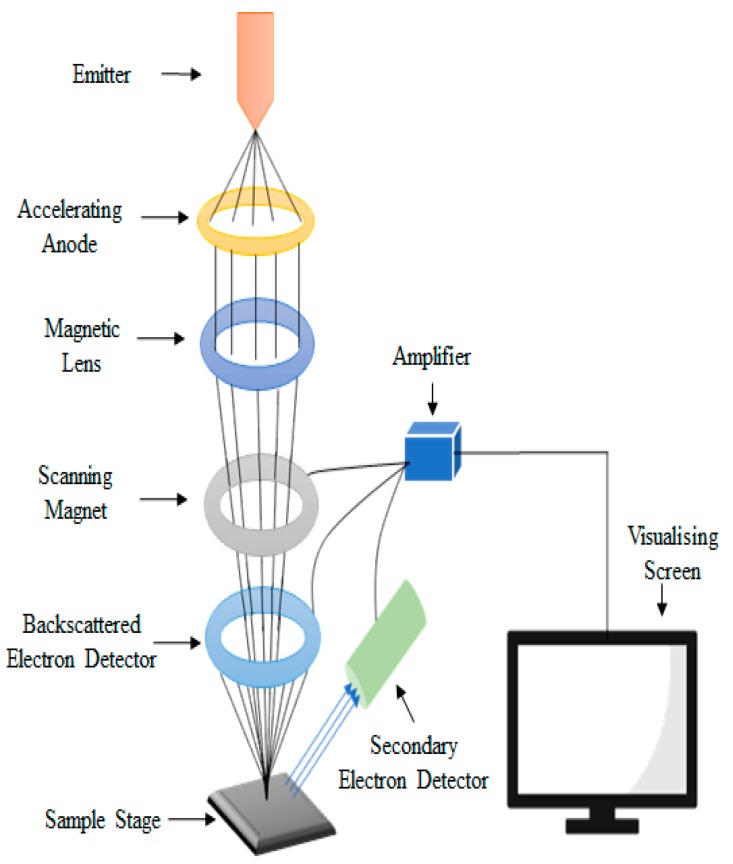
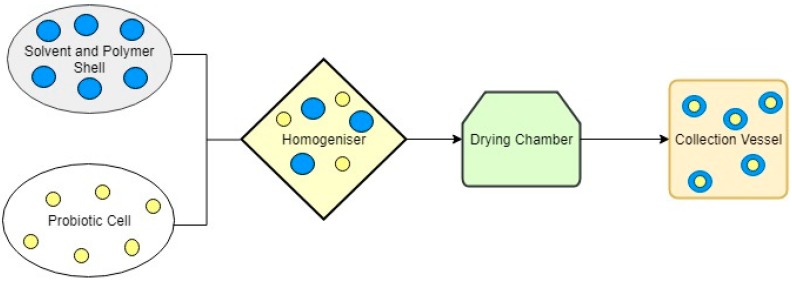
Nanotechnology deals with matter of atomic or molecular scale. Other factors that define the character of a nanoparticle are its physical and chemical properties, such as surface area, surface charge, hydrophobicity of the surface, thermal stability of the nanoparticle and its antimicrobial activity. A nanoparticle is usually characterized by using microscopic and spectroscopic techniques. Microscopic techniques are used to characterise the size, shape and location of the nanoparticle by producing an image of the individual nanoparticle. Several techniques, such as scanning electron microscopy (SEM), transmission electron microscopy/high resolution transmission electron microscopy (TEM/HRTEM), atomic force microscopy (AFM) and scanning tunnelling microscopy (STM) have been developed to observe and characterise the surface and structural properties of nanostructured material. Spectroscopic techniques are used to study the interaction of a nanoparticle with electromagnetic radiations as the function of wavelength, such as Raman spectroscopy, UV⁻Visible spectroscopy, attenuated total reflectance Fourier-transform infrared spectroscopy (ATR-FTIR), dynamic light scattering spectroscopy (DLS), Zeta potential spectroscopy, X-ray photoelectron spectroscopy (XPS) and X-ray photon correlation spectroscopy. Nanostructured materials have a wide application in the food industry as nanofood, nano-encapsulated probiotics, edible nano-coatings and in active and smart packaging.
Keywords: characterisation; food industry; microscopy; nanotechnology; spectroscopy.
Conflict of interest statement
The authors declare no conflict of interest.
Figures
References
-
- Lövestam G., Rauscher H., Roebben G., Klüttgen B.S., Gibson N., Putaud J.-P., Stamm H. Considerations on a Definition of Nanomaterial for Regulatory Purposes. Joint Research Centre (JRC); Luxembourg: 2010. p. 80004-1.
-
- Huang Q. Nanotechnology in the Food, Beverage and Nutraceutical Industries. Elsevier; Amsterdam, The Netherlands: 2012.
-
- Hett A. Nanotechnology: Small Matter, Many Unknowns. Swiss Reinsurance Company; Zürich, Switzerland: 2004.
Publication types
LinkOut - more resources
Full Text Sources
Miscellaneous
