


Lactobacillus curvatus UFV-NPAC1 and other lactic acid bacteria isolated from calabresa, a fermented meat product, present high bacteriocinogenic activity against Listeria monocytogenes
- PMID: 30894128
- PMCID: PMC6425648
- DOI: 10.1186/s12866-019-1436-4
Lactobacillus curvatus UFV-NPAC1 and other lactic acid bacteria isolated from calabresa, a fermented meat product, present high bacteriocinogenic activity against Listeria monocytogenes
Abstract
Background: Bacteriocins produced by lactic acid bacteria (LAB) can be considered as viable alternatives for food safety and quality, once these peptides present antimicrobial activity against foodborne pathogens and spoilage bacteria. Fermented foods, such as artisanal sausages and cured meats, are relevant sources of LAB strains capable of producing novel bacteriocins, with particular interest by the food industry.
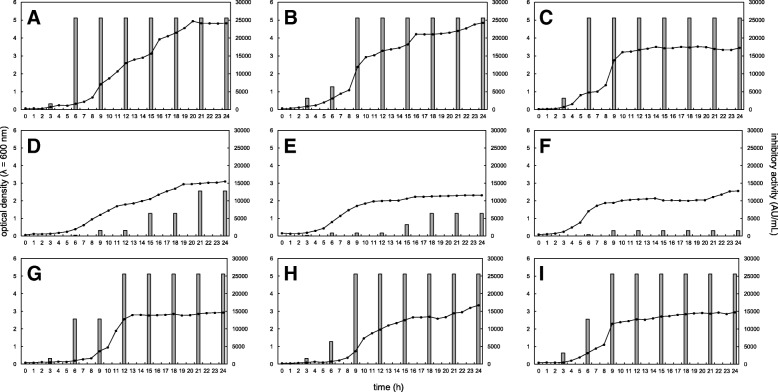
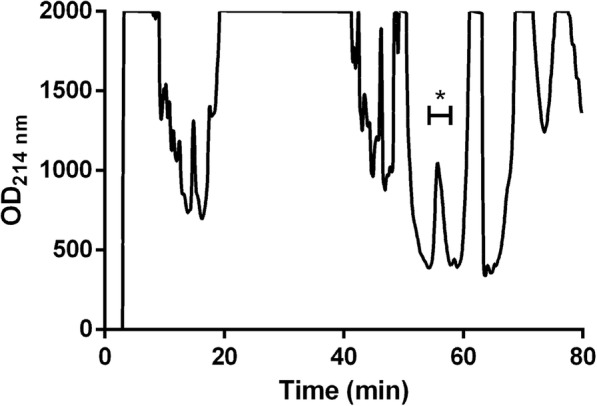
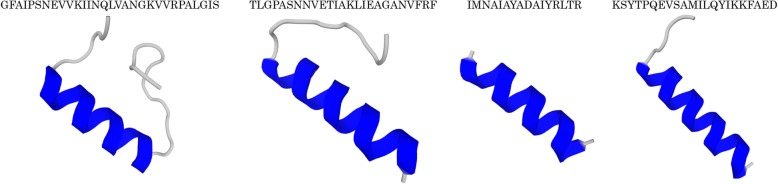
Results: Three LAB strains (firstly named as Lactobacillus curvatus 12, L. curvatus 36 and Weissella viridescens 23) were obtained from calabresa by presenting promising bacteriocinogenic activity, distinct genetic profiles (rep-PCR, RAPD, bacteriocin-related genes) and wide inhibitory spectrum. Among these strains, L. curvatus 12 presented higher bacteriocin production, reaching 25,000 AU/mL after incubation at 25, 30 and 37 °C and 6, 9 and 12 h. Partially purified bacteriocins from L. curvatus 12 kept their inhibitory activity after elution with isopropanol at 60% (v/v). Bacteriocins produced by this strain were purified by HPLC and sequenced, resulting in four peptides with 3102.79, 2631.40, 1967.06 and 2588.31 Da, without homology to known bacteriocins.
Conclusions: LAB isolates obtained from calabresa presented high inhibitory activity. Among these isolates, bacteriocins produced by L. curvatus 12, now named as L. curvatus UFV-NPAC1, presented the highest inhibitory performance and the purification procedures revealed four peptides with sequences not described for bacteriocins to date.
Keywords: Bacteriocin; Calabresa; Lactic acid bacteria; Lactobacillus curvatus; Listeria monocytogenes.
Conflict of interest statement
Ethics approval and consent to participate
Not applicable.
Consent for publication
Not applicable.
Competing interests
The authors declare that they have no competing interests.
Publisher’s Note
Springer Nature remains neutral with regard to jurisdictional claims in published maps and institutional affiliations.
Figures
References
-
- Toldrá F. Handbook of meat processing. Iowa: John Wiley & Sons; 2010.
-
- Oliveira M, Ferreira V, Magalhães R, Teixeira P. Biocontrol strategies for Mediterranean-style fermented sausages. Food Res Int. 2018;103:438–449. - PubMed
-
- Cotter PD, Hill C, Ross RP. Bacteriocins: developing innate immunity for food. Nat Rev Microbiol. 2005;3(10):777–788. - PubMed
-
- Todorov SD, Wachsman M, Tomé E, Dousset X, Destro MT, Dicks LMT, Franco BDGM, Vaz-Velho M, Drider D. Characterisation of an antiviral pediocin-like bacteriocin produced by Enterococcus faecium. Food Microbiol. 2010;27(7):869–879. - PubMed
-
- Collins MD, Samelis J, Metaxopoulos J, Wallbanks S. Taxonomic studies on some leuconostoc-like organisms from fermented sausages: description of a new genus Weissella for the Leuconostoc paramesenteroides group of species. J Appl Bacteriol. 1993;75(6):595–603. - PubMed
Publication types
MeSH terms
Substances
LinkOut - more resources
Full Text Sources
Miscellaneous
