Clinical outcomes and predictive model of platelet reactivity to clopidogrel after acute ischemic vascular events
- PMID: 30896564
- PMCID: PMC6595887
- DOI: 10.1097/CM9.0000000000000210
Clinical outcomes and predictive model of platelet reactivity to clopidogrel after acute ischemic vascular events
Abstract
Background: High on-treatment platelet reactivity (HTPR) has been suggested as a risk factor for patients with ischemic vascular disease. We explored a predictive model of platelet reactivity to clopidogrel and the relationship with clinical outcomes.
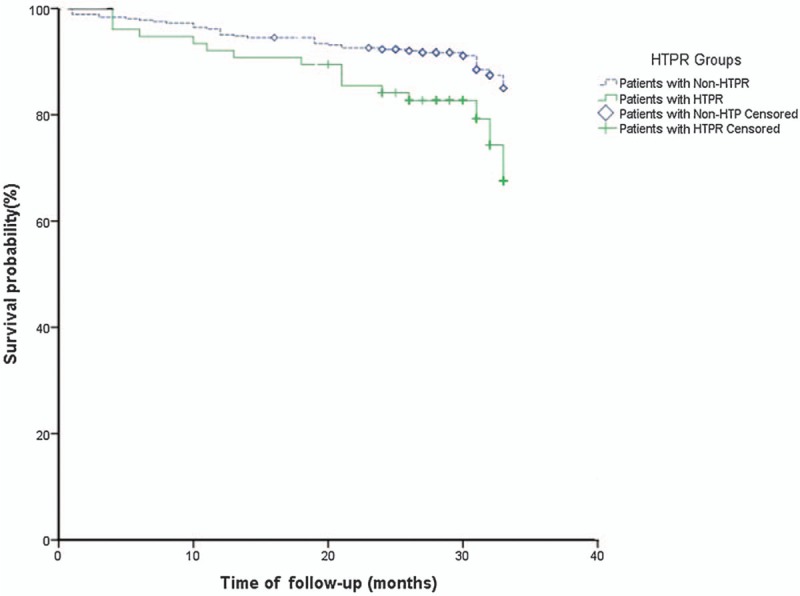
Methods: A total of 441 patients were included. Platelet reactivity was measured by light transmittance aggregometry after receiving dual antiplatelet therapy. HTPR was defined by the consensus cutoff of maximal platelet aggregation >46% by light transmittance aggregometry. CYP2C19 loss-of-function polymorphisms were identified by DNA microarray analysis. The data were compared by binary logistic regression to find the risk factors. The primary endpoint was major adverse clinical events (MACEs), and patients were followed for a median time of 29 months. Survival curves were constructed with Kaplan-Meier estimates and compared by log-rank tests between the patients with HTPR and non-HTPR.
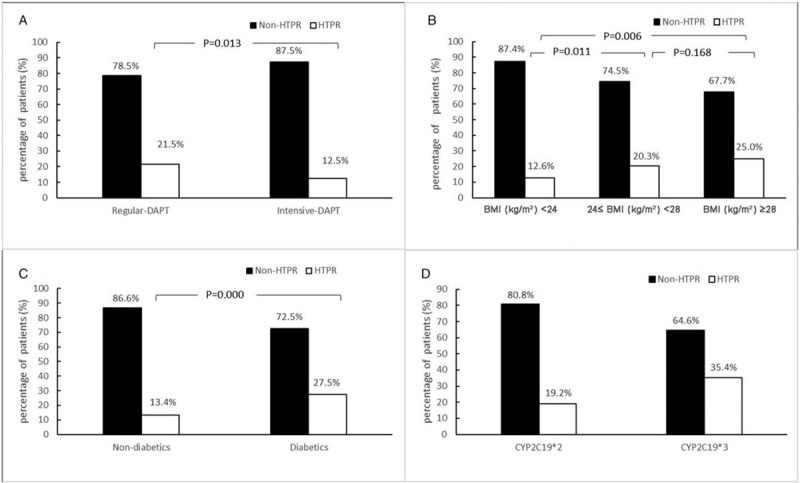
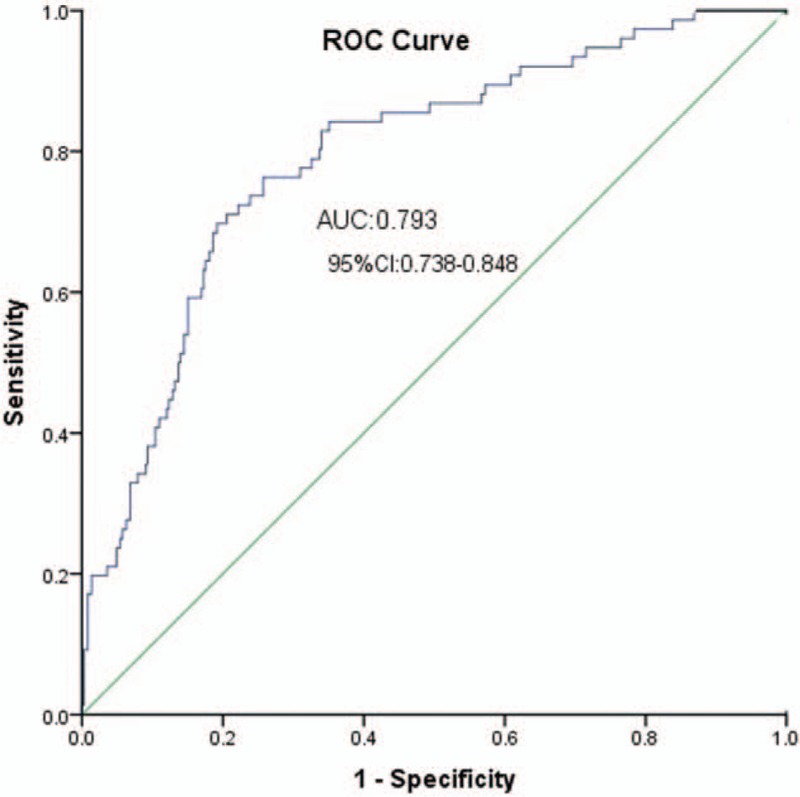
Results: The rate of HTPR was 17.2%. Logistic regression identified the following predictors of HTPR: age, therapy regimen, body mass index, diabetes history, CYP2C192, or CYP2C193 variant. The area under the curve of receiver operating characteristic for the HTPR predictive model was 0.793 (95% confidence interval: 0.738-0.848). Kaplan-Meier analysis showed that patients with HTPR had a higher incidence of MACE than those with non-HTPR (21.1% vs. 9.9%; χ = 7.572, P = 0.010).
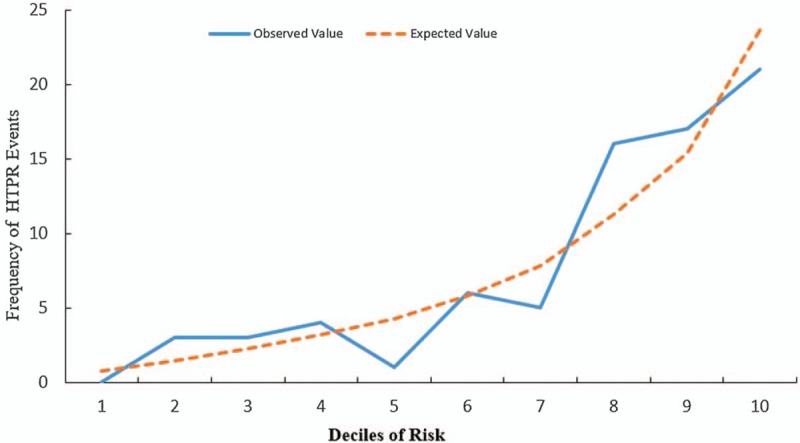
Conclusions: Our results suggest that advanced age, higher body mass index, treatment with regular dual antiplatelet therapy, diabetes, and CYP2C192 or CYP2C193 carriers are significantly associated with HTPR to clopidogrel. The predictive model of HTPR has useful discrimination and good calibration and may predict long-term MACE.
Figures
References
-
- Wang W, Jiang B, Sun H, Ru X, Sun D, Wang L, et al. Prevalence, incidence, and mortality of stroke in China: results from a nationwide population-based survey of 480 687 adults. Circulation 2017; 135:759–771. doi: 10.1161/CIRCULATIONAHA.116.025250. - PubMed
-
- Murray CJ, Lopez AD. Measuring the global burden of disease. N Engl J Med 2013; 369:448–457. doi: 10.1056/NEJMra1201534. - PubMed
-
- Liu M, Wu B, Wang WZ, Lee LM, Zhang SH, Kong LZ. Stroke in China: epidemiology, prevention, and management strategies. Lancet Neurol 2007; 6:456–464. doi: 10.1016/S1474-4422(07)70004-2. - PubMed
-
- Kiernan TJ, Yan BP, Jaff MR. Antiplatelet therapy for the primary and secondary prevention of cerebrovascular events in patients with extracranial carotid artery disease. J Vasc Surg 2009; 50:431–439. doi: 10.1016/j.jvs.2009.04.052. - PubMed
-
- Xu H, Ping Y, Lin H, He P, Li W, Dai H. Antiplatelet strategies and outcomes in patients with noncardioembolic ischemic stroke from a real-world study with a five-year follow-up. Transl Stroke Res 2017; 8:228–233. doi: 10.1007/s12975-016-0516-0. - PubMed
MeSH terms
Substances
LinkOut - more resources
Full Text Sources