


Sociodemographic Factors Associated with the Knowledge and Use of Birth Control Methods in Adolescents before and after Pregnancy
- PMID: 30897835
- PMCID: PMC6465996
- DOI: 10.3390/ijerph16061022
Sociodemographic Factors Associated with the Knowledge and Use of Birth Control Methods in Adolescents before and after Pregnancy
Abstract
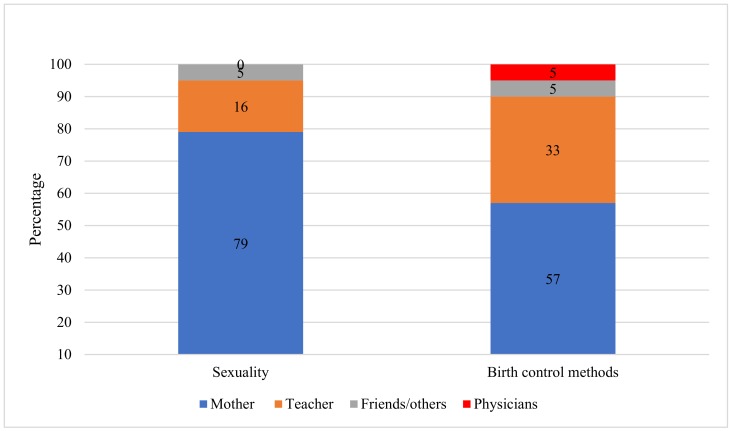
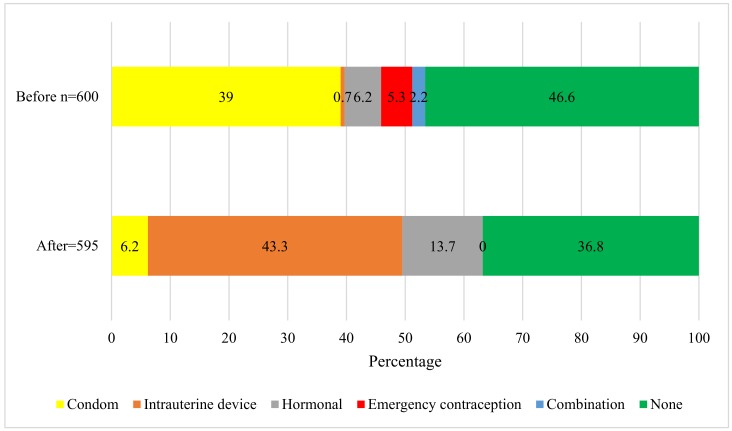
Adolescent pregnancy rates are high worldwide. However, insufficient information exists regarding the frequency of birth control methods used before the first pregnancy and postpartum. In the current study, we analyzed the association of sociodemographic factors with the knowledge of birth control methods and their use before and after pregnancy in a sample of adolescents in Mexico City. A cohort study was conducted on 600 pregnant adolescents in Mexico City, from 2013 to 2017, at a health care institution providing prenatal care. Participants were assessed during the second trimester and four months postpartum. The questionnaire explored the knowledge of birth control methods, their use, and other associated factors. Two logistic regression models were implemented to identify potential variables associated with the lack of birth control method use before and after pregnancy. The mean age of participants was 15.4 + 1 years, of which, 48% and 65.2% used a birth control method before pregnancy and postpartum, respectively. We found that the main factors associated with increased risk of not using any birth control method before pregnancy included being under the age of 15 years, school dropout, having an educational lag, initiation of sexual life before the age of 15, and having a mother who did not inform their child about contraceptives. By contrast, variables associated with a higher risk of not using any contraceptive methods after pregnancy included educational lag, lower level of education, and the fact that the adolescent had not used any birth control prior to the pregnancy.
Keywords: Mexico; adolescents; birth control methods; pregnancy in adolescents; sex education.
Conflict of interest statement
The authors declare that they have no conflict of interest.
Figures
References
-
- Alkema L., Chou D., Hogan D., Zhang S., Moller A.B., Gemmill A., Fat DM., Boerma T., Temmerman M., Mathers C., et al. Global, regional, and national levels and trends in maternal mortality between 1990 and 2015, with scenario-based projections to 2030: A systematic analysis by the UN Maternal Mortality Estimation Inter-Agency Group. Lancet. 2016;387:462–474. - PMC - PubMed
-
- Trends in Maternal Mortality: 1990 to 2015: Estimates by WHO, UNICEF, UNFPA, World Bank Group and the United Nations Population Division. World Health Organization; Geneva, Switzerland: 2015.
-
- WHO/Adolescent Birth Rate Global Health Observatory (GHO) Data. [(accessed on 25 October 2017)];Globally, the Adolescent Birth Rate in 2015 Was 44.1 per 1000 Women Aged 15–19 years. Available online: http://www.who.int/gho/maternal_health/reproductive_health/adolescent_fe...
-
- Rios-Zertuche D., Blanco L.C., Zúñiga-Brenes P., Palmisano E.B., Colombara D.V., Mokdad A.H., Iriarte E. Contraceptive knowledge and use among women living in the poorest areas of five Mesoamerican countries. Contraception. 2017;95:549–557. doi: 10.1016/j.contraception.2017.01.005. - DOI - PMC - PubMed
Publication types
MeSH terms
LinkOut - more resources
Full Text Sources
Medical
