


Gut microbiota specific signatures are related to the successful rate of bariatric surgery
- PMID: 30899393
- PMCID: PMC6413284
Gut microbiota specific signatures are related to the successful rate of bariatric surgery
Abstract
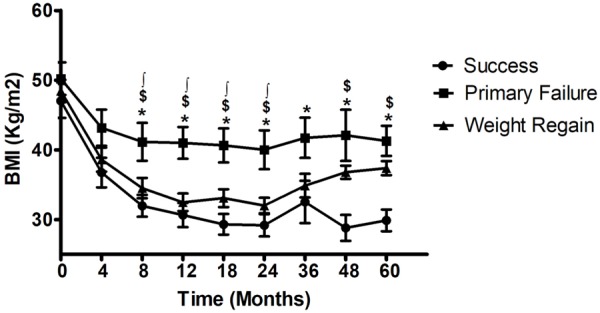
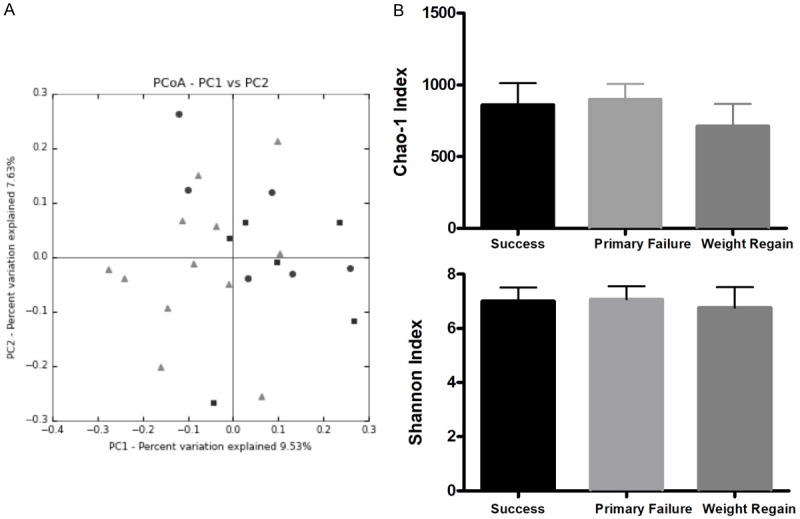
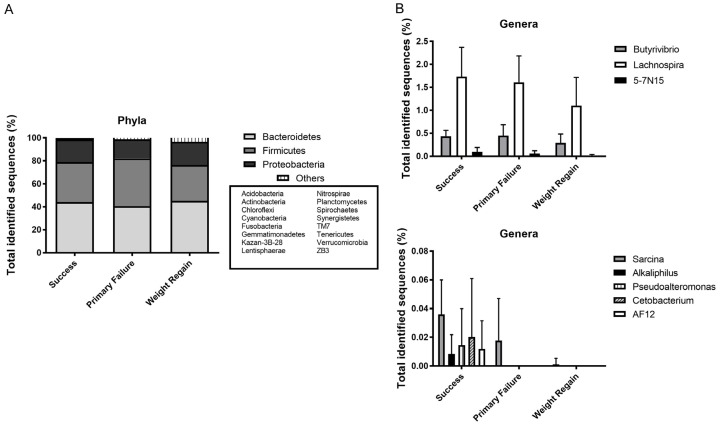
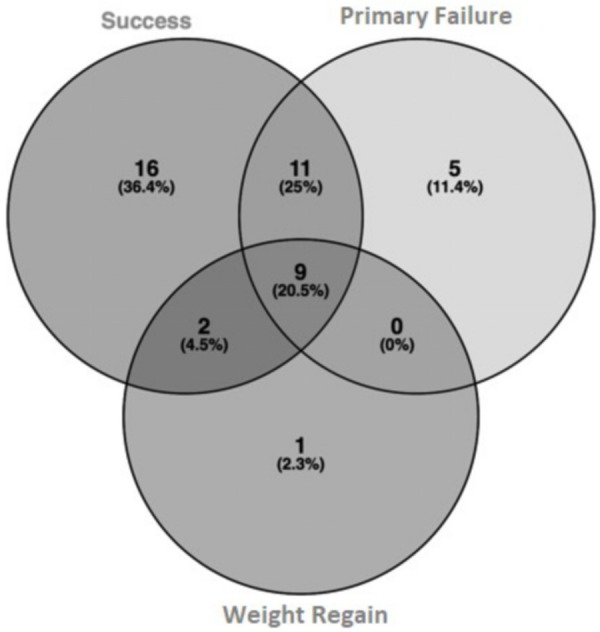
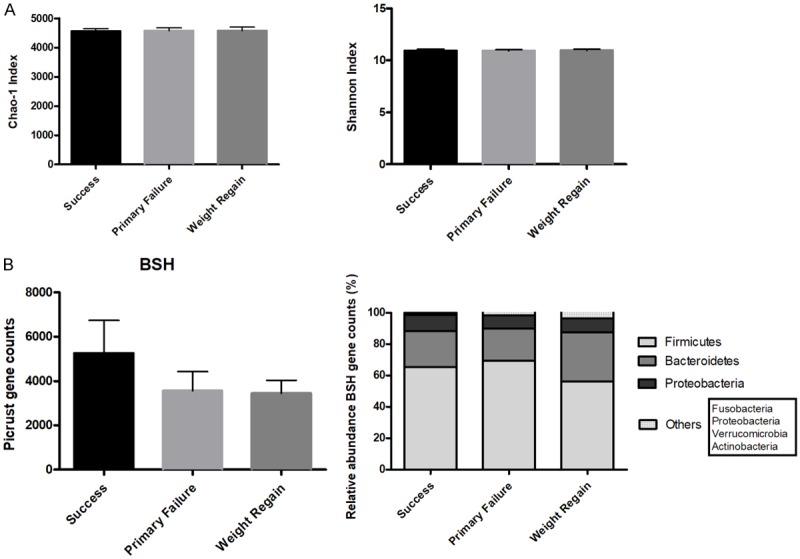
Bariatric surgery (BS) success rates vary in the long-time. A better understanding of weight-loss response may help improve the outcomes of BS. Gut microbiome could be implicated in the successful rate of BS. The aim of the study is to analyze the role of gut microbiome in the successful rate of BS. This is a cross-sectional study of a prospective cohort of 24 patients who underwent gastric bypass. Patients were classified based on excess weight loss (EWL) as: Success (EWL50% at nadir weight and throughout follow-up), Primary Failure (EWL<50% at nadir weight and thereafter), and Weight Regain (EWL>50% at nadir weight, but <50% at last follow-up visit). Gut microbiome analysis was assessed by High Throughput Sequencing. Cholesterol metabolism was shown as the most affected parameter among groups. Studied groups registered minor changes between their gut microbiome abundances, with Butyrivibrio, Lachnospira and Sarcina among them. However, Success group shared a more diverse core microbiome than the other groups. We showed evidence of a possible role of gut microbiome in the cholesterol metabolism, possibly through bile acids, relative to the success or failure of BS outcomes. Acinetobacter and Serratia, from Primary Failure core microbiome, could have implications in its successful rate. Sarcina abundance was presented as the best genera related to the body mass index (BMI) post-surgery. Gut microbiota could mediate, at least partially, the success rate of BS through their interaction with the bile acids milieu. Further studies are necessary to validate this probe of concept.
Keywords: Bariatric surgery; RYGB; bile acids; cholesterol; gut microbiota.
Conflict of interest statement
None.
Figures
References
-
- Ariyarathenam AV, Pournaras DJ, Tham JC, Finlay I, Cota A. Need for standardization of the measurement of preoperative weight in bariatric surgical patients in the UK: a survey of british obesity and metabolic surgery society (BOMSS) members. Int J Surg. 2012;10:598–600. - PubMed
-
- Sherf-Dagan S, Schechter L, Lapidus R, Sakran N, Goitein D, Raziel A. Perceptions of success in bariatric surgery: a nationwide survey among medical professionals. Obes Surg. 2018;28:135–141. - PubMed
-
- Reynolds CL, Byrne SM, Hamdorf JM. Treatment success: investigating clinically significant change in quality of life following bariatric surgery. Obes Surg. 2017;27:1842–1848. - PubMed
-
- de Hollanda A, Jimenez A, Corcelles R, Lacy AM, Patrascioiu I, Vidal J. Gastrointestinal hormones and weight loss response after Roux-en-Y gastric bypass. Surg Obes Relat Dis. 2014;10:814–819. - PubMed
-
- de Hollanda A, Casals G, Delgado S, Jiménez A, Viaplana J, Lacy AM, Vidal J. Gastrointestinal hormones and weight loss maintenance following Roux-en-Y gastric bypass. J Clin Endocrinol Metab. 2015;100:4677–4684. - PubMed
LinkOut - more resources
Full Text Sources