The value of arterial spin labelling in adults glioma grading: systematic review and meta-analysis
- PMID: 30899427
- PMCID: PMC6422184
- DOI: 10.18632/oncotarget.26674
The value of arterial spin labelling in adults glioma grading: systematic review and meta-analysis
Abstract
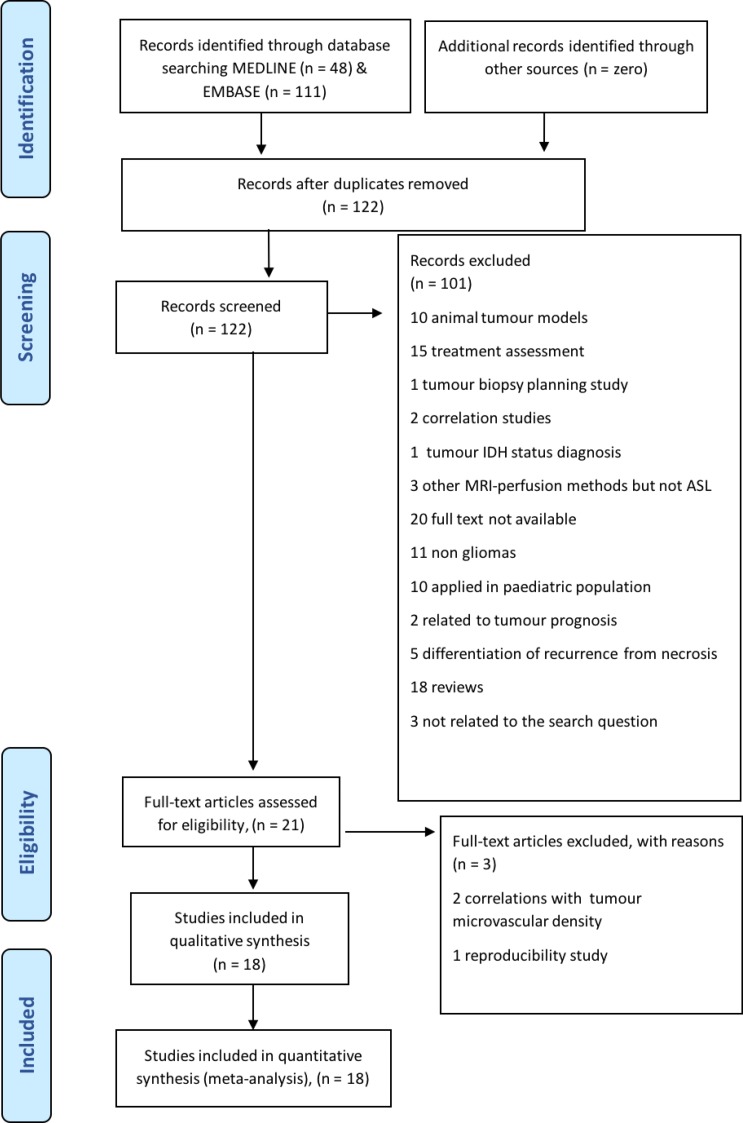
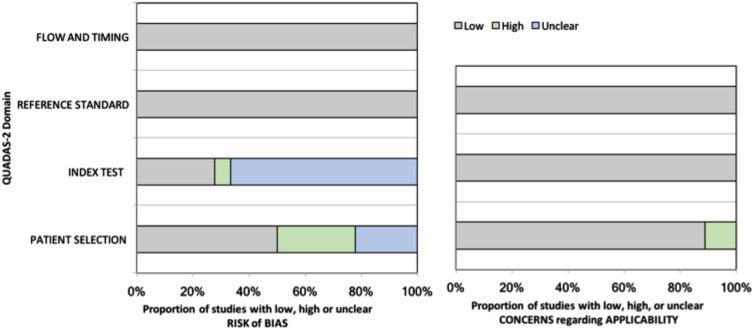
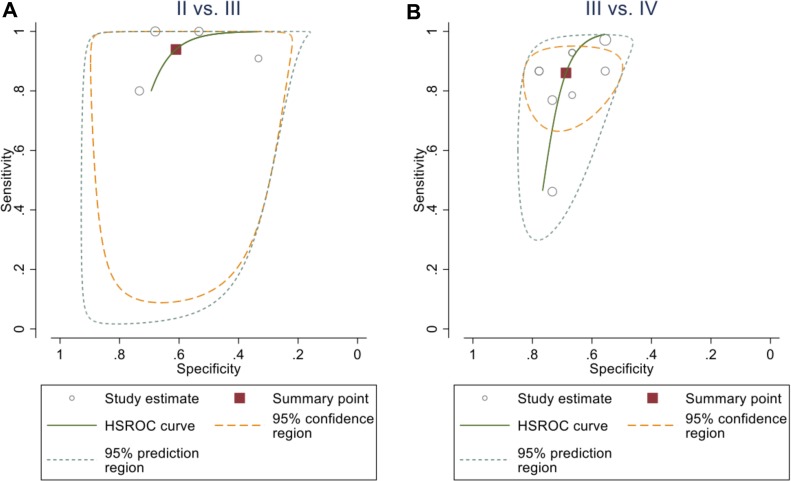
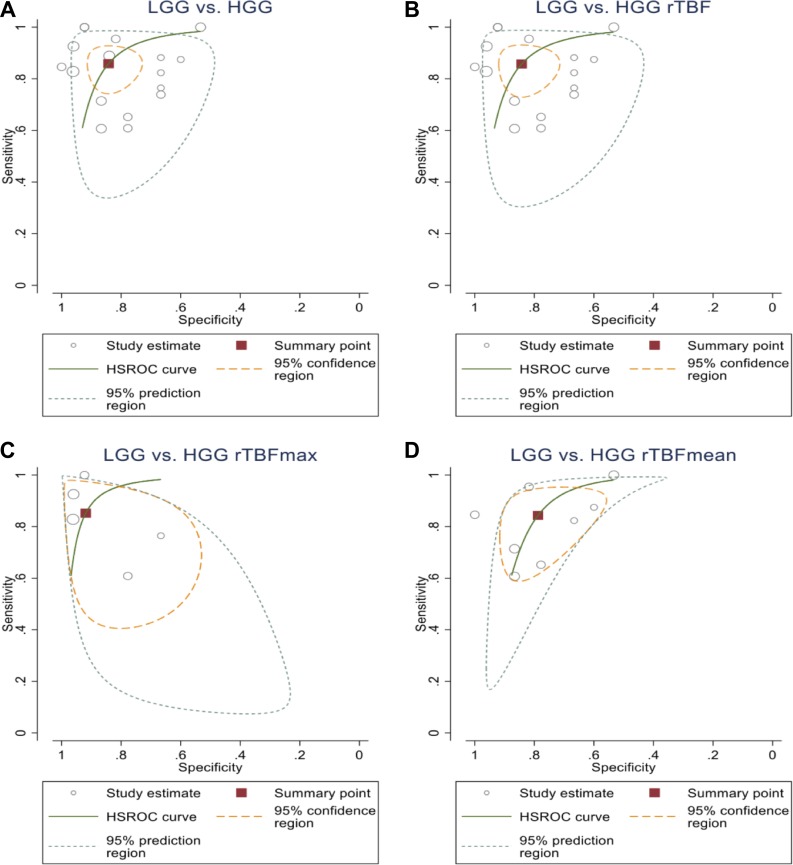
This study aimed to evaluate the diagnostic performance of arterial spin labelling (ASL) in grading of adult gliomas. Eighteen studies matched the inclusion criteria and were included after systematic searches through EMBASE and MEDLINE databases. The quality of the included studies was assessed utilizing Quality Assessment of Diagnostic Accuracy Studies-2 (QUADAS-2). The quantitative values were extracted and a meta-analysis was subsequently based on a random-effect model with forest plot and joint sensitivity and specificity modelling. Hierarchical summary receiver operating characteristic (HROC) curve analysis was also conducted. The absolute tumour blood flow (TBF) values can differentiate high-grade gliomas (HGGs) from low-grade gliomas (LGGs) and grade II from grade IV tumours. However, it lacked the capacity to differentiate grade II from grade III tumours and grade III from grade IV tumours. In contrast, the relative TBF (rTBF) is effective in differentiating HGG from LGG and in glioma grading. The maximum rTBF (rTBFmax) demonstrated the best results in glioma grading. These results were also reflected in the sensitivity/specificity analysis in which the rTBFmax showed the highest discrimination performance in glioma grading. The estimated effect size for the rTBF was approximately similar between HGGs and LGGs, and grade II and grade III tumours, (-1.46 (-2.00, -0.91), p-value < 0.001), (-1.39 (-1.89, -0.89), p-value < 0.001), respectively; while it exhibited smaller effect size between grade III and grade IV (-1.05 (-1.82, -0.27)), p < 0.05). Sensitivity and specificity analysis replicate these results as well. This meta-analysis suggests that ASL is useful for glioma grading, especially when considering the rTBFmax parameter.
Keywords: arterial spin labeling; glioma; grading.
Conflict of interest statement
CONFLICTS OF INTEREST The views expressed in this article are those of the author(s) and not necessarily those of the NHS, the NIHR, or the Department of Health and Social Care.
Figures
References
-
- Noguchi T, Yoshiura T, Hiwatashi A, Togao O, Yamashita K, Nagao E, Shono T, Mizoguchi M, Nagata S, Sasaki T, Suzuki SO, Iwaki T, Kobayashi K, et al. Perfusion imaging of brain tumors using arterial spin-labeling: correlation with histopathologic vascular density. AJNR Am J Neuroradiol. 2008;29:688–93. doi: 10.3174/ajnr.A0903. - DOI - PMC - PubMed
-
- Shen N, Zhao L, Jiang J, Jiang R, Su C, Zhang S, Tang X, Zhu W. Intravoxel incoherent motion diffusion-weighted imaging analysis of diffusion and microperfusion in grading gliomas and comparison with arterial spin labeling for evaluation of tumor perfusion. J Magn Reson Imaging. 2016;44:620–32. doi: 10.1002/jmri.25191. - DOI - PubMed
LinkOut - more resources
Full Text Sources