Estimating global trends in total and childhood antibiotic consumption, 2011-2015
- PMID: 30899565
- PMCID: PMC6407570
- DOI: 10.1136/bmjgh-2018-001241
Estimating global trends in total and childhood antibiotic consumption, 2011-2015
Abstract
Introduction: Understanding patterns of antibiotic consumption is essential to ensure access to appropriate antibiotics when needed and to minimise overuse, which can lead to antibiotic resistance. We aimed to describe changes in global antibiotic consumption between 2011 and 2015.
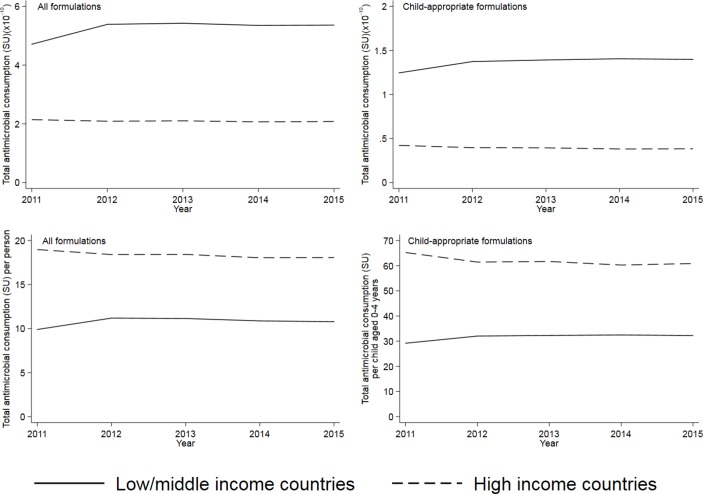
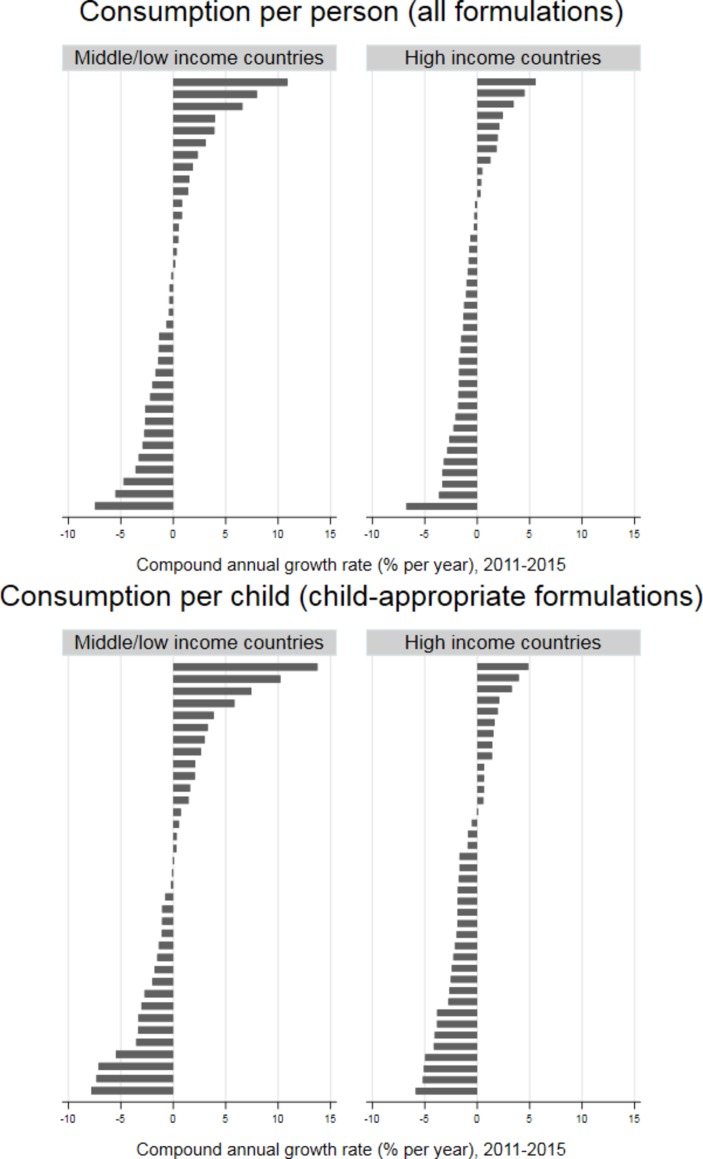
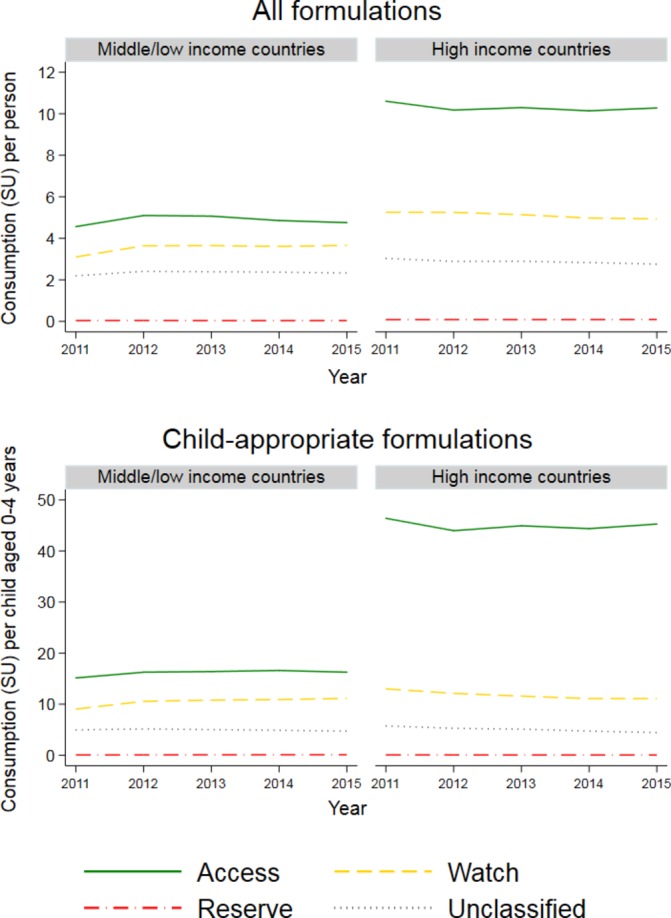
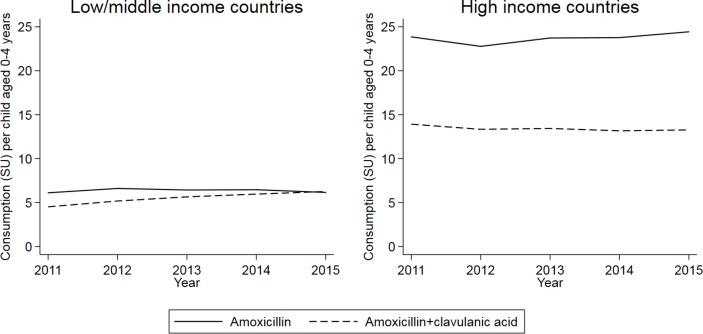
Methods: We analysed wholesale data on total antibiotic sales and antibiotics sold as child-appropriate formulations (CAFs), stratified by country income level (low/middle-income and high-income countries (LMICs and HICs)). The volume of antibiotics sold per year was recorded for 36 LMICs and 39 HICs, measured in standard units (SU: 1 SU is equivalent to a single tablet, capsule or 5 mL ampoule/vial/oral suspension) and SU per person, overall and as CAFs. Changes over time were quantified as percentage changes and compound annual growth rates in consumption per person. Analyses were conducted separately for total sales, sales of antibiotics in the Access and Watch groups of the WHO's Essential Medicines List for children 2017, for amoxicillin and amoxicillin with clavulanic acid.
Results: Antibiotic consumption increased slightly between 2011 and 2015, from 6.85×10¹⁰ SU to 7.44×10¹⁰ SU overall and from 1.66×10¹⁰ SU to 1.78×10¹⁰ SU for CAFs. However, trends differed between countries and for specific antibiotics; for example, consumption of amoxicillin as CAFs changed little in LMICs and HICs, but that of amoxicillin with clavulanic acid increased by 6.8% per year in LMICs and decreased by 1.0% per year in HICs.
Conclusions: As measured in standard units in sales data, the rate of increase in global antibiotic consumption may be slowing. However, the trends appear to differ between countries and drugs. In the absence of routine surveillance of antibiotic use in many countries, these data provide important indicators of trends in consumption which should be confirmed in national and local studies of prescribing.
Keywords: antibiotics; global surveillance; paediatrics.
Conflict of interest statement
Competing interests: PS is employed by IQVIA, which is funded by both industry and governments to collect, process and analyse information on medicine usage. All other authors report no conflicts of interest.
Figures
References
-
- World Health Organization Global action plan on antimicrobial resistance, 2015. - PubMed
LinkOut - more resources
Full Text Sources