


Strain-level diversity of commercial probiotic isolates of Bacillus, Lactobacillus, and Saccharomyces species illustrated by molecular identification and phenotypic profiling
- PMID: 30901338
- PMCID: PMC6430388
- DOI: 10.1371/journal.pone.0213841
Strain-level diversity of commercial probiotic isolates of Bacillus, Lactobacillus, and Saccharomyces species illustrated by molecular identification and phenotypic profiling
Abstract
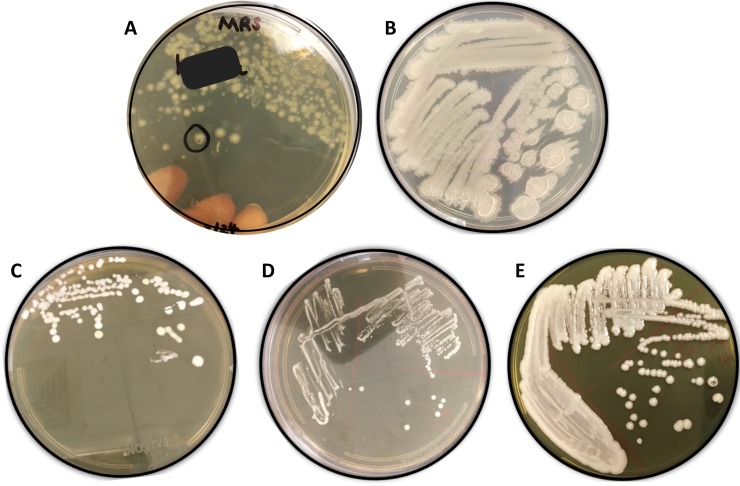
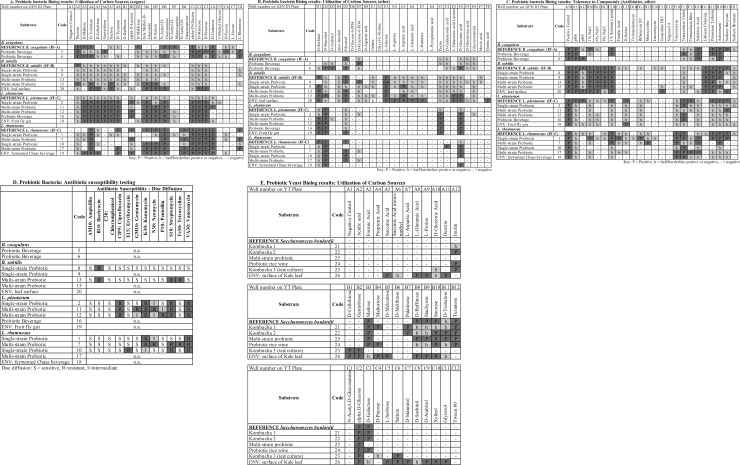
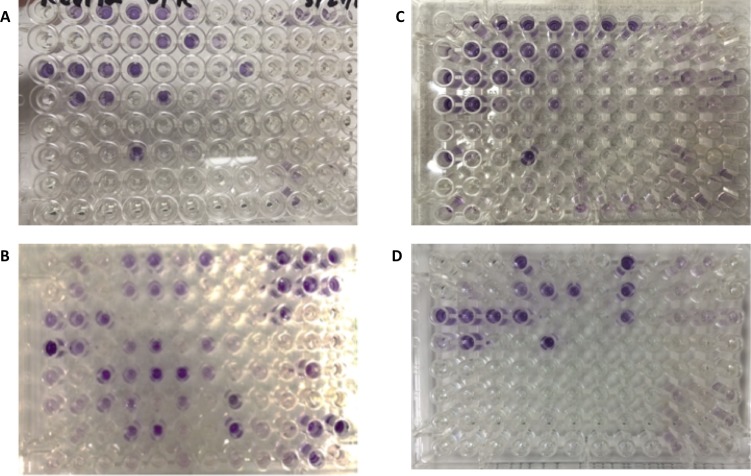
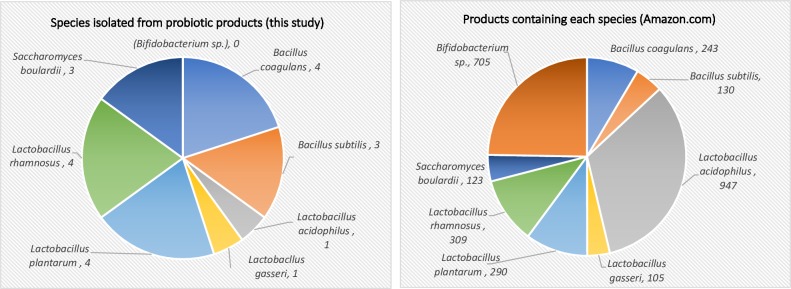
Probiotic products are becoming more prevalent as awareness of the role of beneficial microbes in health increases. Ingredient labels of these products often omit identifications at the strain level, making it difficult to track down applicable published research. In this study, we investigated whether products labeled with the same species name contained different strains of those species. From 21 commercially available probiotic supplements and beverages, we cultured five main species: Bacillus coagulans, Bacillus subtilis, Lactobacillus plantarum, Lactobacillus rhamnosus, and the yeast Saccharomyces boulardii. To confirm the identity of each bacterial isolate, we applied standard molecular approaches: 16S rRNA gene sequencing and Matrix Assisted Laser Desorption Ionization Time-of-Flight mass spectrometry (MALDI-TOF MS). Phenotypic profiling and identification were performed with the Biolog Microbial Identification system. All of the bacterial isolates were correctly identified by at least one approach. Sequencing the 16S rRNA gene led to 82% of species identifications matching the product label, with 71% of isolates identified by MALDI-TOF MS and 60% identified correctly with the Biolog system. Analysis of the Biolog phenotypic profiles revealed different patterns of carbon source usage by each species, with sugars preferentially utilized by all except B. subtilis. To assess the strain-level differences, we compared strains of the same species and found variability in carbohydrate utilization and tolerance to environmental stressors (salt, acidity, antibiotics). By demonstrating that products listing the same species often contain strains with different 16S sequences and phenotypes, this study highlights that current labels of probiotic supplements do not sufficiently convey the strain diversity in these products.
Conflict of interest statement
The authors have declared that no competing interests exist.
Figures
References
-
- Yadav R, Shukla P. Probiotics for Human Health: Current Progress and Applications. Recent advances in Applied Microbiology. 2017. 10.1007/978-981-10-5275-0_6 - DOI
-
- Reid G. The growth potential for dairy probiotics. Int Dairy J. Elsevier; 2015;49: 16–22. 10.1016/J.IDAIRYJ.2015.04.004 - DOI
-
- Ramakrishna BS. Probiotic-induced changes in the intestinal epithelium: implications in gastrointestinal disease. Trop Gastroenterol. 30: 76–85. Available: http://www.ncbi.nlm.nih.gov/pubmed/19760989 - PubMed
Publication types
MeSH terms
Substances
LinkOut - more resources
Full Text Sources
Other Literature Sources
Molecular Biology Databases
