


Nutrigenomics of Vitamin D
- PMID: 30901909
- PMCID: PMC6470874
- DOI: 10.3390/nu11030676
Nutrigenomics of Vitamin D
Abstract
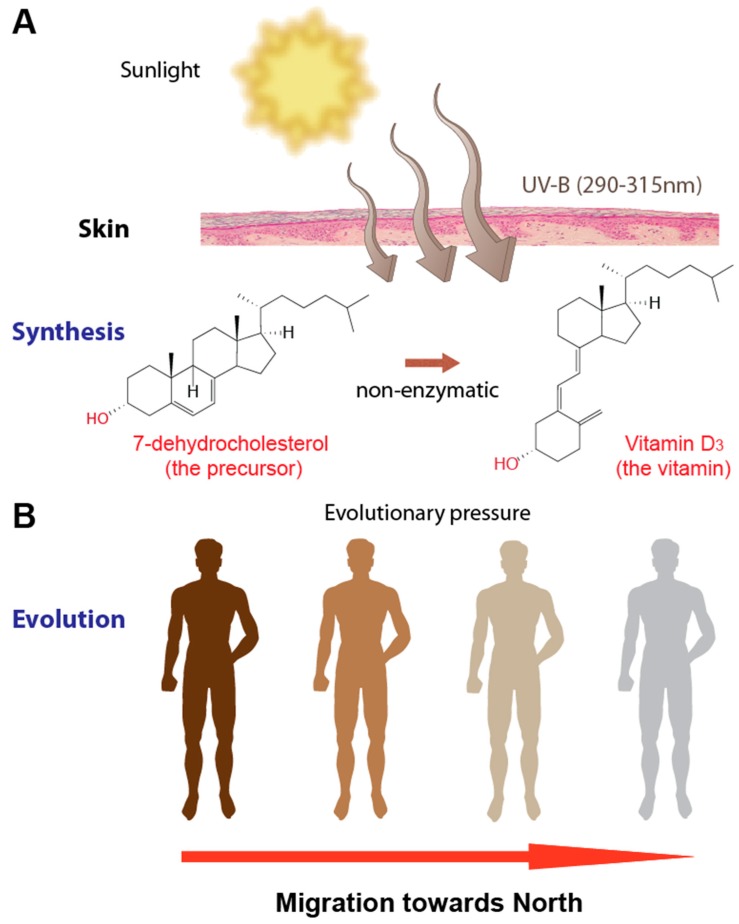
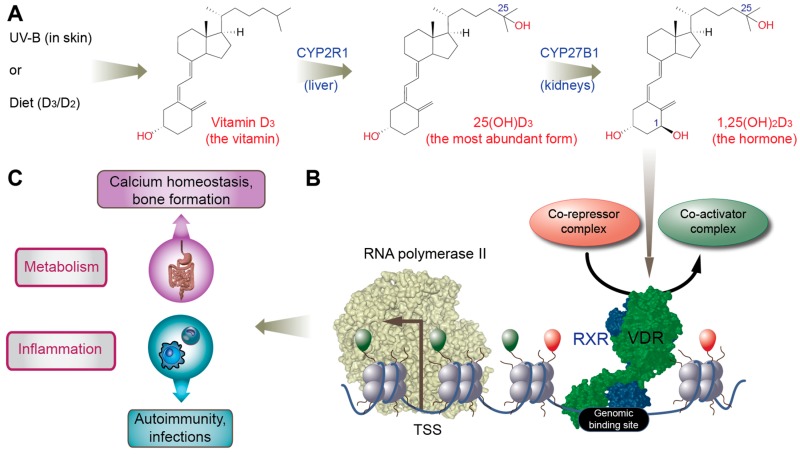
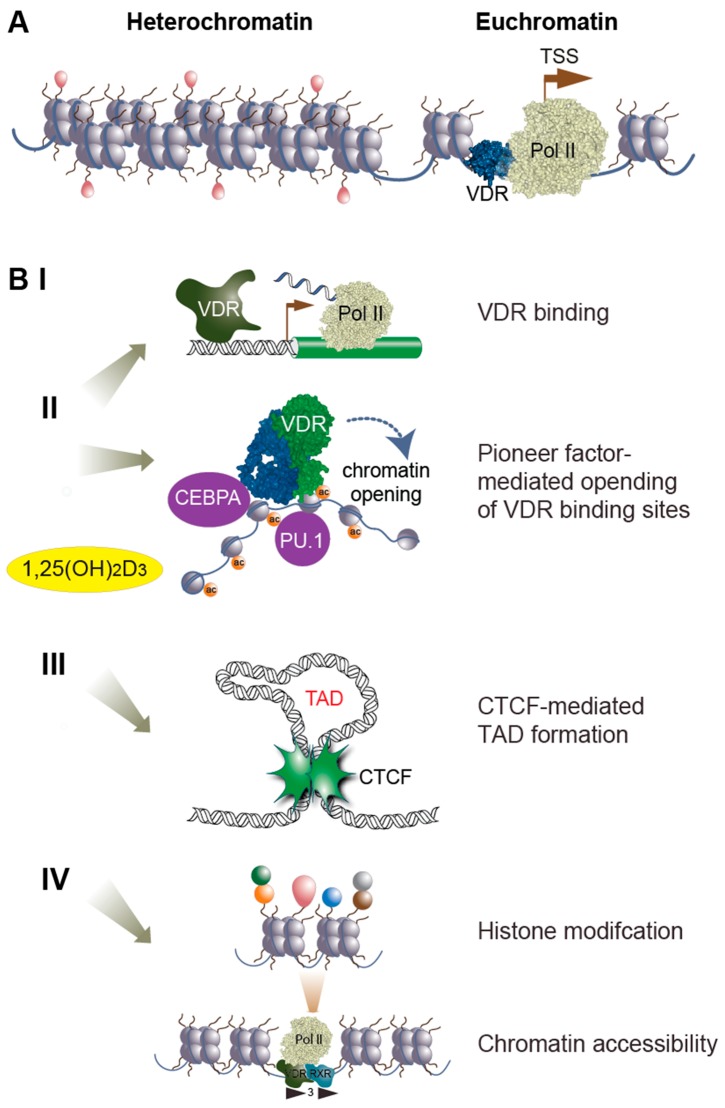
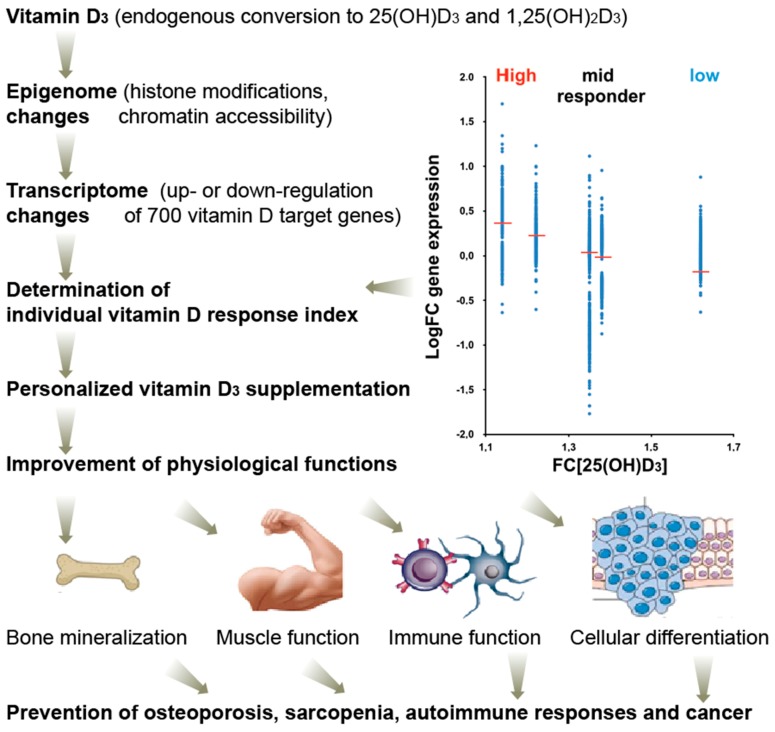
Nutrigenomics studies how environmental factors, such as food intake and lifestyle, influence the expression of the genome. Vitamin D₃ represents a master example of nutrigenomics, since via its metabolite 1α,25-dihydroxyvitamin D₃, which binds with high-affinity to the vitamin D receptor, the secosteroid directly affects the epigenome and transcriptome at thousands of loci within the human genome. Vitamin D is important for both cellular metabolism and immunity, as it controls calcium homeostasis and modulates the response of the innate and adaptive immune system. At sufficient UV-B exposure, humans can synthesize vitamin D₃ endogenously in their skin, but today's lifestyle often makes the molecule a true vitamin and micronutrient that needs to be taken up by diet or supplementation with pills. The individual's molecular response to vitamin D requires personalized supplementation with vitamin D₃, in order to obtain optimized clinical benefits in the prevention of osteoporosis, sarcopenia, autoimmune diseases, and possibly different types of cancer. The importance of endogenous synthesis of vitamin D₃ created an evolutionary pressure for reduced skin pigmentation, when, during the past 50,000 years, modern humans migrated from Africa towards Asia and Europe. This review will discuss different aspects of how vitamin D interacts with the human genome, focusing on nutritional epigenomics in context of immune responses. This should lead to a better understanding of the clinical benefits of vitamin D.
Keywords: VDR; Vitamin D; evolution; immune system; nutritional epigenomics; transcriptome.
Conflict of interest statement
The author declares no conflict of interest.
Figures
References
-
- Lander E.S., Linton L.M., Birren B., Nusbaum C., Zody M.C., Baldwin J., Devon K., Dewar K., Doyle M., FitzHugh W., et al. Initial sequencing and analysis of the human genome. Nature. 2001;409:860–921. - PubMed
-
- International Human Genome Sequencing Consortium Finishing the euchromatic sequence of the human genome. Nature. 2004;431:931–945. - PubMed
-
- Carlberg C., Ulven S.M., Molnár F. Nutrigenomics. Springer Textbook; Springer; Berlin, Germany: 2016.
Publication types
MeSH terms
Substances
LinkOut - more resources
Full Text Sources
Medical
Miscellaneous
