


Vitamin D deficiency in northern Taiwan: a community-based cohort study
- PMID: 30902083
- PMCID: PMC6431073
- DOI: 10.1186/s12889-019-6657-9
Vitamin D deficiency in northern Taiwan: a community-based cohort study
Abstract
Background: Vitamin D deficiency has become an important public health problem, however few studies have been conducted in subtropical countries, and the predictors of vitamin D deficiency in people with healthy renal function are unclear. The objective of this study was to evaluate the prevalence and factors associated with vitamin D deficiency in northern Taiwan.
Methods: The cross-sectional study was performed between August 2013 and August 2017, and included 3954 participants without chronic kidney disease (CKD) aged ≥30 years in northern Taiwan. Serum 25-hydroxyvitamin D [25(OH)-D] levels, biochemistry, sociodemographic variables (age, sex, education, occupation) and lifestyle habits (tea, coffee consumption and physical activities) were recorded. Associations between vitamin D status and these variables were examined using a regression model. The definition of deficiency was defined as a serum 25(OH)-D level < 20 ng/mL (50 nmol/L).
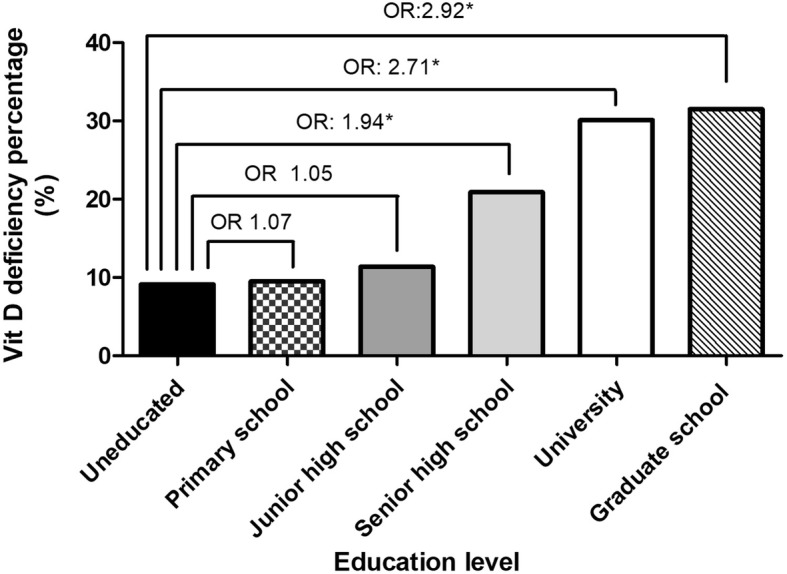
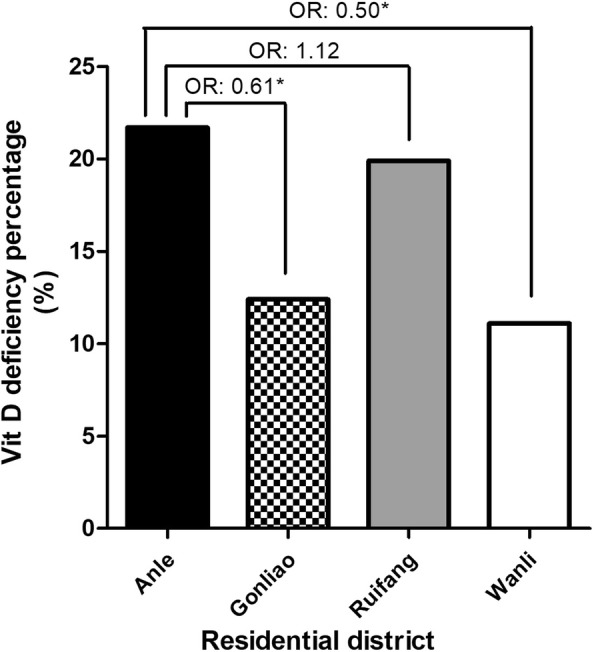
Results: The mean 25(OH)-D concentration was 28.9 ng/mL, and 22.4% of the study population had vitamin D deficiency. There was a significantly higher vitamin D deficiency ratio in the women compared to the men (22.9% vs 9.9%, p < 0.001). Vitamin D deficiency was most prevalent (38.4%) in those aged 30-39 years. Those with a graduate degree had the highest rate of vitamin D deficiency (31.5%). The predictors of vitamin D deficiency included female sex, young age, high education level, living in an urban area and physical inactivity. Tea consumption was negatively associated with vitamin D deficiency.
Conclusions: Vitamin D deficiency is prevalent in subtropical areas such as northern Taiwan in healthy individuals without CKD.
Keywords: Prevalence; Risk factor; Taiwan; Vitamin D deficiency.
Conflict of interest statement
Ethics approval and consent to participate
This study was approved by the Institutional Review Board (IRB) of the Chang Gung Memorial Hospital (IRB No:100-2248A3). All participants agreed to the study conditions and provided written informed consent before the enrollment in this study.
Consent for publication
Not applicable
Competing interests
The authors declare that they have no competing interests.
Publisher’s Note
Springer Nature remains neutral with regard to jurisdictional claims in published maps and institutional affiliations.
Figures

References
-
- Gagnon C, Lu ZX, Magliano DJ, Dunstan DW, Shaw JE, Zimmet PZ, Sikaris K, Grantham N, Ebeling PR, Daly RM. Serum 25-hydroxyvitamin D, calcium intake, and risk of type 2 diabetes after 5 years: results from a national, population-based prospective study (the Australian diabetes, obesity and lifestyle study) Diabetes Care. 2011;34(5):1133–1138. doi: 10.2337/dc10-2167. - DOI - PMC - PubMed
MeSH terms
Substances
Grants and funding
LinkOut - more resources
Full Text Sources
Medical
