


Age-Related Decreases in the Retrieval Practice Effect Directly Relate to Changes in Alpha-Beta Oscillations
- PMID: 30902871
- PMCID: PMC6538864
- DOI: 10.1523/JNEUROSCI.2791-18.2019
Age-Related Decreases in the Retrieval Practice Effect Directly Relate to Changes in Alpha-Beta Oscillations
Abstract
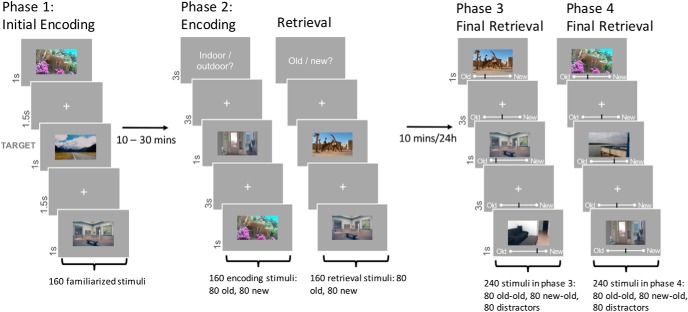
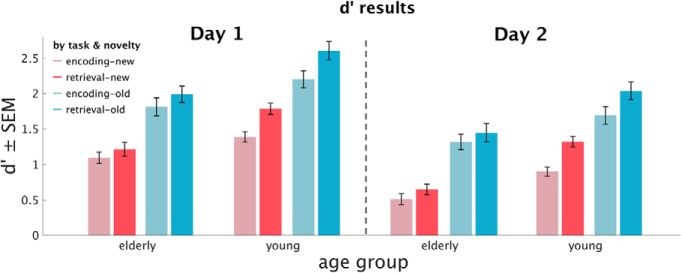
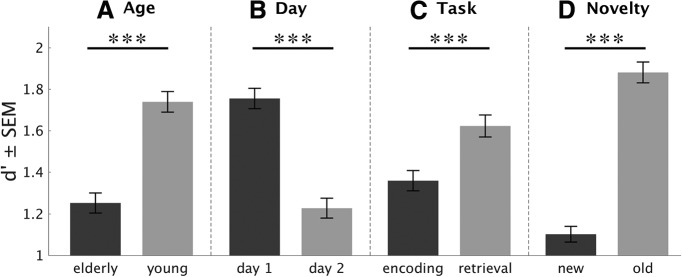
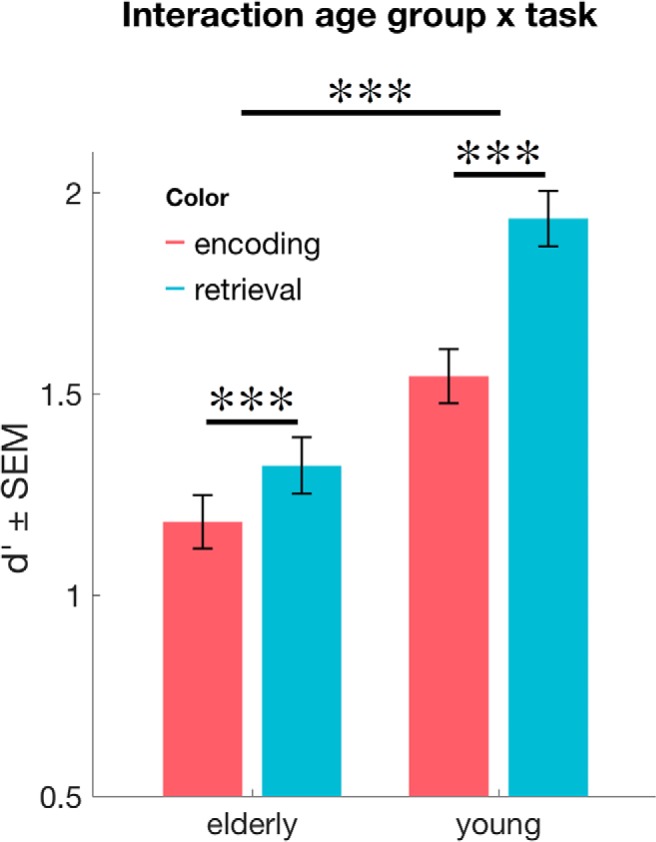
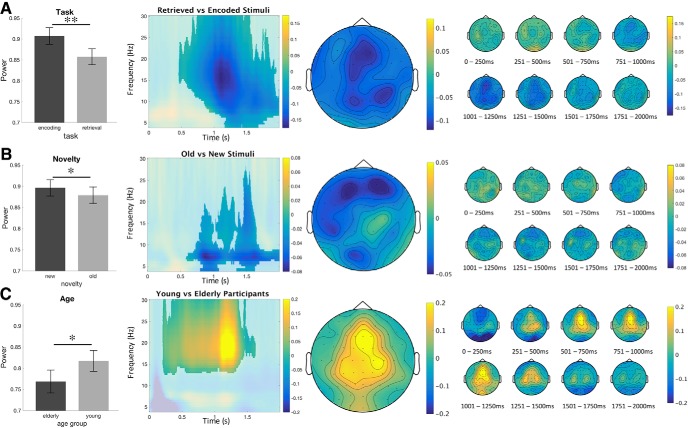
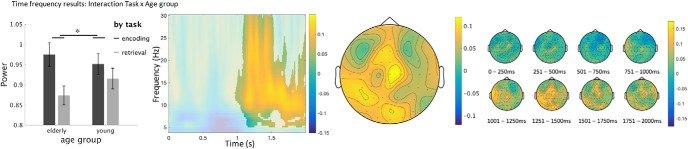
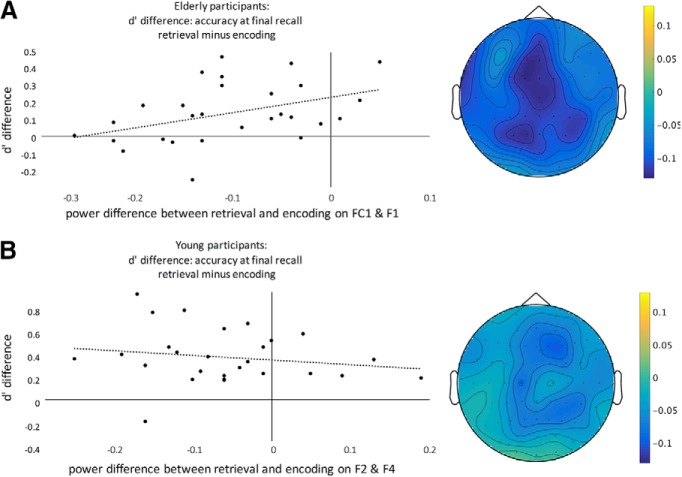
The retrieval (or testing) of information leads to better memory performance compared with reencoding. This phenomenon is known as "testing effect" or "retrieval practice effect" and has been primarily described in behavioral studies with healthy young subjects. However, possible age-related changes and their associated underlying neural processes, in particular neural oscillations, remain unclear. To address this issue, we used a previously established paradigm in healthy young (N = 27) and elderly (N = 28) male and female human adults while their brain activity was being recorded using EEG. Subjects viewed prefamiliarized scene images intermixed with new scenes and classified them as indoor versus outdoor (encoding task) or old versus new (retrieval task). Subsequently, subjects performed a recognition memory task 10 min and 24 h after encoding. Behaviorally, both age groups showed the testing effect at both time points but, importantly, it was less pronounced in the elderly. At the neural level, the retrieval compared with the encoding task was accompanied by power decreases in the alpha (9-12 Hz) and beta bands (13-30 Hz), possibly reflecting task demands, and this difference was more pronounced in the elderly. Finally, a correlation analysis revealed that those elderly who displayed a more pronounced testing effect exhibited a neural pattern that was more similar to the younger subjects. These findings provide evidence that the testing effect decreases across the life span, and they suggest that changes in alpha-beta oscillations play a direct role.SIGNIFICANCE STATEMENT Learning new and retrieving old information is part of everyday human life. Understanding how learning processes can be optimized therefore has direct applications in the realm of educational and rehabilitative contexts. Here, we show that retrieval practice is a strategy to optimize encoding into long-term memory in both young and elderly humans. Importantly, retrieval practice was significantly reduced in the elderly and closely related to changes in alpha (9-13 Hz) and beta band (13-30 Hz) oscillations. Our findings suggest that decreased retrieval practice effects across the life span contribute to, and may reflect, age-related declines in memory performance. They further provide new insights into the underlying neural mechanisms and point toward future avenues for neuro-modulatory interventions.
Keywords: EEG; aging; alpha-beta oscillations; long-term memory; retrieval practice effect; testing effect.
Copyright © 2019 the authors.
Figures
References
-
- Abbott EE. (1909) On the analysis of the factor of recall in the learning process. Psychol Rev Monogr Suppl 11:159 10.1037/h0093018 - DOI
-
- Bjork RA. (1999) Assessing our own competence: heuristics and illusions. In: Attention and performance, Vol XVII: Cognitive regulation of performance: interaction of theory and application (Gopher D, Koriat A, eds), pp 435–459. Cambridge, MA: Massachusetts Institute of Technology.
MeSH terms
LinkOut - more resources
Full Text Sources
Medical
