


Mechanism for the Structural Transformation to the Modulated Superconducting Phase of Compressed Hydrogen Sulfide
- PMID: 30903002
- PMCID: PMC6430777
- DOI: 10.1038/s41598-019-41607-1
Mechanism for the Structural Transformation to the Modulated Superconducting Phase of Compressed Hydrogen Sulfide
Abstract
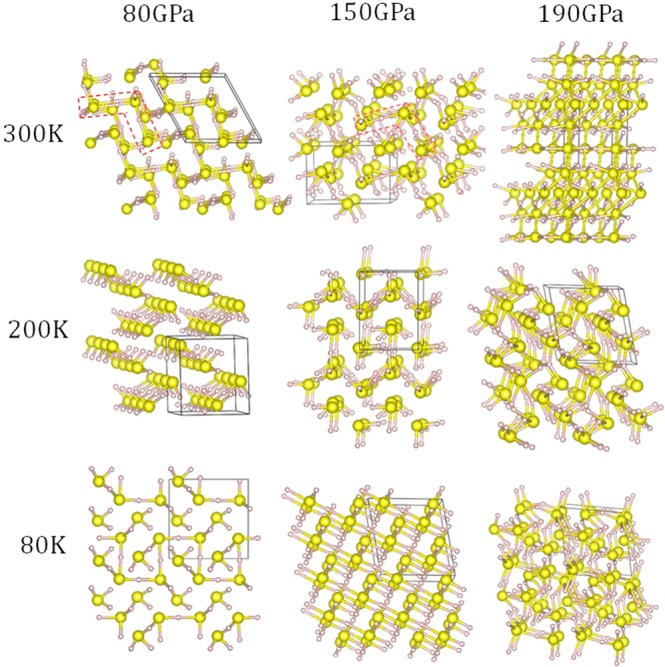
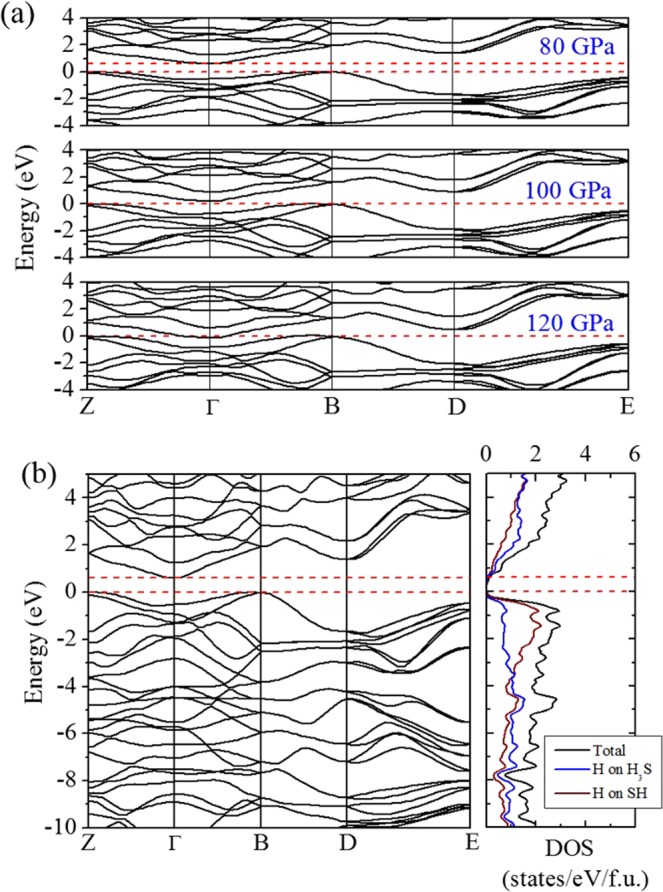
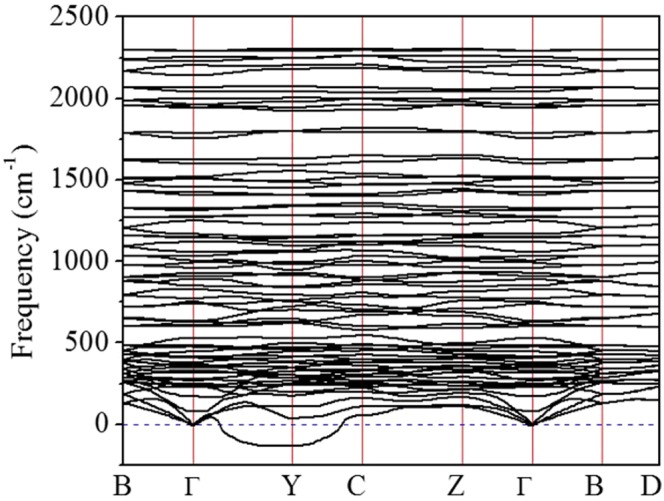
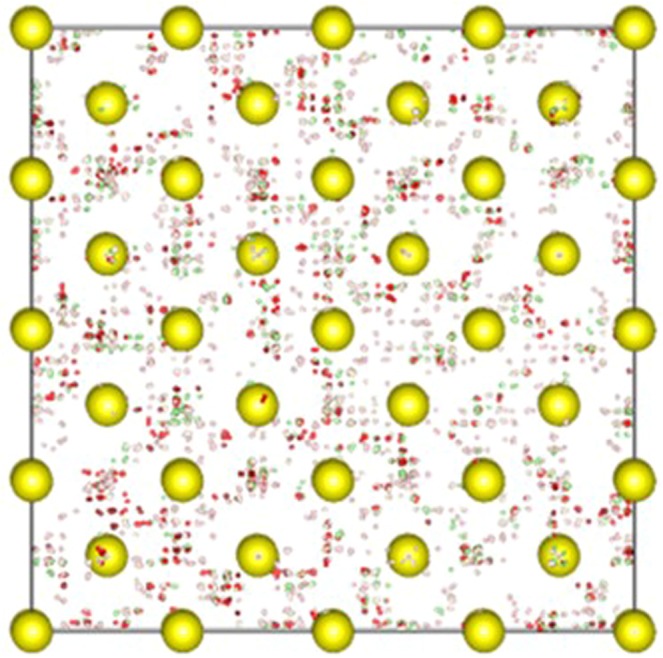
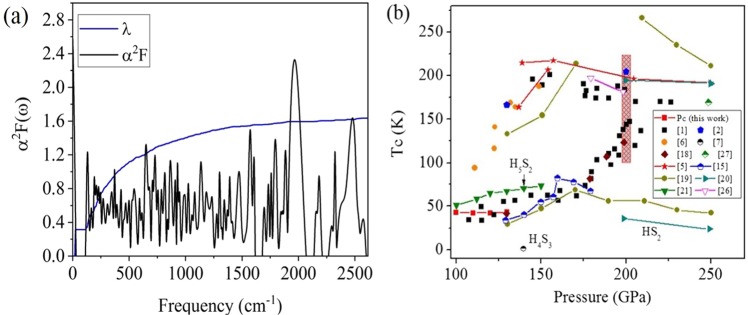
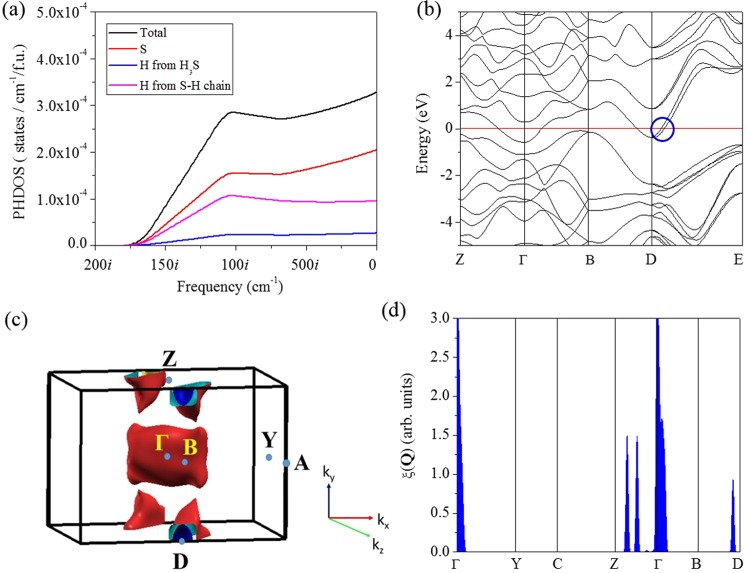
A comprehensive description of crystal and electronic structures, structural transformations, and pressure-dependent superconducting temperature (Tc) of hydrogen sulfide (H2S) compressed from low pressure is presented through the analysis of the results from metadynamics simulations. It is shown that local minimum metastable crystal structures obtained are dependent on the choice of pressure-temperature thermodynamic paths. The origin of the recently proposed 'high-Tc' superconducting phase with a modulated structure and a diffraction pattern reproducing two independent experiments was the low pressure Pmc21 structure. This Pmc21 structure is found to transform to a Pc structure at 80 K and 80 GPa which becomes metallic and superconductive above 100 GPa. This structure becomes dynamically unstable above 140 GPa beyond which phonon instability sets in at about a quarter in the Γ to Y segment. This explains the transformation to a 1:3 modulation structure at high pressures proposed previously. The pressure trend of the calculated Tc for the Pc structure is consistent with the experimentally measured 'low-Tc phase'. Fermi surface analysis hints that pressurized hydrogen sulfide may be a multi-band superconductor. The theoretical results reproduced many experimental characteristics, suggesting that the dissociation of H2S is unrequired to explain the superconductivity of compressed H2S at any pressure.
Conflict of interest statement
The authors declare no competing interests.
Figures
References
-
- Bernstein N, Hellberg CS, Johannes MD, Mazin II, Mehl MJ. What superconducts in sulfur hydrides under pressure and why. Phys. Rev. B. 2015;91:060511. doi: 10.1103/PhysRevB.91.060511. - DOI
-
- Papaconstantopoulos DA, Klein BM, Mehl MJ, Pickett WE. Cubic H3S around 200 GPa: An atomic hydrogen superconductor stabilized by sulfur. Phys. Rev. B. 2015;91:184511. doi: 10.1103/PhysRevB.91.184511. - DOI
LinkOut - more resources
Full Text Sources
