


Infants discriminate the source of social touch at stroking speeds eliciting maximal firing rates in CT-fibers
- PMID: 30903992
- PMCID: PMC6969234
- DOI: 10.1016/j.dcn.2019.100639
Infants discriminate the source of social touch at stroking speeds eliciting maximal firing rates in CT-fibers
Abstract
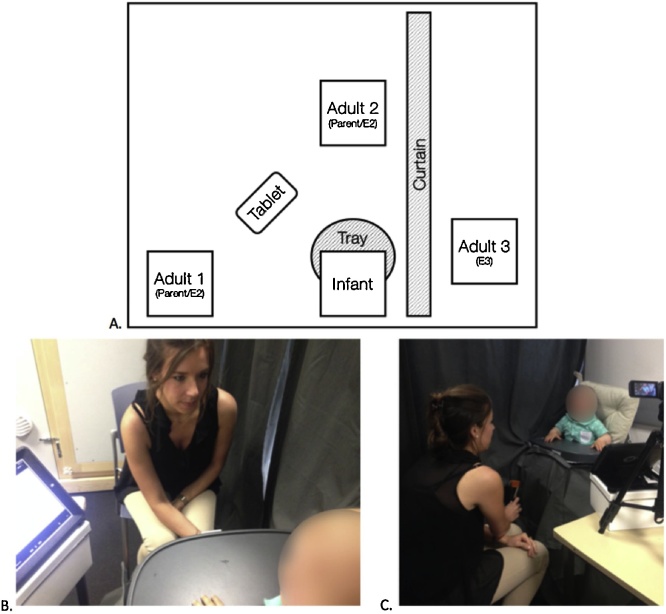
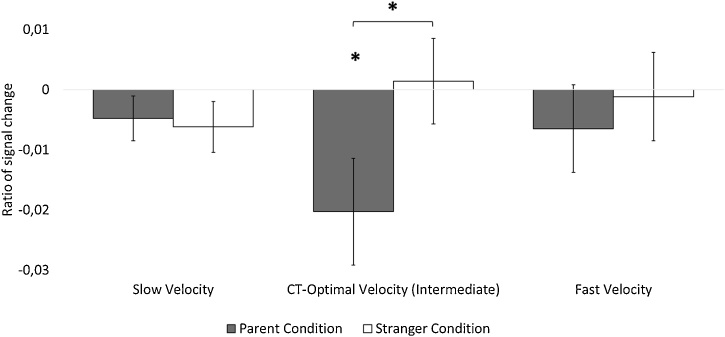
The evaluation of interpersonal touch is heavily influenced by its source. For example, a gentle stroke from a loved one is generally more pleasant than the same tactile stimulation from a complete stranger. Our study tested the early ontogenetic roots of humans' sensitivity to the source of interpersonal touch. We measured the heart rate of three groups of nine-month-olds while their legs were stroked with a brush. The participants were stroked at a different speed in each group (0.3 cm/s, 3 cm/s, 30 cm/s). Depending on the Identity condition (stranger vs. parent), the person who acted as if she was stroking the infant's leg was either an unfamiliar experimenter or the participant's caregiver. In fact, the stimulation was always delivered by a second experimenter blind to the Identity condition. Infants' heart rate decreased more in reaction to strokes when their caregiver rather than a stranger acted as the source of the touch. This effect was found only for tactile stimulations whose velocity (3 cm/s) is known to elicit maximal mean firing rates in a class of afferents named C-tactile fibers (CTs). Thus, the infants' reaction to touch is modulated not just by its mechanical properties but also by its social source.
Keywords: CT fibers; Caregiving; Infancy research; Social cognition; Social grooming; Touch.
Copyright © 2019 The Authors. Published by Elsevier Ltd.. All rights reserved.
Figures
References
-
- Aureli F., Preston S.D., de Waal F. Heart rate responses to social interactions in free-moving rhesus macaques (Macaca mulatta): a pilot study. J. Comp. Psychol. 1999;113(1):59–65. - PubMed
Publication types
MeSH terms
LinkOut - more resources
Full Text Sources
Research Materials
