


Vitamin D and breast cancer: A systematic review and meta-analysis of observational studies
- PMID: 30904218
- PMCID: PMC6570818
- DOI: 10.1016/j.clnesp.2018.12.085
Vitamin D and breast cancer: A systematic review and meta-analysis of observational studies
Abstract
Context: Breast cancer (BC) is the most common malignancy among women in the US. Vitamin D status and intakes are thought to be inversely associated with BC occurrence.
Objectives: In our systematic review and meta-analysis, we evaluated evidence linking serum 25(OH)D (both in serum and diet) with breast cancer (BC) occurrence.
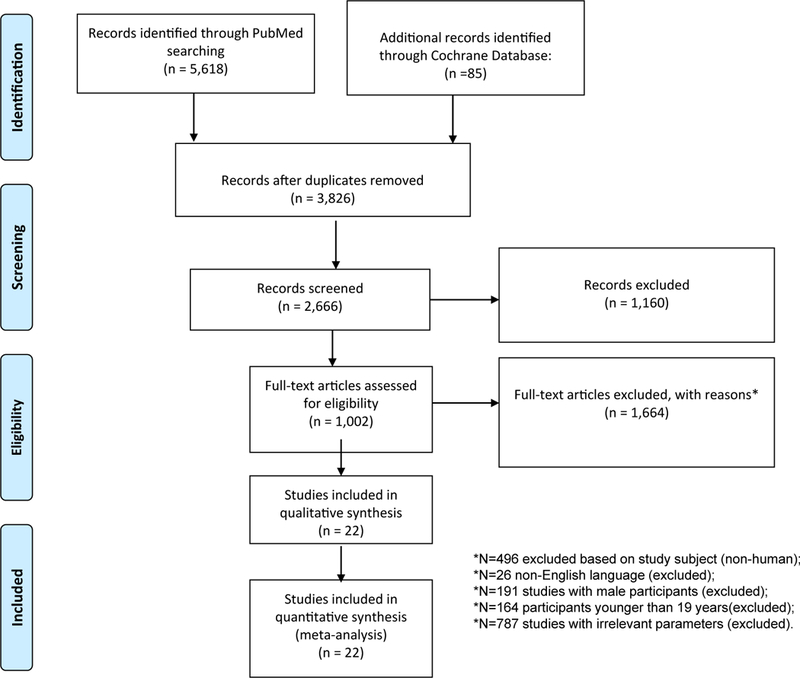
Data sources and extraction: Only observational studies from databases such as PubMed and Cochrane (January 1st 2000 through March 15th, 2018) were included using PRISMA guidelines. Publication bias and consistency upon replication were assessed, while harmonizing risk ratios (RR, 95% CI) of BC, per fixed increment of 5 exposures [10 ng/mL of 25(OH)D; 100 IU/d for total/dietary vitamin D intakes; vitamin D deficiency; supplement use). RRs were pooled using random effect models.
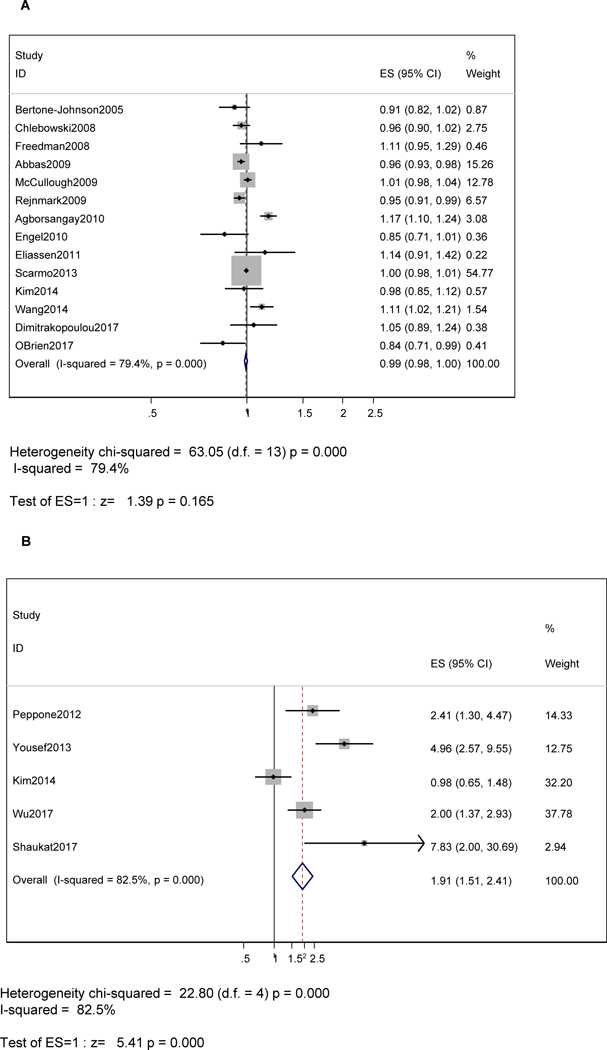
Data analysis: Pooled findings from 22 studies suggested a net direct association between 25(OH)D deficiency and BC, with RRpooled = 1.91, 95% CI: 1.51-2.41, P < 0.001). Total vitamin D intake (RRpooled = 0.99, 95% CI: 0.97-1.00, P = 0.022, per 100 IU/d) and supplemental vitamin D (RRpooled = 0.97, 95% CI:0.95-1.00, P = 0.026) were inversely associated with BC. No evidence of publication bias was found; all 5 exposures of interest were consistent upon replication.
Conclusions: 25(OH)D deficiency was directly related to BC while total vitamin D and supplemental vitamin D intakes had an inverse relationship with this outcome. Randomized clinical trials are warranted pending further evidence from primary meta-analyses of observational studies.
Keywords: Breast cancer; Meta-analysis; Vitamin D.
Published by Elsevier Ltd.
Figures

References
Publication types
MeSH terms
Substances
Grants and funding
LinkOut - more resources
Full Text Sources
Other Literature Sources
Medical
