The potential impact of age, gender, body mass index, socioeconomic status and dietary habits on the prevalence of dental caries among Egyptian adults: a cross-sectional study
- PMID: 30906540
- PMCID: PMC6426081
- DOI: 10.12688/f1000research.17892.1
The potential impact of age, gender, body mass index, socioeconomic status and dietary habits on the prevalence of dental caries among Egyptian adults: a cross-sectional study
Abstract
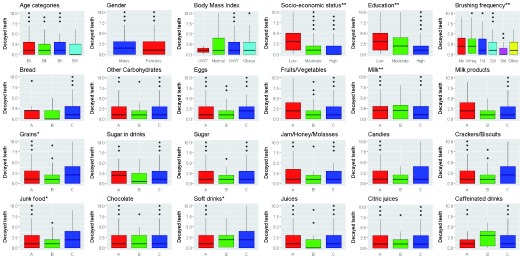
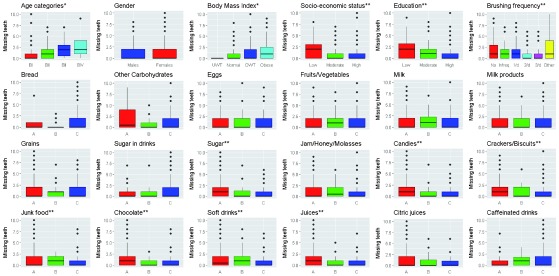
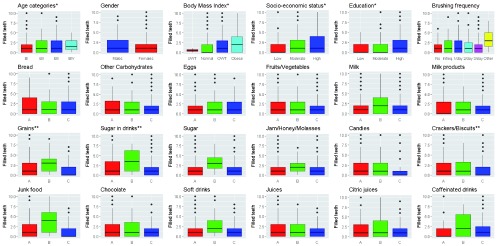
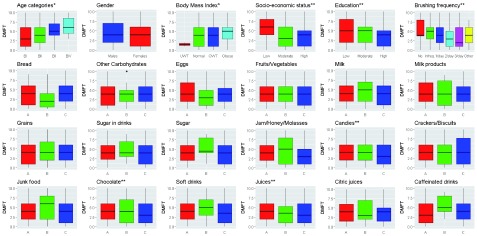
Background: Dental caries is a major public health problem and the most widespread chronic disease to affect individuals throughout their lifetime. Little information exists about the prevalence of dental caries among Egyptian adults. Therefore, this study investigated the dental caries experience among Egyptian adults in correlation with different risk factors. Methods: A total of 359 Egyptian adults (age range, 18-74 years) were examined over a period of 3 months, starting on the 15 th of November 2017 until the 13 th of January 2018. Socio-demographic data, brushing frequency, body mass index (BMI) and eating habits were recorded and collected using a questionnaire. Dental examination was performed using the Decayed, Missing and Filled tooth (DMFT) index. Results: In total, 86.63% of participants had dental caries experience. Of the participants, 60.45%, 48.47% and 55.43% had at least one decayed, missing and filled tooth, respectively. The mean number of decayed, missing, filled or DMFT for the whole sample were 2.4±3.6, 1.98±3.99, 1.79±2.45, 6.09±5.7, respectively. Decayed teeth were inversely correlated with socio-economic status (SES), education level, brushing frequency and milk consumption and positively correlated with grains, junk food and soda drinks consumption. Missing teeth were inversely correlated with SES, education level and brushing frequency, while positively correlated with age, BMI and caffeinated drink consumption. Conversely, filled teeth were positively correlated with age, BMI, SES and education level, while negatively correlated with grains and sugars in drinks. Conclusion: The present study clarifies that age, BMI, SES, education level and brushing frequency are risk factors significantly associated with dental caries prevalence amongst Egyptian adults. Egyptian adults' dietary habits might lead to obesity, which indirectly causes dental caries rather than directly as in children.
Keywords: Adults; Age; Caries; Dietary; Education; Egyptian; Prevalence; Socioeconomic.
Conflict of interest statement
No competing interests were disclosed.
Figures
References
-
- Shingare P, Jogani V, Sevekar S, et al. : Dental Caries Prevalence among 3 to 14 years old school children, Uran, Raigad District, Maharashtra. J Contemporary Dent. 2012;2(2):11–14. 10.5005/jp-journals-10031-1002 - DOI
Publication types
MeSH terms
Grants and funding
LinkOut - more resources
Full Text Sources
Medical