


1,25-Dihydroxyvitamin D exerts an antiaging role by activation of Nrf2-antioxidant signaling and inactivation of p16/p53-senescence signaling
- PMID: 30907059
- PMCID: PMC6516172
- DOI: 10.1111/acel.12951
1,25-Dihydroxyvitamin D exerts an antiaging role by activation of Nrf2-antioxidant signaling and inactivation of p16/p53-senescence signaling
Retraction in
-
RETRACTION: 1,25-Dihydroxyvitamin D exerts an antiaging role by activation of Nrf2-antioxidant signaling and inactivation of p16/p53-senescence signaling.Aging Cell. 2024 Nov;23(11):e14383. doi: 10.1111/acel.14383. Epub 2024 Oct 18. Aging Cell. 2024. PMID: 39424609 Free PMC article.
Abstract
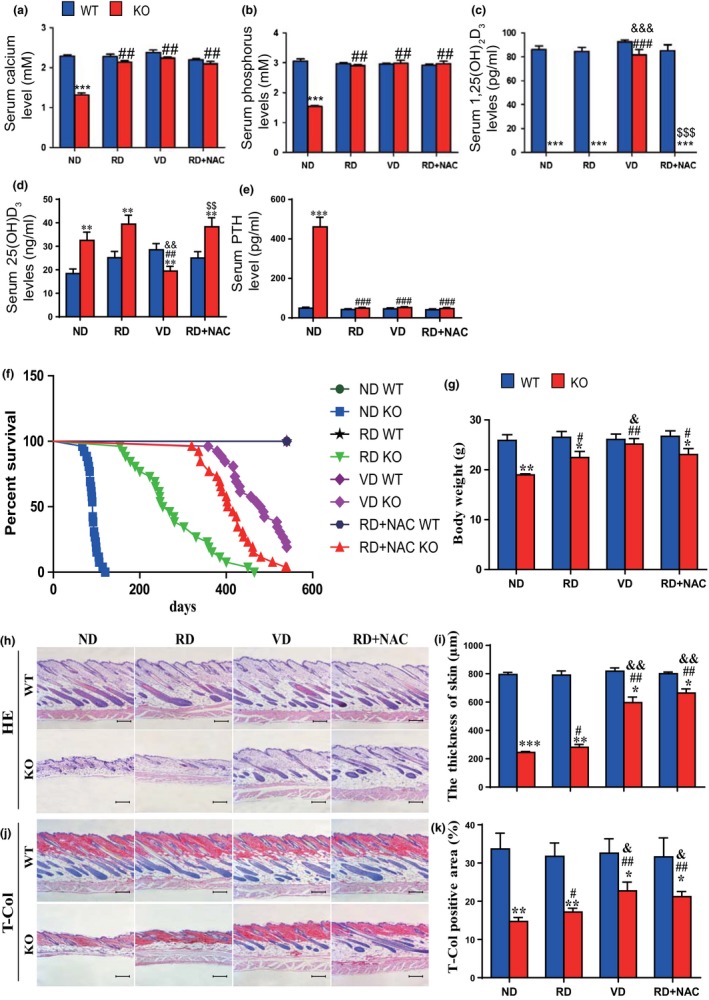
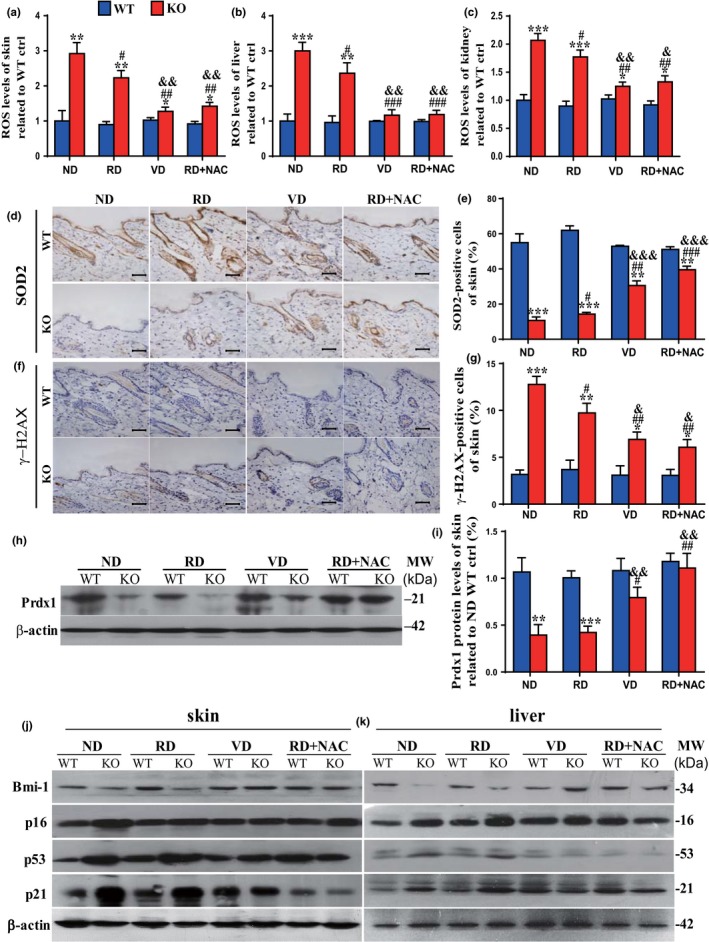
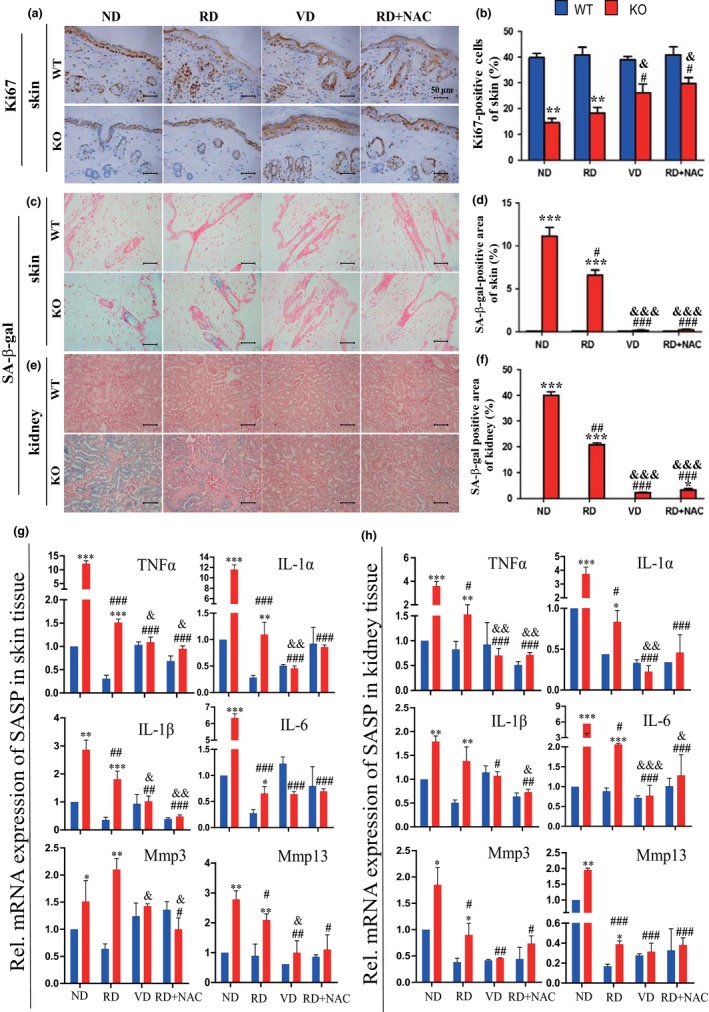
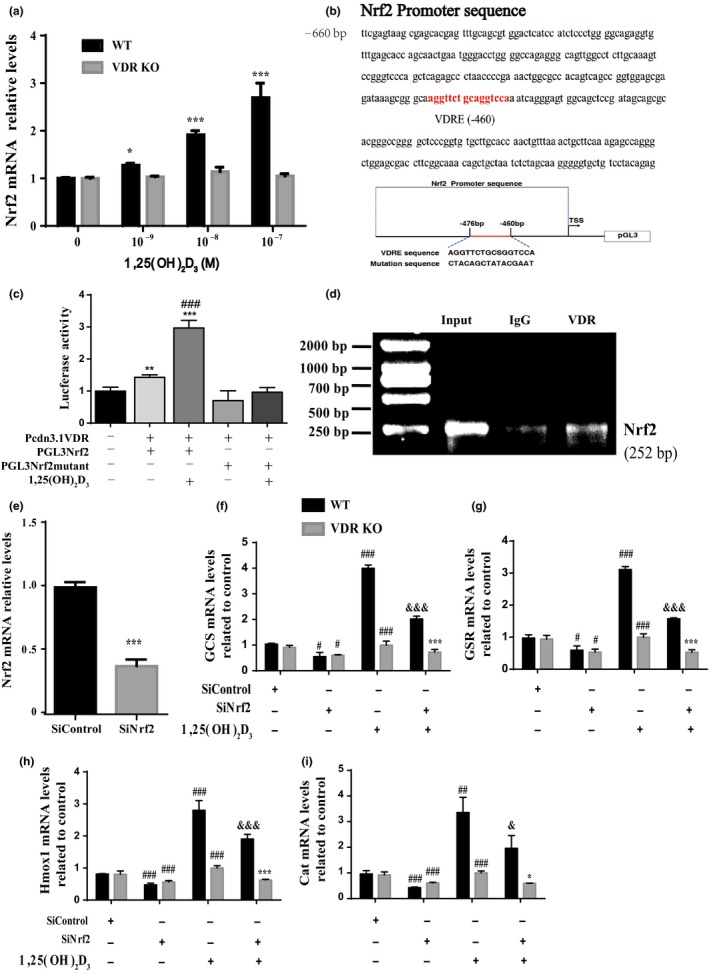
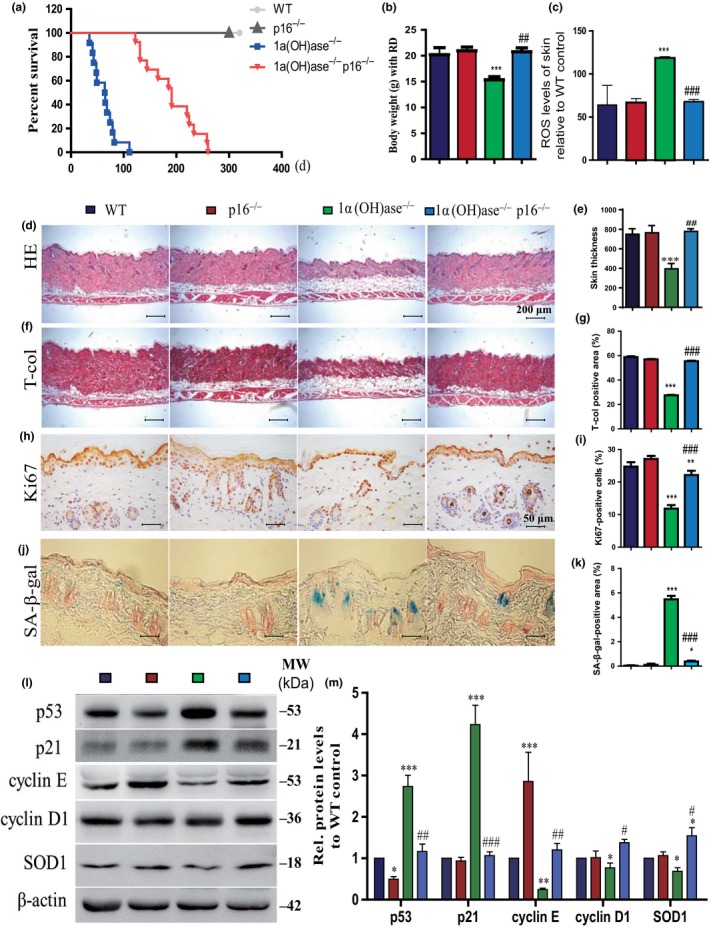
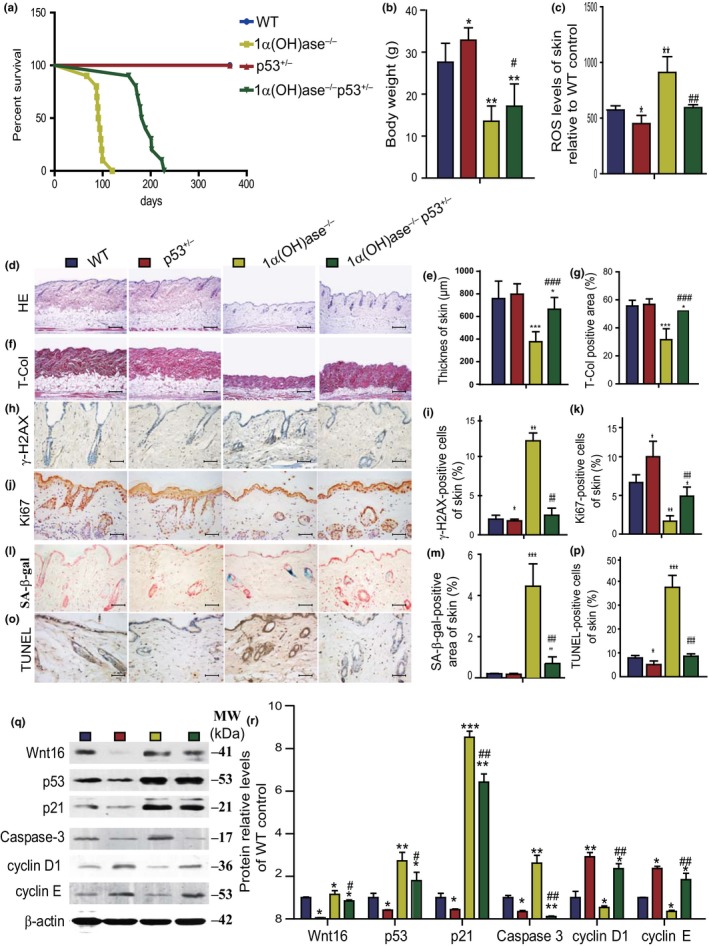
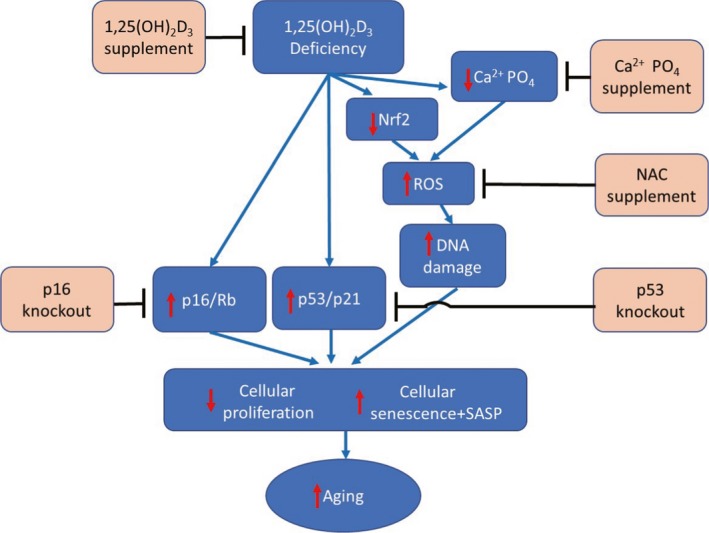
We tested the hypothesis that 1,25-dihydroxyvitamin D3 [1α,25(OH)2 D3 ] has antiaging effects via upregulating nuclear factor (erythroid-derived 2)-like 2 (Nrf2), reducing reactive oxygen species (ROS), decreasing DNA damage, reducing p16/Rb and p53/p21 signaling, increasing cell proliferation, and reducing cellular senescence and the senescence-associated secretory phenotype (SASP). We demonstrated that 1,25(OH)2 D3 -deficient [1α(OH)ase-/- ] mice survived on average for only 3 months. Increased tissue oxidative stress and DNA damage, downregulated Bmi1 and upregulated p16, p53 and p21 expression levels, reduced cell proliferation, and induced cell senescence and the senescence-associated secretory phenotype (SASP) were observed. Supplementation of 1α(OH)ase-/- mice with dietary calcium and phosphate, which normalized serum calcium and phosphorus, prolonged their average lifespan to more than 8 months with reduced oxidative stress and cellular senescence and SASP. However, supplementation with exogenous 1,25(OH)2 D3 or with combined calcium/phosphate and the antioxidant N-acetyl-l-cysteine prolonged their average lifespan to more than 16 months and nearly 14 months, respectively, largely rescuing the aging phenotypes. We demonstrated that 1,25(OH)2 D3 exerted an antioxidant role by transcriptional regulation of Nrf2 via the vitamin D receptor (VDR). Homozygous ablation of p16 or heterozygous ablation of p53 prolonged the average lifespan of 1α(OH)ase-/- mice on the normal diet from 3 to 6 months by enhancing cell proliferative ability and reducing cell senescence or apoptosis. This study suggests that 1,25(OH)2 D3 plays a role in delaying aging by upregulating Nrf2, inhibiting oxidative stress and DNA damage,inactivating p53-p21 and p16-Rb signaling pathways, and inhibiting cell senescence and SASP.
Keywords: Nrf2; aging; cell senescence; p16 and p53; vitamin D.
© 2019 The Authors. Aging Cell published by the Anatomical Society and John Wiley & Sons Ltd.
Conflict of interest statement
None declared.
Figures
References
-
- Bao, B. Y. , Ting, H. J. , Hsu, J. W. , & Lee, Y. F. (2008). Protective role of 1 alpha, 25‐dihydroxyvitamin D3 against oxidative stress in nonmalignant human prostate epithelial cells. International Journal of Cancer, 122, 2699–2706. - PubMed
-
- Berridge, M. J. (2015a). Vitamin D cell signalling in health and disease. Biochemical and Biophysical Research Communications, 460, 53–71. - PubMed
-
- Berridge, M. J. (2015b). Vitamin D: A custodian of cell signalling stability in health and disease. Biochemical Society Transactions, 43, 349–358. - PubMed
Publication types
MeSH terms
Substances
Grants and funding
- 2014CB942900/National Basic Research Program of China/International
- 81230009/National Natural Science Foundation of China/International
- 81730066/National Natural Science Foundation of China/International
- 81471501/National Natural Science Foundation of China/International
- 81500682/National Natural Science Foundation of China/International
LinkOut - more resources
Full Text Sources
Other Literature Sources
Medical
Molecular Biology Databases
Research Materials
Miscellaneous
