


Single Chromosome Aneuploidy Induces Genome-Wide Perturbation of Nuclear Organization and Gene Expression
- PMID: 30909073
- PMCID: PMC6434407
- DOI: 10.1016/j.neo.2019.02.003
Single Chromosome Aneuploidy Induces Genome-Wide Perturbation of Nuclear Organization and Gene Expression
Abstract
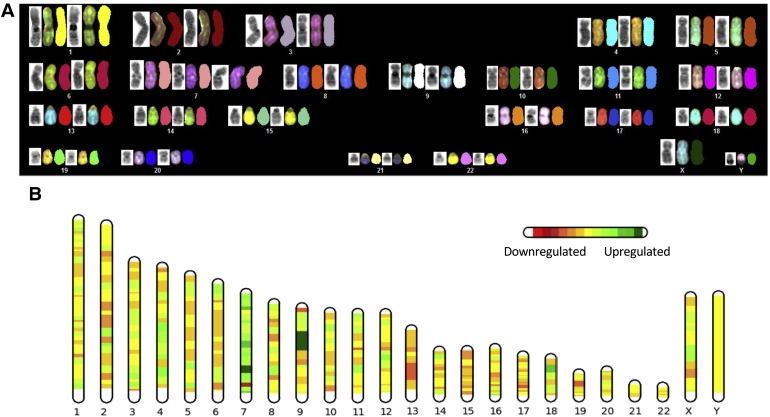
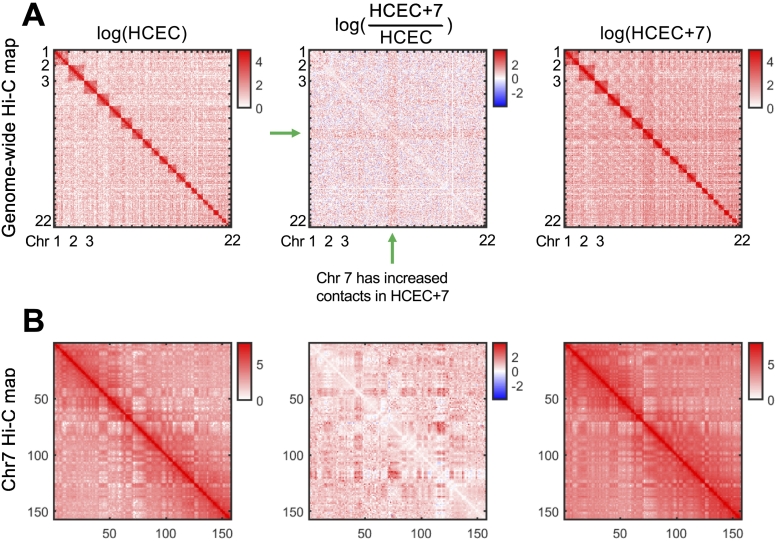
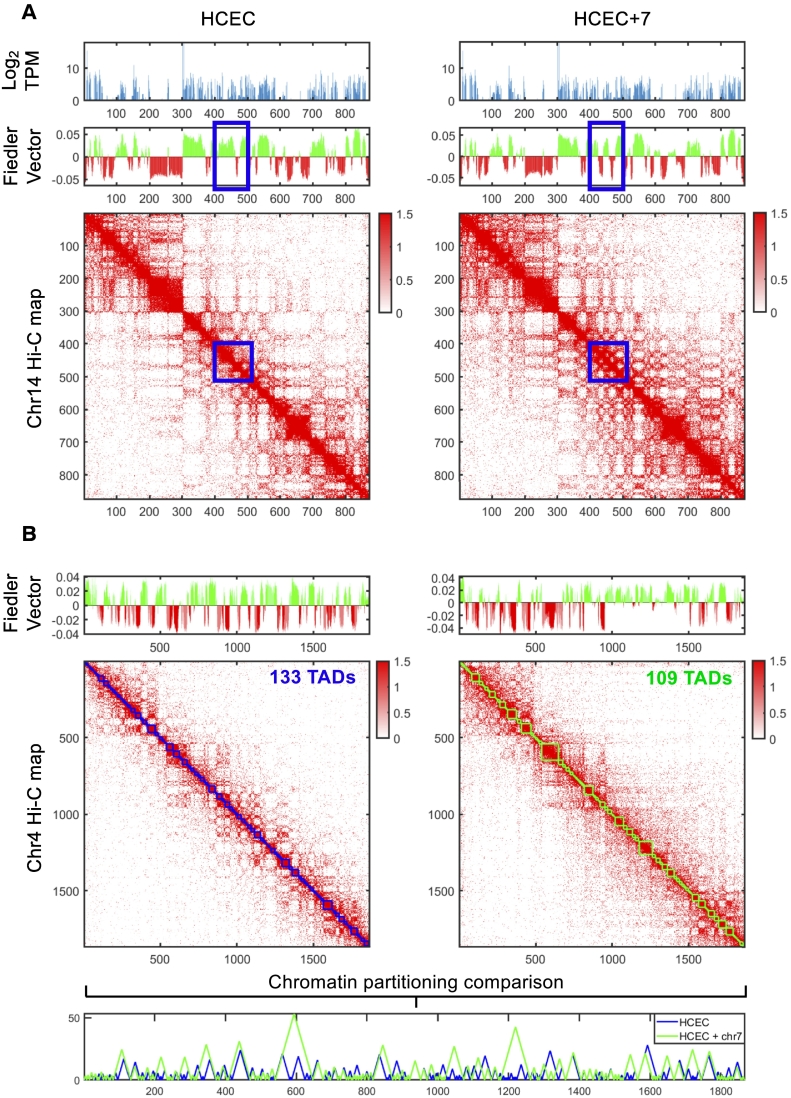
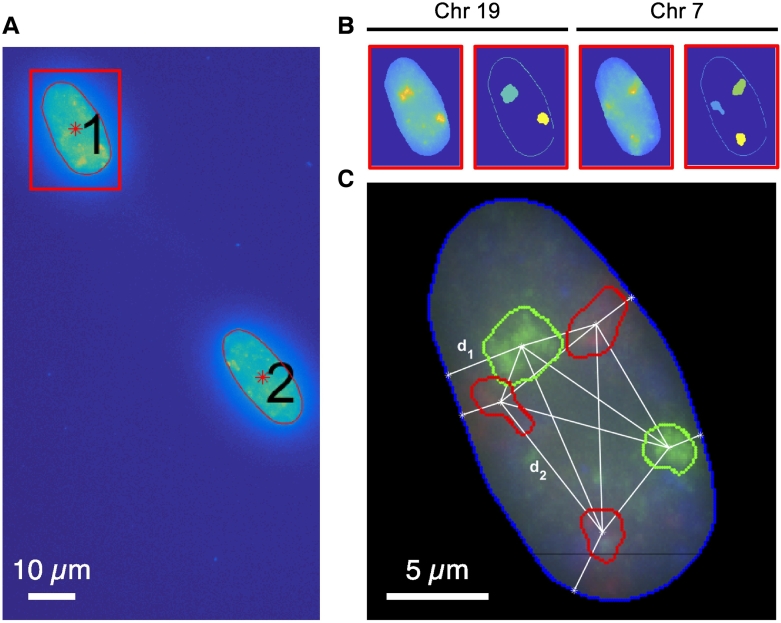
Chromosomal aneuploidy is a defining feature of carcinomas and results in tumor-entity specific genomic imbalances. For instance, most sporadic colorectal carcinomas carry extra copies of chromosome 7, an aneuploidy that emerges already in premalignant adenomas, and is maintained throughout tumor progression and in derived cell lines. A comprehensive understanding on how chromosomal aneuploidy affects nuclear organization and gene expression, i.e., the nucleome, remains elusive. We now analyzed a cell line established from healthy colon mucosa with a normal karyotype (46,XY) and its isogenic derived cell line that acquired an extra copy of chromosome 7 as its sole anomaly (47,XY,+7). We studied structure/function relationships consequent to aneuploidization using genome-wide chromosome conformation capture (Hi-C), RNA sequencing and protein profiling. The gain of chromosome 7 resulted in an increase of transcript levels of resident genes as well as genome-wide gene and protein expression changes. The Hi-C analysis showed that the extra copy of chromosome 7 is reflected in more interchromosomal contacts between the triploid chromosomes. Chromatin organization changes are observed genome-wide, as determined by changes in A/B compartmentalization and topologically associating domain (TAD) boundaries. Most notably, chromosome 4 shows a profound loss of chromatin organization, and chromosome 14 contains a large A/B compartment switch region, concurrent with resident gene expression changes. No changes to the nuclear position of the additional chromosome 7 territory were observed when measuring distances of chromosome painting probes by interphase FISH. Genome and protein data showed enrichment in signaling pathways crucial for malignant transformation, such as the HGF/MET-axis. We conclude that a specific chromosomal aneuploidy has profound impact on nuclear structure and function, both locally and genome-wide. Our study provides a benchmark for the analysis of cancer nucleomes with complex karyotypes.
Published by Elsevier Inc.
Figures
References
-
- Ried T. Homage to Theodor Boveri (1862-1915): Boveri's theory of cancer as a disease of the chromosomes, and the landscape of genomic imbalances in human carcinomas. Environ Mol Mutagen. 2009;50:593–601. - PubMed
-
- Balaban GB, Herlyn M, Clark WH, Jr., Nowell PC. Karyotypic evolution in human malignant melanoma. Cancer Genet Cytogenet. 1986;19:113–122. - PubMed
-
- Magnani I, Guerneri S, Pollo B, Cirenei N, Colombo BM, Broggi G, Galli C, Bugiani O, DiDonato S, Finocchiaro G. Increasing complexity of the karyotype in 50 human gliomas. Progressive evolution and de novo occurrence of cytogenetic alterations. Cancer Genet Cytogenet. 1994;75:77–89. - PubMed
-
- Ried T, Heselmeyer-Haddad K, Blegen H, Schrock E, Auer G. Genomic changes defining the genesis, progression, and malignancy potential in solid human tumors: a phenotype/genotype correlation. Genes Chromosom Cancer. 1999;25:195–204. - PubMed
Publication types
MeSH terms
LinkOut - more resources
Full Text Sources
Miscellaneous
