


Karyotypic and mtDNA based characterization of Malaysian water buffalo
- PMID: 30909863
- PMCID: PMC6434848
- DOI: 10.1186/s12863-019-0741-0
Karyotypic and mtDNA based characterization of Malaysian water buffalo
Abstract
Background: In Malaysia, the domestic water buffaloes (Bubalus bubalis) are classified into the swamp and the murrah buffaloes. Identification of these buffaloes is usually made via their phenotypic appearances. This study characterizes the subspecies of water buffaloes using karyotype, molecular and phylogenetic analyses. Blood of 105 buffaloes, phenotypically identified as swamp, murrah and crossbred buffaloes were cultured, terminated and harvested using conventional karyotype protocol to determine the number of chromosomes. Then, the D-loop of mitochondrial DNA of 10 swamp, 6 crossbred and 4 murrah buffaloes which were identified earlier by karyotyping were used to construct a phylogenetic tree was constructed.
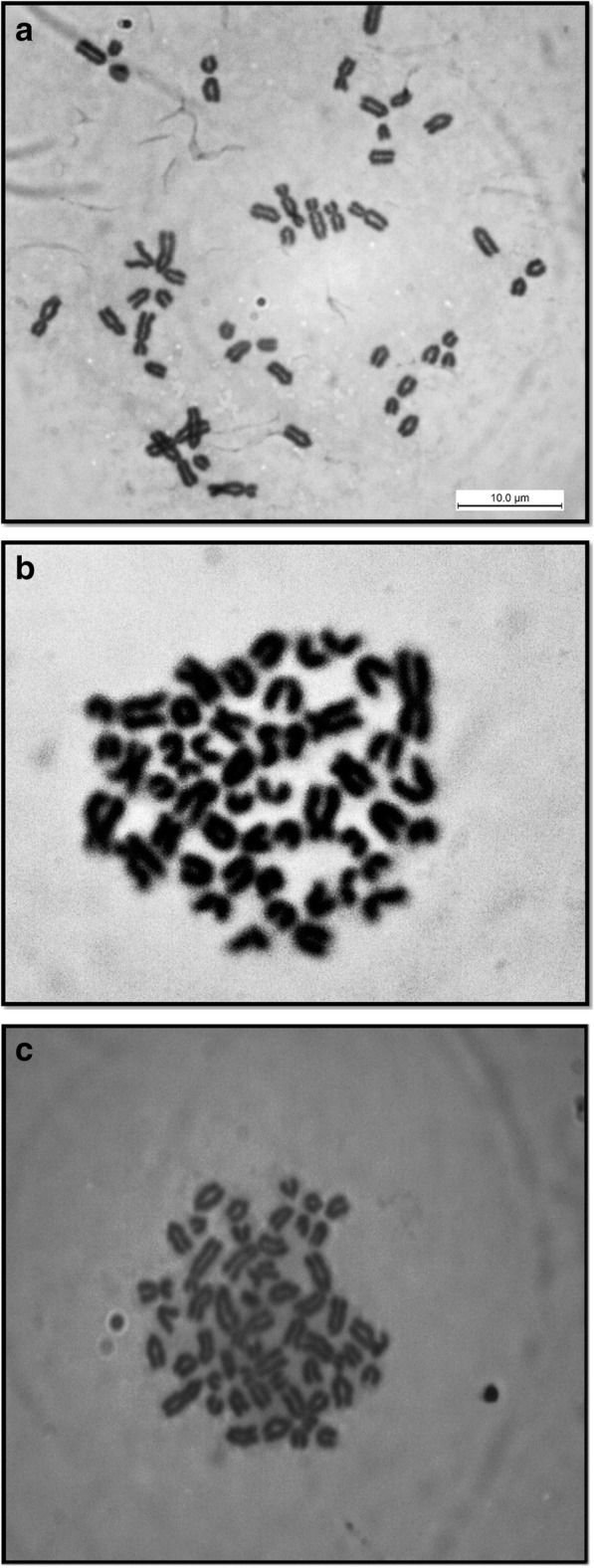
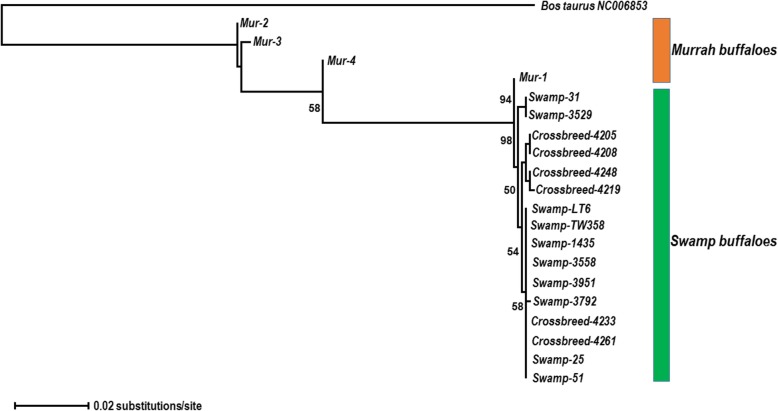
Results: Karyotypic analysis confirmed that all 93 animals phenotypically identified as swamp buffaloes with 48 chromosomes, all 7 as crossbreds with 49 chromosomes, and all 5 as murrah buffaloes with 50 chromosomes. The D-loop of mitochondrial DNA analysis showed that 10 haplotypes were observed with haplotype diversity of 0.8000 ± 0.089. Sequence characterization revealed 72 variables sites in which 67 were parsimony informative sites with sequence diversity of 0.01906. The swamp and murrah buffaloes clearly formed 2 different clades in the phylogenetic tree, indicating clear maternal divergence from each other. The crossbreds were grouped within the swamp buffalo clade, indicating the dominant maternal swamp buffalo gene in the crossbreds.
Conclusion: Thus, the karyotyping could be used to differentiate the water buffaloes while genotypic analysis could be used to characterize the water buffaloes and their crossbreds.
Keywords: Karyotyping; Mitochondrial DNA; Phylogenetic; Water buffaloes.
Conflict of interest statement
Ethics approval and consent to participate
All testing related to animal care and handling was approved by the Institutional Animal Care and Use Committee (IACUC) of the Faculty of Veterinary Medicine, Universiti Putra Malaysia, Malaysia (UPM/IACUC/AUP-U017/2018, 8 January 2018). The blood samples were collected from the farm by qualified veterinarians and with the permission of the owners of the animals.
Consent for publication
Not applicable.
Competing interests
The authors declare that they have no competing interests.
Publisher’s Note
Springer Nature remains neutral with regard to jurisdictional claims in published maps and institutional affiliations.
Figures
References
-
- Borghese A. Buffalo production and research. FAO Ed. REU Technical Series. 2005. pp. 1–315.
-
- Kandeepan G, Biswas S, Rajkumar RS. Buffalo as potential food animal. Int J Livest Prod. 2009;1(1):1–5.
-
- Ariff OM, Sharifah NY, Hafidz AW. Status of beef industry of Malaysia. Malays J Anim Sci. 2015;18(2):1–21.
-
- Department of Veterinary Services, DVS . Livestock statistic. Malaysia: Department of Veterinary Services; 2016.
-
- Department of Veterinary Services, DVS . Farm Policy. Malaysia: Department of Veterinary Services; 2016.
Publication types
MeSH terms
Substances
LinkOut - more resources
Full Text Sources
