


In vitro evaluation of the α-glucosidase inhibitory potential of methanolic extracts of traditionally used antidiabetic plants
- PMID: 30909900
- PMCID: PMC6434821
- DOI: 10.1186/s12906-019-2482-z
In vitro evaluation of the α-glucosidase inhibitory potential of methanolic extracts of traditionally used antidiabetic plants
Abstract
Background: Different plant parts of Roylea cinerea (D. Don) Baill. (Lamiaceae), Clematis grata Wall. (Ranunculaceae), Cornus capitata Wall. (Cornaceae) are traditionally used in the management of diabetes and various other diseases.
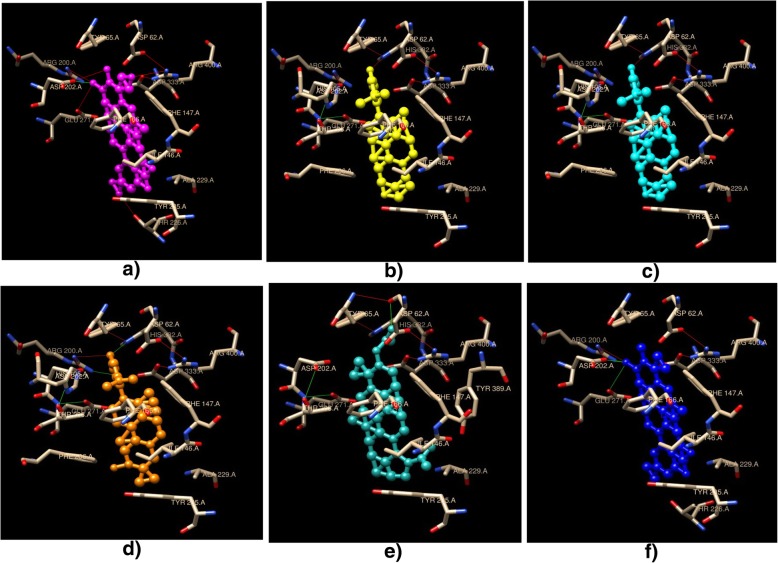
Method: The air-dried plant parts from different plants were coarsely powdered and macerated in methanol to obtain their crude extracts. The crude extracts were evaluated for their α-glucosidase inhibitory activity. On the basis of results obtained, the methanolic crude extract of Cornus capitata Wall. was further sequentially fractionated in hexane, diethyl ether, ethyl acetate, n-butanol. Fractions obtained were also evaluated for their α-glucosidase inhibitory potential. The kinetic study was performed using Lineweaver Burk plot to evaluate the type of inhibition. Furthermore, in silico analysis was also carried with active sites of the enzyme (PDB ID: 3WY1) using Autodock4.
Results: Among all the plant extracts, Cornus capitata extract showed maximum inhibitory activity. Therefore its methanolic extract was further fractionated with the help of different solvents and the maximum activity was shown by the ethyl acetate fraction (IC50 50 μg/mL). Kinetic analysis indicated that Vmax and Km were increased indicating a competitive type of inhibition. In docking studies, among different constituents known in this plant, betulinic acid showed minimum binding energy (- 10.21 kcal/mol). The kinetic and docking studies have strengthened the observation made in the present study regarding the α-glucosidase inhibitory activity of Cornus capitata.
Conclusion: The study provided partial evidence for pharmacological basis regarding clinical applications of Cornus capitata in the treatment of diabetes suggesting it to be a suitable candidate for the treatment of postprandial hyperglycemia.
Keywords: Clematis grata wall.; Cornus capitata wall.; Roylea cinerea (D. Don) Baill; α-Glucosidase.
Conflict of interest statement
Ethics approval and consent to participate
Not applicable.
Consent for publication
Not applicable.
Competing interests
The authors declare that they have no competing interests.
Publisher’s Note
Springer Nature remains neutral with regard to jurisdictional claims in published maps and institutional affiliations.
Figures


References
-
- AG HB Pharmacology of α-glucosidase inhibition. Eur J Clin Investig. 1994;S3:3–10. - PubMed
-
- Van de Laar FA, Lucassen PL, Akkermans RP, Van de Lisdonk EH, De Grauw WJ. Alpha-glucosidase inhibitors for people with impaired glucose tolerance or impaired fasting blood glucose. Cochrane Libr. 2006;4:CD005061-CD005061. - PubMed
-
- Kapoor LD. Handbook of Ayurvedic medicinal plants: herbal reference library. Newyork: Routledge; 2017.
MeSH terms
Substances
Grants and funding
LinkOut - more resources
Full Text Sources
Medical
