


Molecular investigation of vector-borne parasitic infections in dogs in Northeast India
- PMID: 30909966
- PMCID: PMC6434811
- DOI: 10.1186/s13071-019-3389-8
Molecular investigation of vector-borne parasitic infections in dogs in Northeast India
Abstract
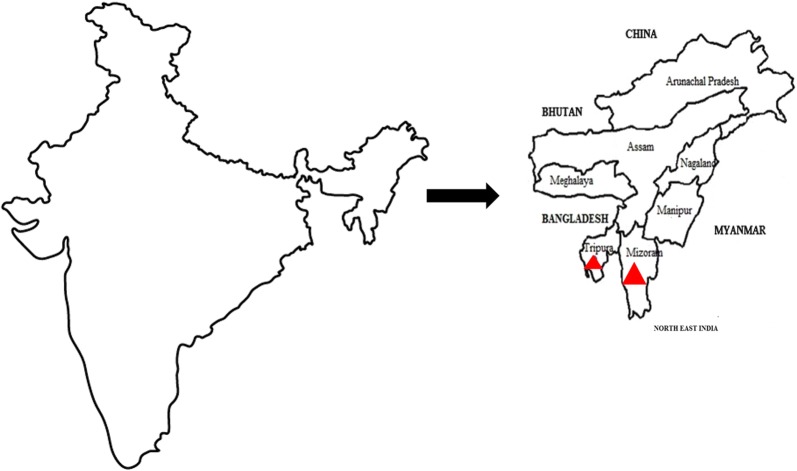
Background: Information on the status of vector-borne pathogens among canines in Northeast India is lacking, particularly for the states of Mizoram and Tripura close to the Myanmar border. Blood samples collected from 130 dogs, 80 from Mizoram and 50 from Tripura, were examined in this study.
Methods: Polymerase chain reaction (PCR) was performed for filariid worms, Babesia, Hepatozoon, Ehrlichia and Anaplasma spp. and DNA sequencing was then carried out to identify pathogens at the species level.
Results: Vector-borne pathogens were detected in 52% (68/130) of the sampled dogs. The most prevalent pathogen was Babesia gibsoni detected in 56/130 (43%) dogs, followed by Hepatozoon canis in 50/130 (38%), Anaplasma platys in 4/130 (3%), B. vogeli in 4/130 (3%), Acanthochelionema reconditum in 3/130 (2%) and Dirofilaria immitis in 2/130 (2%). Forty-four dogs (34%) were co-infected with two or more pathogens. The most common co-infection observed was with B. gibsoni + H. canis (34%) followed by triple-infection with B. gibsoni + H. canis + A. platys (3%), and B. gibsoni + B. vogeli + H. canis (3%). The infection rate was higher in Mizoram (58%) than in Tripura (44%).
Conclusions: The high prevalence of infection in the studied dog population, especially with B. gibsoni and H. canis, indicates that vector-borne diseases pose a serious threat to the health of dogs in this area of Northeast India. Prevention of vector-borne diseases by using topical acaricides and heartworm preventative treatment would be of great benefit for reducing the threat of vector-borne diseases in the study area.
Keywords: Acanthocheilonema reconditum; Anaplasma platys; Babesia gibsoni; Dirofilaria immitis; Hepatozoon canis; Mizoram; Northeast India; Tripura.
Conflict of interest statement
The authors declare that they have no competing interests.
Figures
References
-
- Menezes R, Mesquita MM. Incidence of human rabies. World Health. 2008;178:2006–2008.
-
- Sudarshan MK, Mahendra BJ, Madhusudana SN, Ashwath Narayana DH, Rahman A, Rao NSN, et al. An epidemiological study of animal bites in India: results of a WHO sponsored national multi-centric rabies survey. J Commun Dis. 2006;38:32–39. - PubMed
MeSH terms
LinkOut - more resources
Full Text Sources
Miscellaneous
