


Liver Cancer Gene Discovery Using Gene Targeting, Sleeping Beauty, and CRISPR/Cas9
- PMID: 30912094
- PMCID: PMC7485130
- DOI: 10.1055/s-0039-1678725
Liver Cancer Gene Discovery Using Gene Targeting, Sleeping Beauty, and CRISPR/Cas9
Abstract
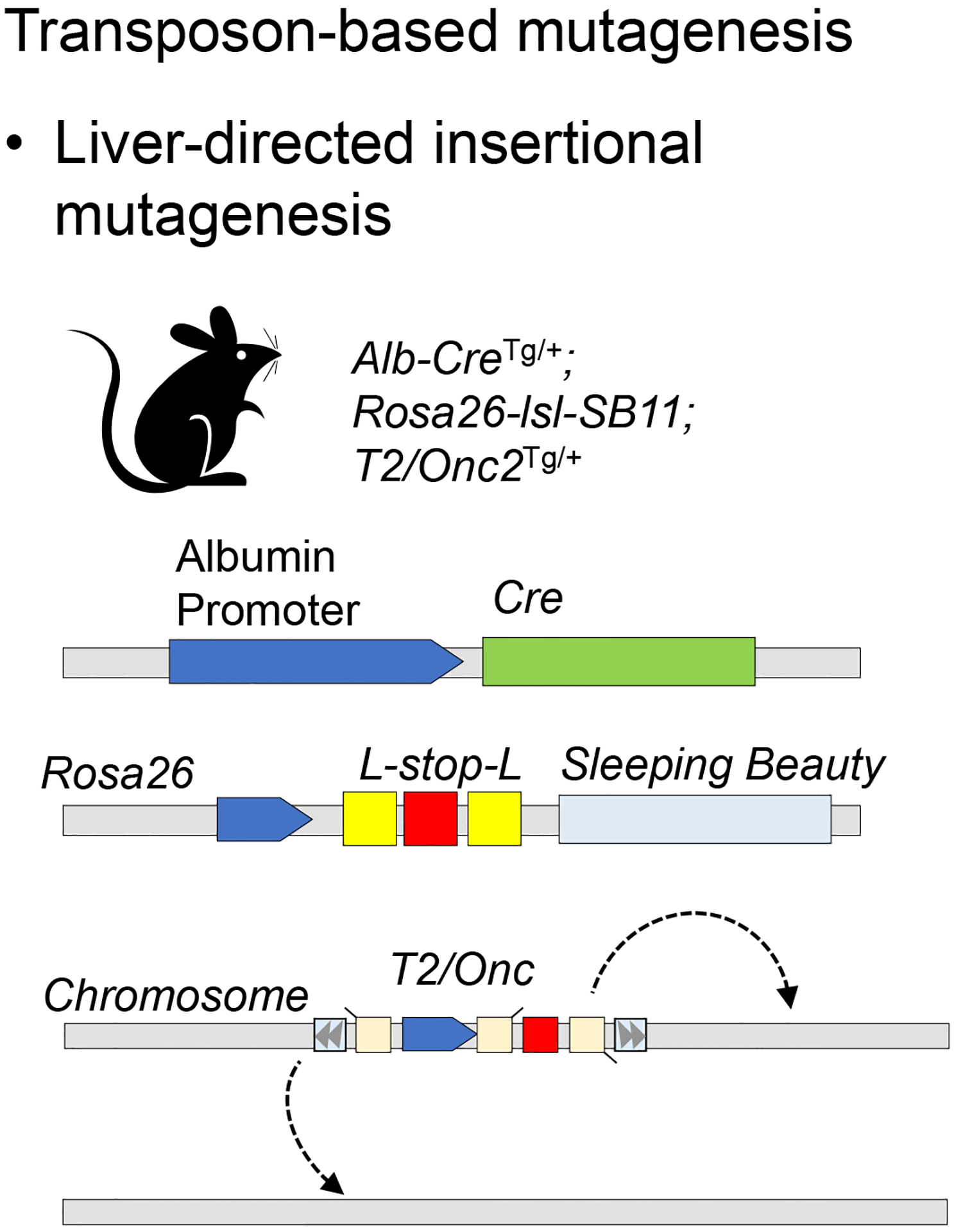
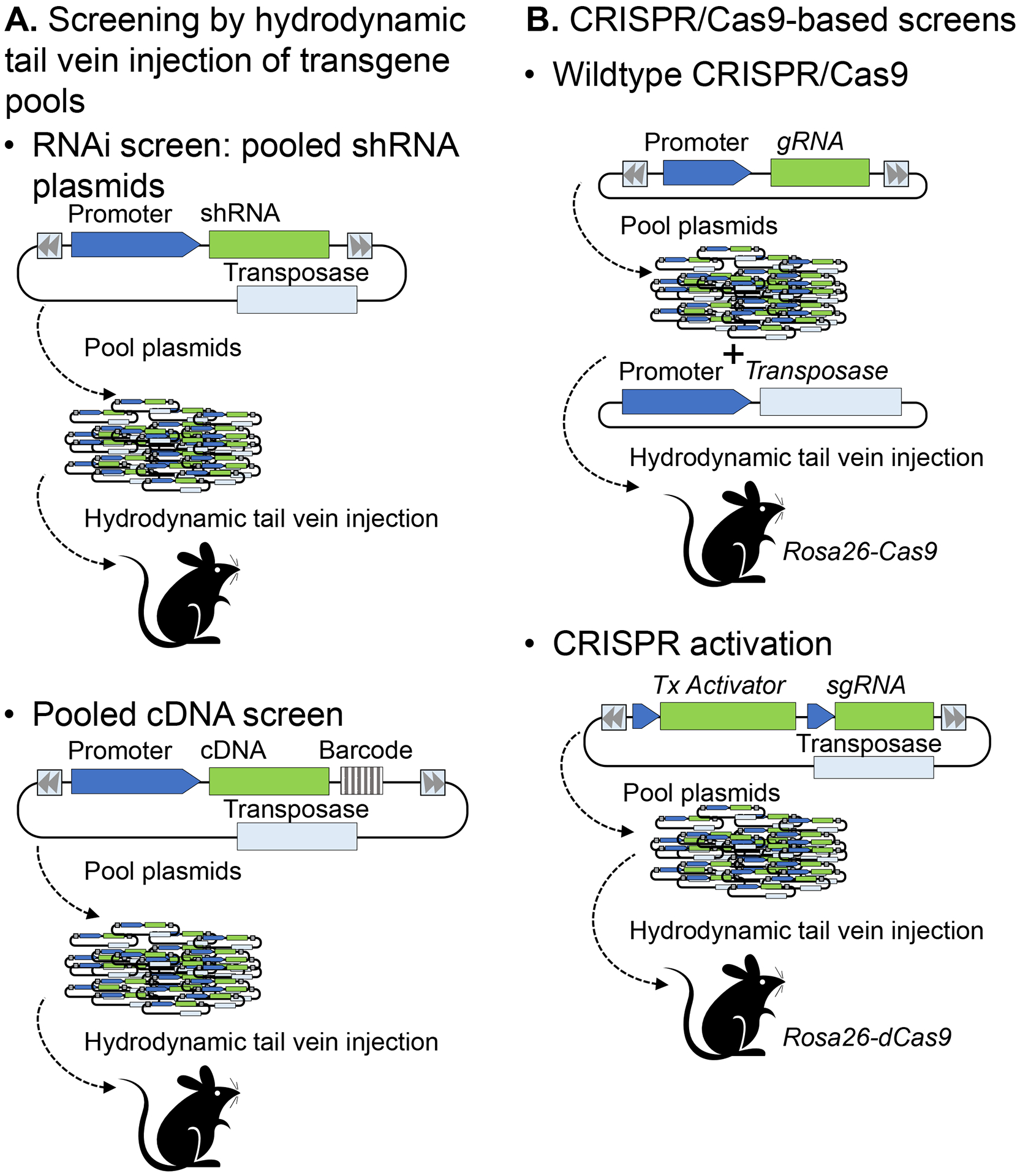
Hepatocellular carcinoma (HCC) is a devastating and prevalent cancer with limited treatment options. Technological advances have enabled genetic screens to be employed in HCC model systems to characterize genes regulating tumor initiation and growth. Relative to traditional methods for studying cancer biology, such as candidate gene approaches or expression analysis, genetic screens have several advantages: they are unbiased, with no a priori selection; can directly annotate gene function; and can uncover gene-gene interactions. In HCC, three main types of screens have been conducted and are reviewed here: (1) transposon-based mutagenesis screens, (2) knockdown screens using RNA interference (RNAi) or the CRISPR/Cas9 system, and (3) overexpression screens using CRISPR activation (CRISPRa) or cDNAs. These methods will be valuable in future genetic screens to delineate the mechanisms underlying drug resistance and to identify new treatments for HCC.
Thieme Medical Publishers 333 Seventh Avenue, New York, NY 10001, USA.
Conflict of interest statement
None.
Figures

References
-
- European Association for the study of the liver. EASL–EORTC Clinical Practice Guidelines: Management of hepatocellular carcinoma. J Hepatol [Internet]. 2012;56(4):908–943. Available from: http://www.journal-of-hepatology.eu/article/S0168-8278(11)00873-7/pdf - PubMed
-
- Parkin DM, Bray F, Ferlay J, Pisani P. Global Cancer Statistics, 2002. CA Cancer J Clin [Internet]. 2005;55(2):74–108. Available from: http://doi.wiley.com/10.3322/canjclin.55.2.74 - DOI - PubMed
-
- Uhlen M, Zhang C, Lee S, Sjöstedt E, Fagerberg L, Bidkhori G, Benfeitas R, Arif M, Liu Z, Edfors F, Sanli K, Von Feilitzen K, Oksvold P, Lundberg E, Hober S, Nilsson P, Mattsson J, Schwenk JM, Brunnström H, Glimelius B, Sjöblom T, Edqvist PH, Djureinovic D, Micke P, Lindskog C, Mardinoglu A, Ponten F. A pathology atlas of the human cancer transcriptome. Science (80-) 2017;357(6352). - PubMed
-
- Llovet JM, Hernandez-Gea V. Hepatocellular carcinoma: Reasons for phase III failure and novel perspectives on trial design. Clin Cancer Res. 2014;20(8):2072–2079. - PubMed
-
- Wangensteen L, Wangensteen KJ, Evans SG, Everts LE, Trooskin SB. Hepatitis C: How to fine-tune your approach. J Fam Pr. 2015; - PubMed
Publication types
MeSH terms
Grants and funding
LinkOut - more resources
Full Text Sources
Other Literature Sources
Medical
