


Blood Flow-restricted Exercise Does Not Induce a Cross-Transfer of Effect: A Randomized Controlled Trial
- PMID: 30913160
- PMCID: PMC6697223
- DOI: 10.1249/MSS.0000000000001984
Blood Flow-restricted Exercise Does Not Induce a Cross-Transfer of Effect: A Randomized Controlled Trial
Abstract
Purpose: The goal of this trial was to determine whether low-load blood flow-restricted (BFR) exercise of appendicular muscles induces a cross-transfer of effect to the trunk extensor (TE) muscles, such that low-load TE exercise would enhance TE size and function to a greater extent than standard low-load exercise in people with recurrent low back pain (LBP). We also investigated the direct effects of BFR exercise in the appendicular muscles.
Methods: Thirty-two adults with recurrent, nonspecific LBP were randomized into two groups: Appendicular BFR exercise (BFR exercise) or control exercise (CON exercise). All participants trained (two times per week) for 10 wk, with a 12-wk follow-up. Participants performed three sets of leg extension (LE), plantar flexion (PF), and elbow flexion (EF) exercises followed by low-load TE exercise without BFR. Outcome measures included magnetic resonance imaging-derived muscle size (quadriceps and TE), strength (LE, PF, EF, and TE), and endurance (LE and TE).
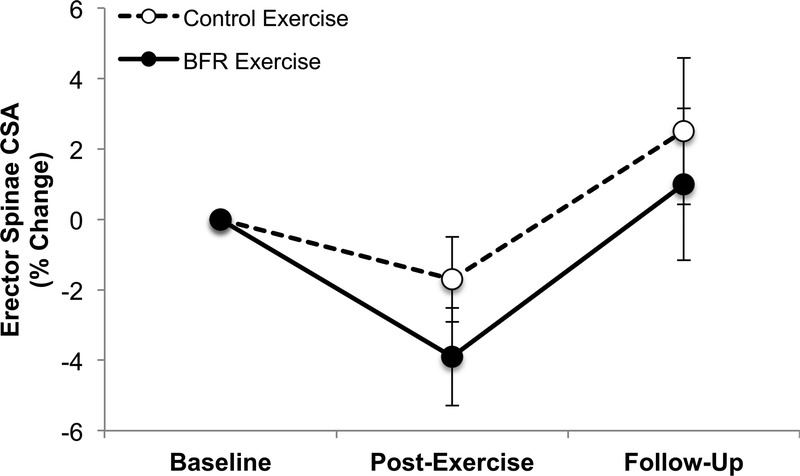
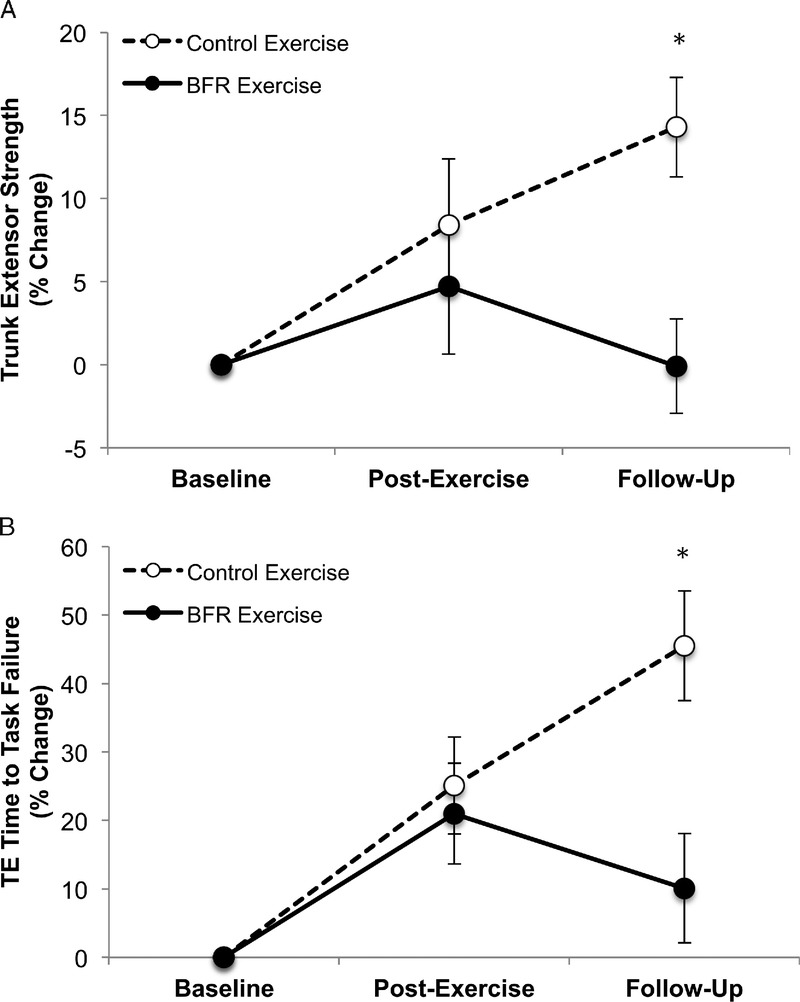
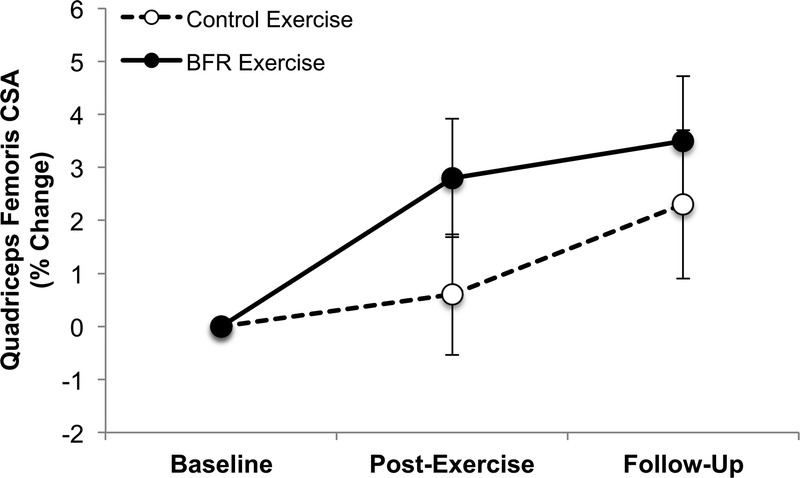
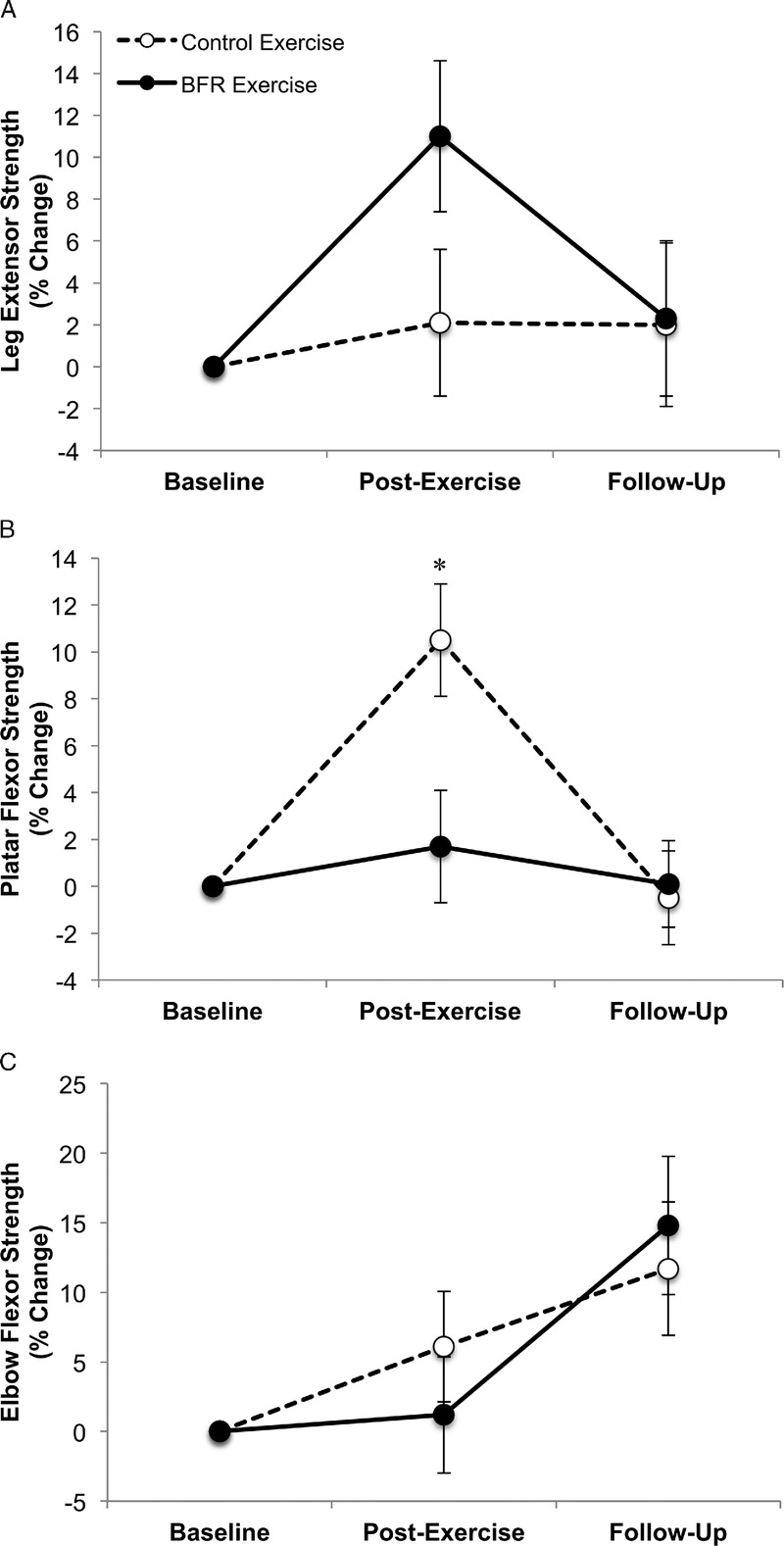
Results: There was no evidence for a cross-transfer of effect to the TE. There was also no statistically significant enhancement of limb skeletal muscle size or function of BFR relative to CON exercise at any time point; though, moderate effect sizes for BFR exercise were observed for enhanced muscle size and strength in the leg extensors.
Conclusions: Low-load BFR exercise of the appendicular muscles did not result in a cross-transfer of effect to the TE musculature. There was also no significant benefit of low-load BFR exercise on the appendicular muscle size and function, suggesting no benefit from low-load BFR exercise in adults with recurrent, nonspecific LBP.
Figures
References
-
- Sundberg CJ, Eiken O, Nygren A, Kaijser L. Effects of ischaemic training on local aerobic muscle performance in man. Acta Physiol Scand. 1993;148(1):13–9. - PubMed
-
- Slysz J, Stultz J, Burr JF. The efficacy of blood flow restricted exercise: a systematic review & meta-analysis. J Sci Med Sport. 2016;19(8):669–75. - PubMed
-
- Hughes L, Paton B, Rosenblatt B, Gissane C, Patterson SD. Blood flow restriction training in clinical musculoskeletal rehabilitation: a systematic review and meta-analysis. Br J Sports Med. 2017;51(13):1003–11. - PubMed
-
- Lixandrao ME, Ugrinowitsch C, Berton R, et al. Magnitude of muscle strength and mass adaptations between high-load resistance training versus low-load resistance training associated with blood-flow restriction: a systematic review and meta-analysis. Sports Med. 2018;48(2):361–78. - PubMed
-
- Loenneke JP, Wilson JM, Marin PJ, Zourdos MC, Bemben MG. Low intensity blood flow restriction training: a meta-analysis. Eur J Appl Physiol. 2012;112(5):1849–59. - PubMed
Publication types
MeSH terms
Grants and funding
LinkOut - more resources
Full Text Sources
Miscellaneous
