


Non-invasive assessment of NAFLD as systemic disease-A machine learning perspective
- PMID: 30913263
- PMCID: PMC6435145
- DOI: 10.1371/journal.pone.0214436
Non-invasive assessment of NAFLD as systemic disease-A machine learning perspective
Abstract
Background & aims: Current non-invasive scores for the assessment of severity of non-alcoholic fatty liver disease (NAFLD) and identification of patients with non-alcoholic steatohepatitis (NASH) have insufficient performance to be included in clinical routine. In the current study, we developed a novel machine learning approach to overcome the caveats of existing approaches.
Methods: Non-invasive parameters were selected by an ensemble feature selection (EFS) from a retrospectively collected training cohort of 164 obese individuals (age: 43.5±10.3y; BMI: 54.1±10.1kg/m2) to develop a model able to predict the histological assessed NAFLD activity score (NAS). The model was evaluated in an independent validation cohort (122 patients, age: 45.2±11.75y, BMI: 50.8±8.61kg/m2).
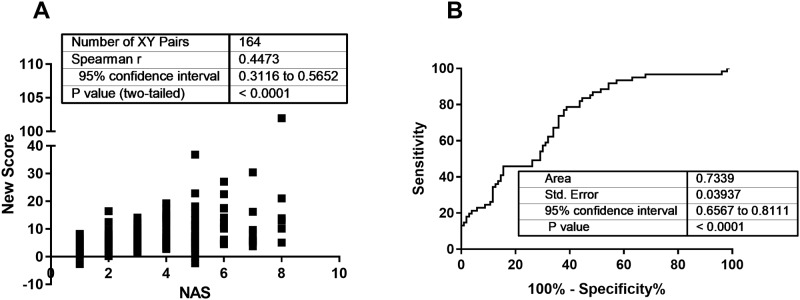
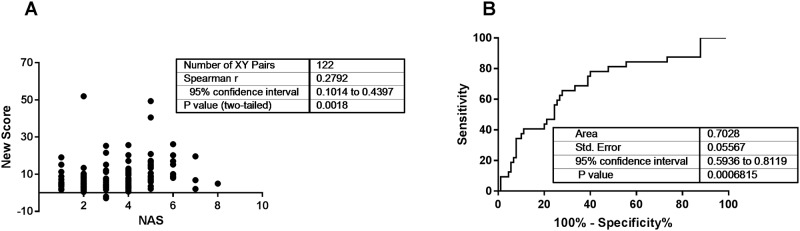
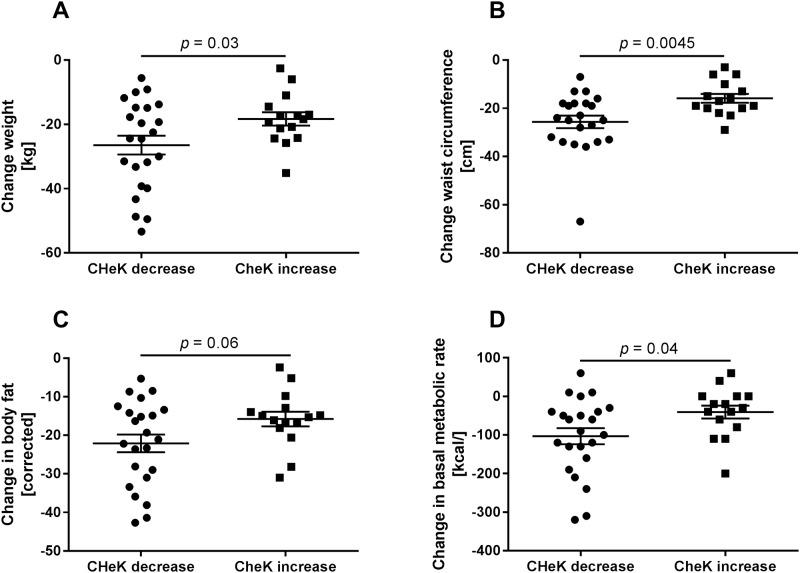
Results: EFS identified age, γGT, HbA1c, adiponectin, and M30 as being highly associated with NAFLD. The model reached a Spearman correlation coefficient with the NAS of 0.46 in the training cohort and was able to differentiate between NAFL (NAS≤4) and NASH (NAS>4) with an AUC of 0.73. In the independent validation cohort, an AUC of 0.7 was achieved for this separation. We further analyzed the potential of the new model for disease monitoring in an obese cohort of 38 patients under lifestyle intervention for one year. While all patients lost weight under intervention, increasing scores were observed in 15 patients. Increasing scores were associated with significantly lower absolute weight loss, lower reduction of waist circumference and basal metabolic rate.
Conclusions: A newly developed model (http://CHek.heiderlab.de) can predict presence or absence of NASH with reasonable performance. The new score could be used to detect NASH and monitor disease progression or therapy response to weight loss interventions.
Conflict of interest statement
JK, UN, MR, SH, HAB, CR, AG, and DH state that there are no conflicts of interest to declare. JPS and AC state that they received royalties for a scientific lecture, which was in part supported by TECOmedical group. This does not alter the authors’ adherence to PLOS ONE policies on sharing data and materials.
Figures
References
-
- Kim CH, Younossi ZM. Nonalcoholic fatty liver disease: a manifestation of the metabolic syndrome. Cleve Clin J Med. 2008;75: 721–728. - PubMed
Publication types
MeSH terms
Substances
LinkOut - more resources
Full Text Sources
Medical
