


How Hosts Taxonomy, Trophy, and Endosymbionts Shape Microbiome Diversity in Beetles
- PMID: 30915518
- PMCID: PMC6842344
- DOI: 10.1007/s00248-019-01358-y
How Hosts Taxonomy, Trophy, and Endosymbionts Shape Microbiome Diversity in Beetles
Abstract
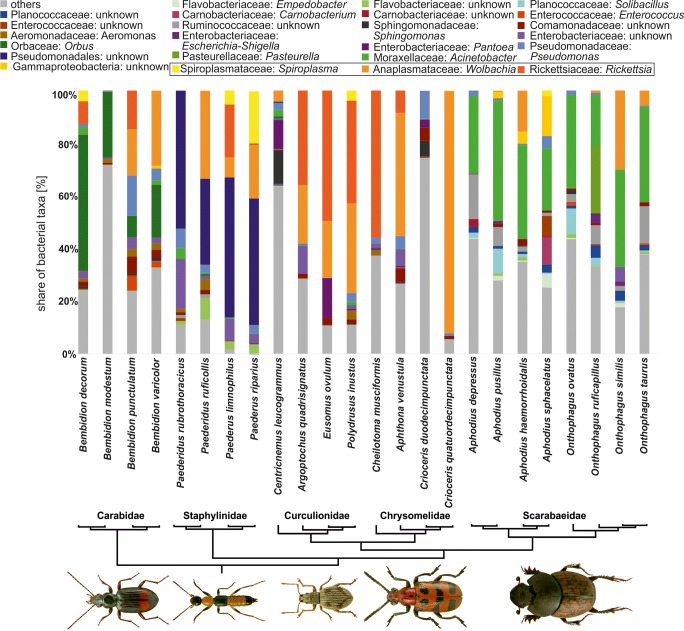
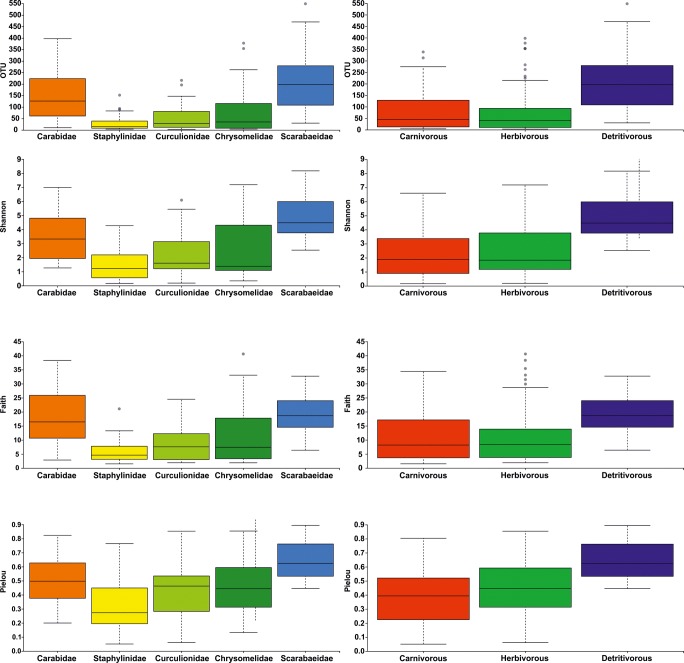
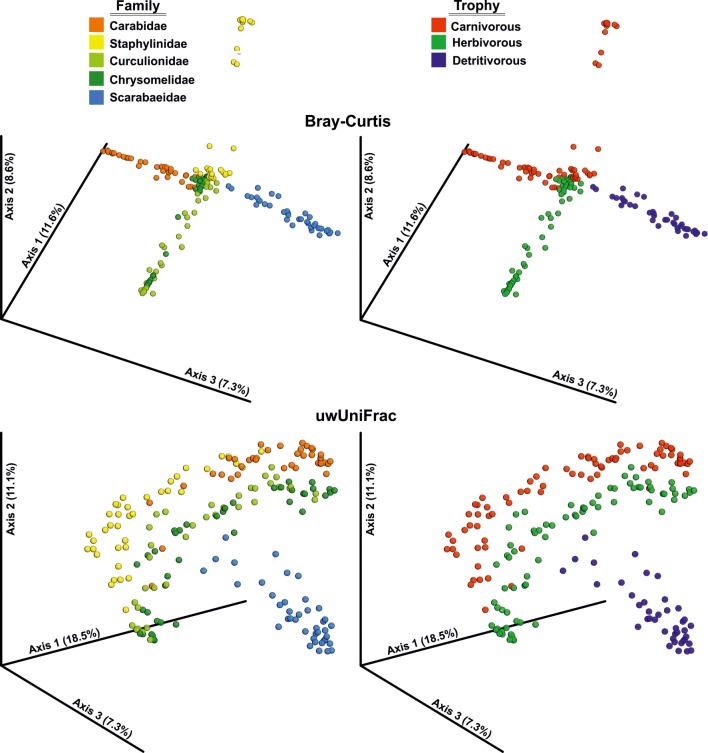
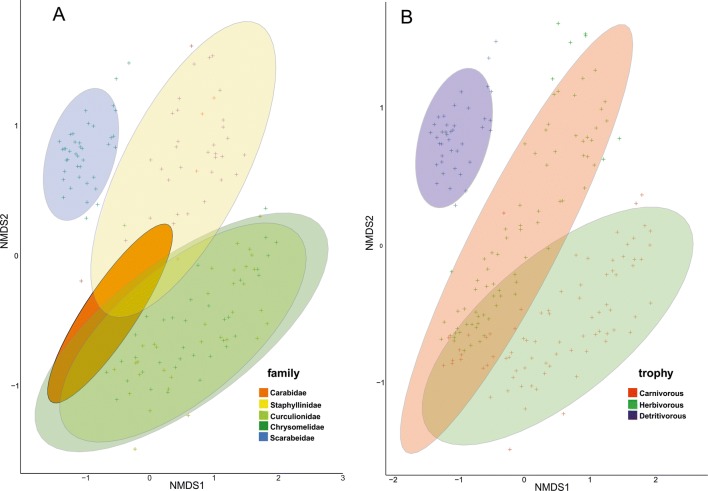
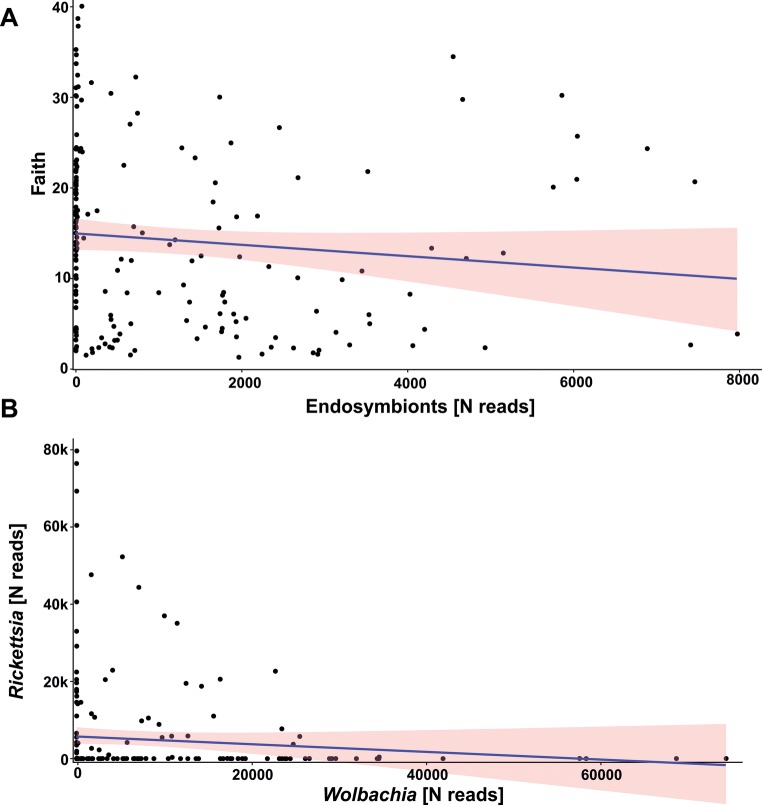
Bacterial communities play a crucial role in the biology, ecology, and evolution of multicellular organisms. In this research, the microbiome of 24 selected beetle species representing five families (Carabidae, Staphylinidae, Curculionidae, Chrysomelidae, Scarabaeidae) and three trophic guilds (carnivorous, herbivorous, detrivorous) was examined using 16S rDNA sequencing on the Illumina platform. The aim of the study was to compare diversity within and among species on various levels of organization, including evaluation of the impact of endosymbiotic bacteria. Collected data showed that beetles possess various bacterial communities and that microbiota of individuals of particular species hosts are intermixed. The most diverse microbiota were found in Carabidae and Scarabaeidae; the least diverse, in Staphylinidae. On higher organization levels, the diversity of bacteria was more dissimilar between families, while the most distinct with respect to their microbiomes were trophic guilds. Moreover, eight taxa of endosymbiotic bacteria were detected including common genera such as Wolbachia, Rickettsia, and Spiroplasma, as well as the rarely detected Cardinium, Arsenophonus, Buchnera, Sulcia, Regiella, and Serratia. There were no correlations among the abundance of the most common Wolbachia and Rickettsia; a finding that does not support the hypothesis that these bacteria occur interchangeably. The abundance of endosymbionts only weakly and negatively correlates with diversity of the whole microbiome in beetles. Overall, microbiome diversity was found to be more dependent on host phylogeny than on the abundance of endosymbionts. This is the first study in which bacteria diversity is compared between numerous species of beetles in a standardized manner.
Keywords: Bacterial community; Coleoptera; Endosymbionts; Host–microbe interactions; Microbial ecology.
Conflict of interest statement
The authors declare that they have no conflict of interest. This study did not involve any protected animal species and any vertebrates. Informed consent was obtained from all individual participants included in the study.
Figures
References
-
- McFall-Ngai M, Hadfield MG, Bosch TCG, Carey HV, Domazet-Lošo T, Douglas AE, Dubilier N, Eberl G, Fukami T, Gilbert SF, Hentschel U, King N, Kjelleberg S, Knoll AH, Kremer N, Mazmanian SK, Metcalf JL, Nealson K, Pierce NE, Rawls JF, Reid A, Ruby EG, Rumpho M, Sanders JG, Tautz D, Wernegreen JJ. Animals in a bacterial world, a new imperative for the life sciences. PNAS. 2013;110:3229–3236. doi: 10.1073/pnas.1218525110. - DOI - PMC - PubMed
MeSH terms
Grants and funding
LinkOut - more resources
Full Text Sources
