. 2019 Mar 26;26(13):3772-3783.e6.
doi: 10.1016/j.celrep.2019.02.090.

Simplified Intestinal Microbiota to Study Microbe-Diet-Host Interactions in a Mouse Model

Affiliations

Simplified Intestinal Microbiota to Study Microbe-Diet-Host Interactions in a Mouse Model

Petia Kovatcheva-Datchary et al. Cell Rep. .

Abstract

The gut microbiota can modulate human metabolism through interactions with macronutrients. However, microbiota-diet-host interactions are difficult to study because bacteria interact in complex food webs in concert with the host, and many of the bacteria are not yet characterized. To reduce the complexity, we colonize mice with a simplified intestinal microbiota (SIM) composed of ten sequenced strains isolated from the human gut with complementing pathways to metabolize dietary fibers. We feed the SIM mice one of three diets (chow [fiber rich], high-fat/high-sucrose, or zero-fat/high-sucrose diets [both low in fiber]) and investigate (1) how dietary fiber, saturated fat, and sucrose affect the abundance and transcriptome of the SIM community, (2) the effect of microbe-diet interactions on circulating metabolites, and (3) how microbiota-diet interactions affect host metabolism. Our SIM model can be used in future studies to help clarify how microbiota-diet interactions contribute to metabolic diseases.

Keywords: diet; metabolome; microbiota; transcriptome.


Figures

None
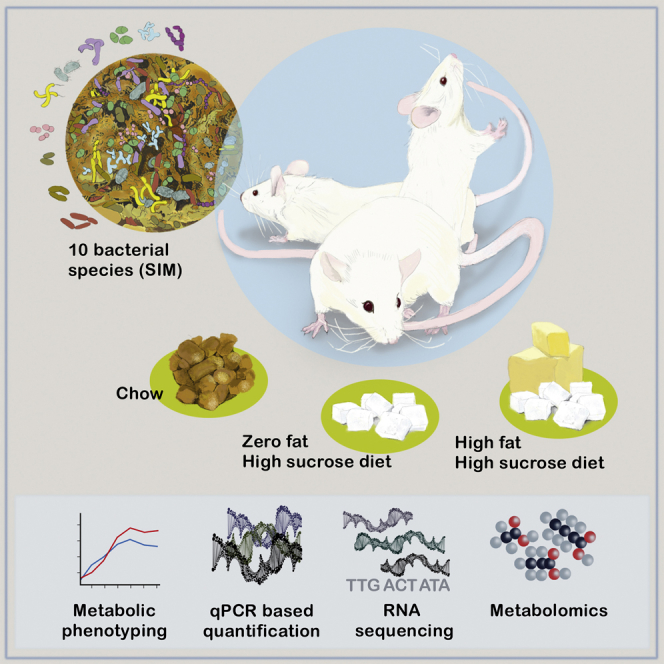
Graphical abstract
Figure 1
Figure 1
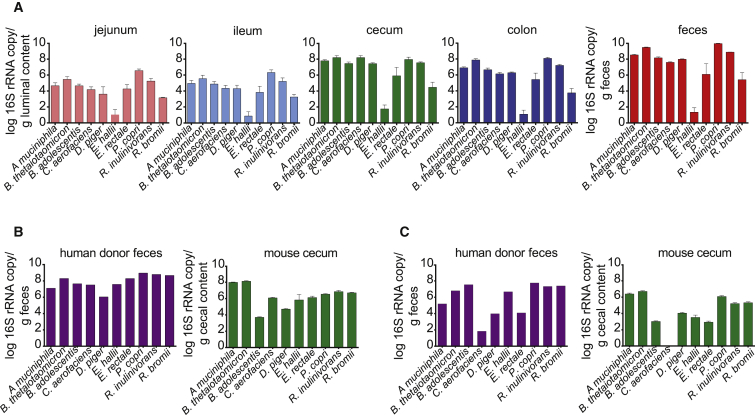
SIM Bacteria Colonize the Mouse Gut (A) Abundance of each of the SIM bacteria in jejunum, ileum, cecum, colon, and feces of chow-fed SIM male mice (n = 5; mice are from two independent experiments; each sample was analyzed in duplicate in one run and in duplicate PCR runs). (B) Abundance of each of the SIM bacteria in the feces of a female human donor and in the cecum of chow-fed Swiss Webster female mice (n = 6; each sample was analyzed in duplicate in one run and in duplicate PCR runs) colonized with feces from this donor. (C) Abundance of each of the SIM bacteria in the feces of a male human donor and in the cecum of chow-fed Swiss Webster male mice (n = 5; each sample was analyzed in duplicate in one run and in duplicate PCR runs) colonized with feces from this donor. Data are mean ± SEM.
Figure 2
Figure 2
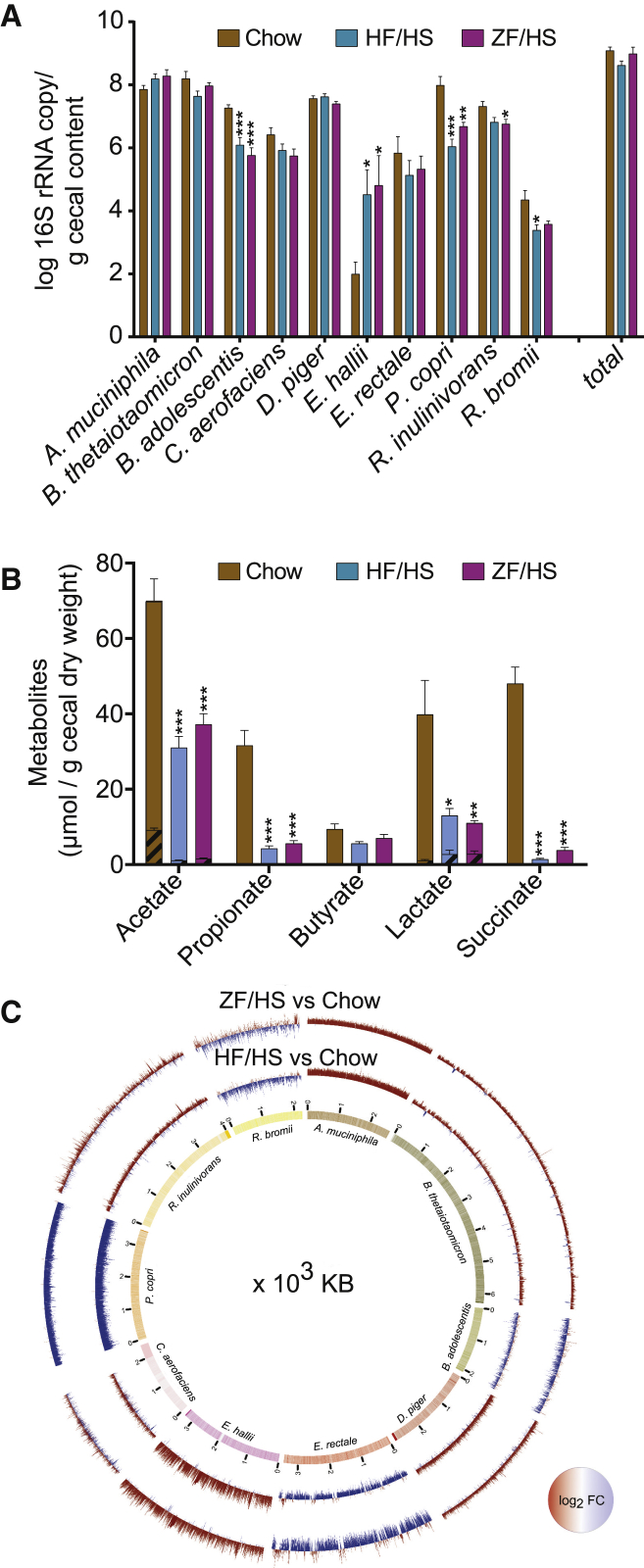
Dietary Changes Affect the Cecal SIM Community (A) Abundance of each of the SIM bacteria in the cecum of SIM mice that remained on chow or switched to an HF-HS diet or a ZF-HS diet for 2 weeks (n = 8–11; mice are from two independent experiments; each sample was analyzed in duplicate in one run and in duplicate PCR runs). (B) Concentrations of SCFAs and organic acids in the cecum of GF mice (n = 5 or 6) and SIM mice that remained on chow or switched to an HF-HS diet or a ZF-HS diet for 2 weeks (n = 8–11; mice are from two independent experiments). Metabolite concentrations for GF mice are shown by hashed lines and overlay data for SIM mice. Data are mean ± SEM. p < 0.05, ∗∗p < 0.01, and ∗∗∗p < 0.001 versus chow (one-way ANOVA). (C) Positive (red) and negative (blue) fold changes in cecal expression of genes for each of the SIM bacteria in mice that switched to a ZF-HS diet (outer circle) or an HF-HS diet (inner circle) compared with mice that remained on chow for 2 weeks (n = 5; mice are from two independent experiments). Inner circle, genome coverage of generated RNA-seq data. See also Table S2.
Figure 3
Figure 3
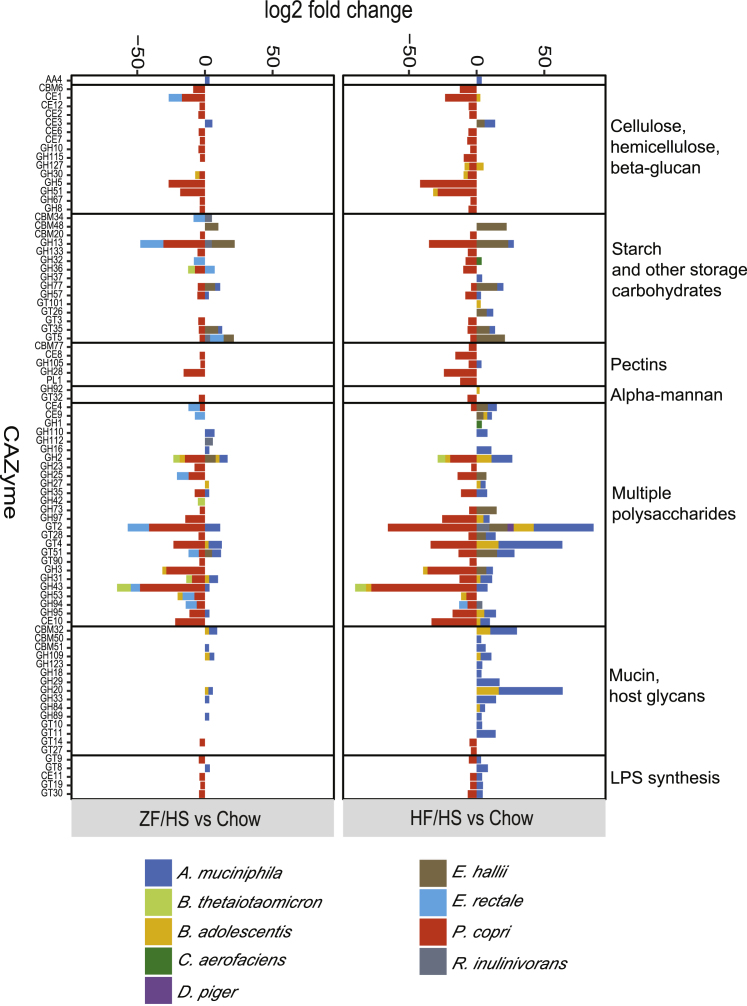
Dietary Changes Affect CAZyme Expression in the Cecal SIM Community Log fold changes in transcripts encoding CAZymes in the metatranscriptomics data of cecal samples from SIM mice fed HF-HS or ZF-HS compared with SIM mice fed chow (n = 5 mice/group; mice are from two independent experiments). Only the CAZyme families with adjusted p values < 0.05 are shown as averages. We classified CAZyme families on the basis of respective substrates; GH5 can potentially convert beta-mannan in addition to cellulose, hemicellulose, and beta-glucans. AA, auxiliary activities; CBM, carbohydrate-binding module; CE, carbohydrate esterase; GH, glycoside hydrolase; GT, glycosyl transferase; PL, polysaccharide lyase. See also Table S3.
Figure 4
Figure 4
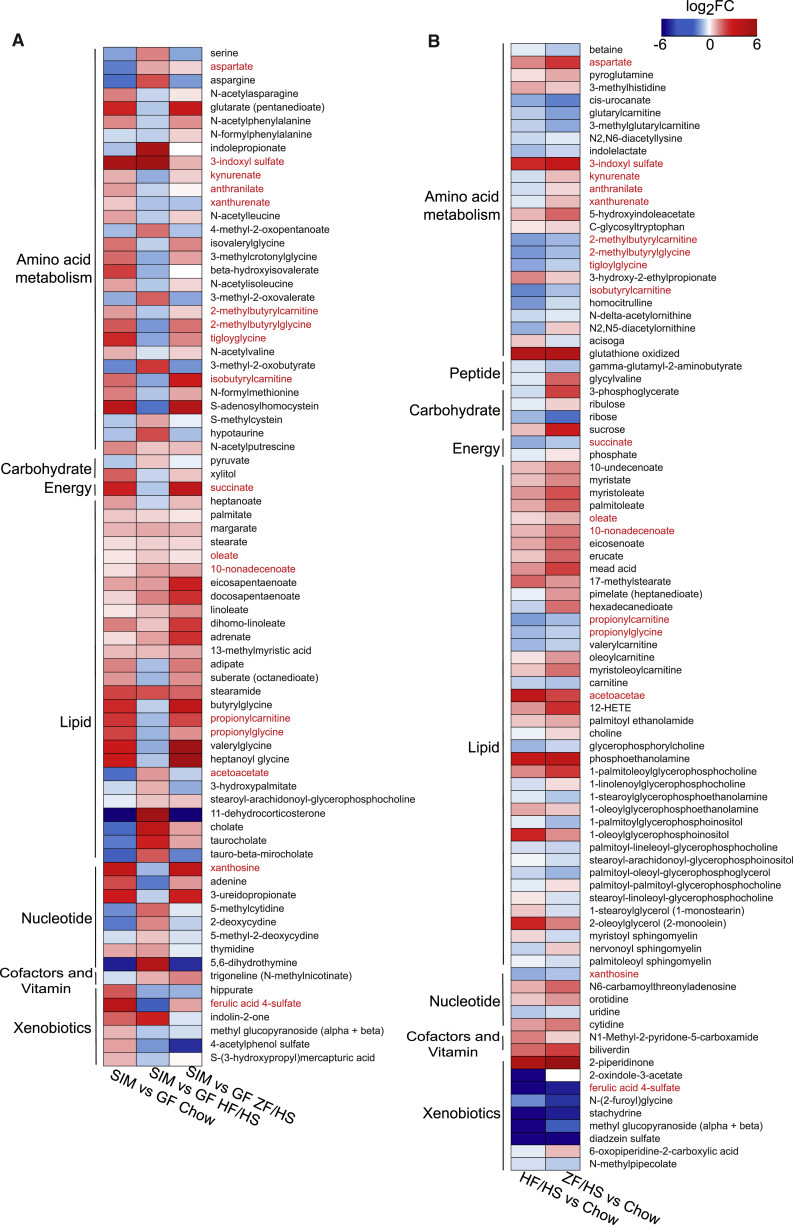
Dietary Changes and Microbiota Affect Plasma Metabolites (A) Heatmap showing statistically significant fold changes in concentrations of metabolites in portal vein plasma from SIM mice (n = 5–7; mice are from two independent experiments) versus GF mice (n = 6–8) on chow, HF-HS, and ZF-HS diets. (B) Heatmap showing statistically significant fold changes in concentrations of metabolites in portal vein plasma from SIM mice on HF-HS (n = 7; mice are from two independent experiments) or ZF-HS (n = 5; mice are from two independent experiments) diet versus SIM mice on chow (n = 7; mice are from two independent experiments) (false discovery rate [FDR], q < 0.1). Metabolites significantly regulated in both datasets (A and B) are listed in red. See also Table S4.
Figure 5
Figure 5
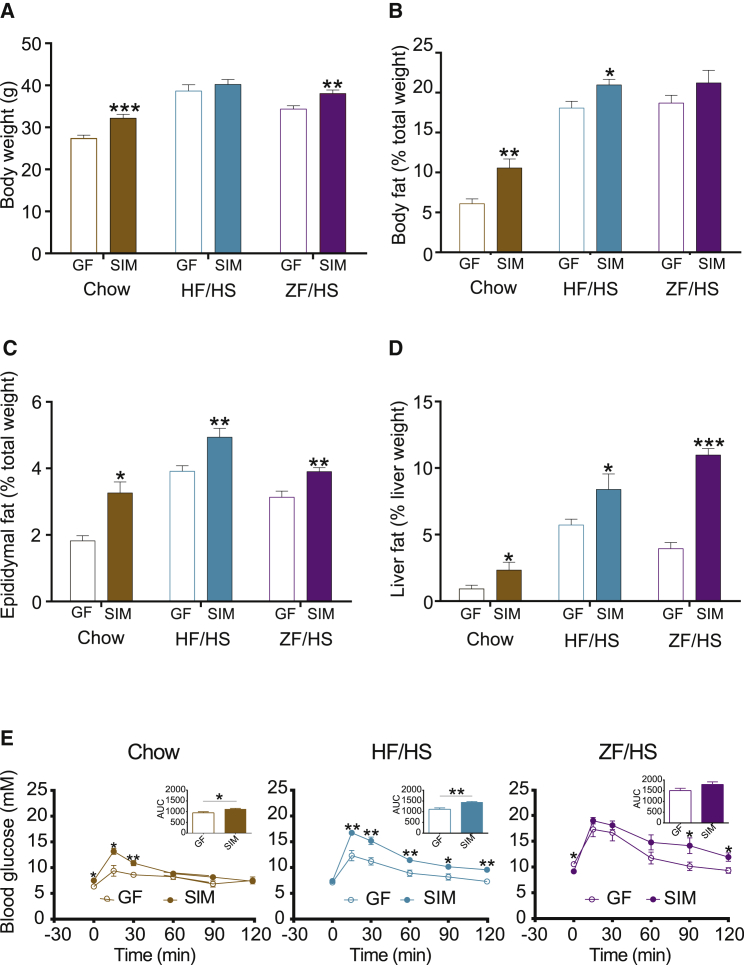
Metabolic Phenotypes of the SIM Mice in Response to Diet (A–E) Body weight (A), body fat (B), epididymal fat (C), liver fat (D), and blood glucose (E) of SIM mice (n = 5) compared with GF mice (n = 5 or 6) on chow, HF-HS, and ZF-HS diets. Data are mean ± SEM. p < 0.05, ∗∗p < 0.01, and ∗∗∗p < 0.001 (Student’s t test).

Comment in

References

    1. Alam M.A., Subhan N., Hossain H., Hossain M., Reza H.M., Rahman M.M., Ullah M.O. Hydroxycinnamic acid derivatives: a potential class of natural compounds for the management of lipid metabolism and obesity. Nutr. Metab. (Lond.) 2016;13:27. - PMC - PubMed
    1. Anders S., Pyl P.T., Huber W. HTSeq—a Python framework to work with high-throughput sequencing data. Bioinformatics. 2015;31:166–169. - PMC - PubMed
    1. Arumugam M., Raes J., Pelletier E., Le Paslier D., Yamada T., Mende D.R., Fernandes G.R., Tap J., Bruls T., Batto J.-M., MetaHIT Consortium Enterotypes of the human gut microbiome. Nature. 2011;473:174–180. - PMC - PubMed
    1. Bäckhed F., Ding H., Wang T., Hooper L.V., Koh G.Y., Nagy A., Semenkovich C.F., Gordon J.I. The gut microbiota as an environmental factor that regulates fat storage. Proc. Natl. Acad. Sci. U S A. 2004;101:15718–15723. - PMC - PubMed
    1. Bäckhed F., Manchester J.K., Semenkovich C.F., Gordon J.I. Mechanisms underlying the resistance to diet-induced obesity in germ-free mice. Proc. Natl. Acad. Sci. U S A. 2007;104:979–984. - PMC - PubMed

Publication types

LinkOut - more resources