


Genotypic and phenotypic adaptation of pathogens: lesson from the genus Bordetella
- PMID: 30921085
- PMCID: PMC6658121
- DOI: 10.1097/QCO.0000000000000549
Genotypic and phenotypic adaptation of pathogens: lesson from the genus Bordetella
Abstract
Purpose of review: To relate genomic changes to phenotypic adaptation and evolution from environmental bacteria to obligate human pathogens, focusing on the examples within Bordetella species.
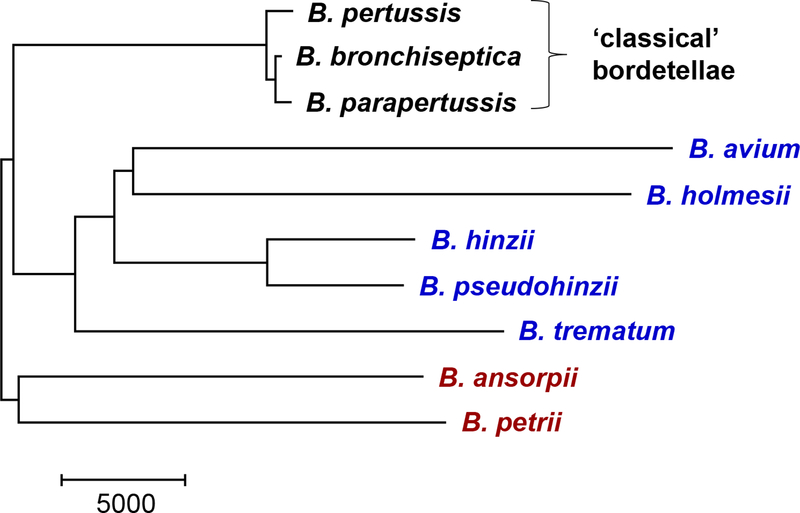
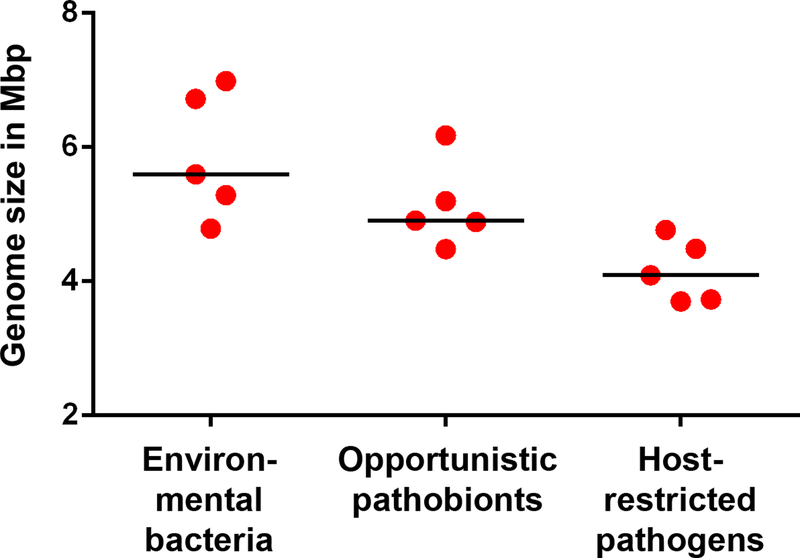
Recent findings: Recent studies showed that animal-pathogenic and human-pathogenic Bordetella species evolved from environmental ancestors in soil. The animal-pathogenic Bordetella bronchiseptica can hijack the life cycle of the soil-living amoeba Dictyostelium discoideum, surviving inside single-celled trophozoites, translocating to the fruiting bodies and disseminating along with amoeba spores. The association with amoeba may have been a 'training ground' for bacteria during the evolution to pathogens. Adaptation to an animal-associated life style was characterized by decreasing metabolic versatility and genome size and by acquisition of 'virulence factors' mediating the interaction with the new animal hosts. Subsequent emergence of human-specific pathogens, such as Bordetella pertussis from zoonoses of broader host range progenitors, was accompanied by a dramatic reduction in genome size, marked by the loss of hundreds of genes.
Summary: The evolution of Bordetella from environmental microbes to animal-adapted and obligate human pathogens was accompanied by significant genome reduction with large-scale gene loss during divergence.
Conflict of interest statement
Figures
References
-
- Heininger U, Stehr K, Schmitt-Grohe S, Lorenz C, Rost R, Christenson PD, Uberall M, Cherry JD: Clinical characteristics of illness caused by Bordetella parapertussis compared with illness caused by Bordetella pertussis. Pediatr Infect Dis J 1994, 13:306–309. - PubMed
-
- Porter JF, Connor K, Donachie W: Isolation and characterization of Bordetella parapertussis-like bacteria from ovine lungs. Microbiology 1994, 140 (Pt 2):255–261. - PubMed
-
- Parkhill J, Sebaihia M, Preston A, Murphy LD, Thomson N, Harris DE, Holden MTG, Churcher CM, Bentley SD, Mungall KL, et al. : Comparative analysis of the genome sequences of Bordetella pertussis, Bordetella parapertussis and Bordetella bronchiseptica. Nature Genetics 2003, 35:32–40. - PubMed
Publication types
MeSH terms
Grants and funding
LinkOut - more resources
Full Text Sources
Research Materials
