


The Biosocial Approach to Human Development, Behavior, and Health Across the Life Course
- PMID: 30923747
- PMCID: PMC6434524
- DOI: 10.7758/RSF.2018.4.4.01
The Biosocial Approach to Human Development, Behavior, and Health Across the Life Course
Abstract
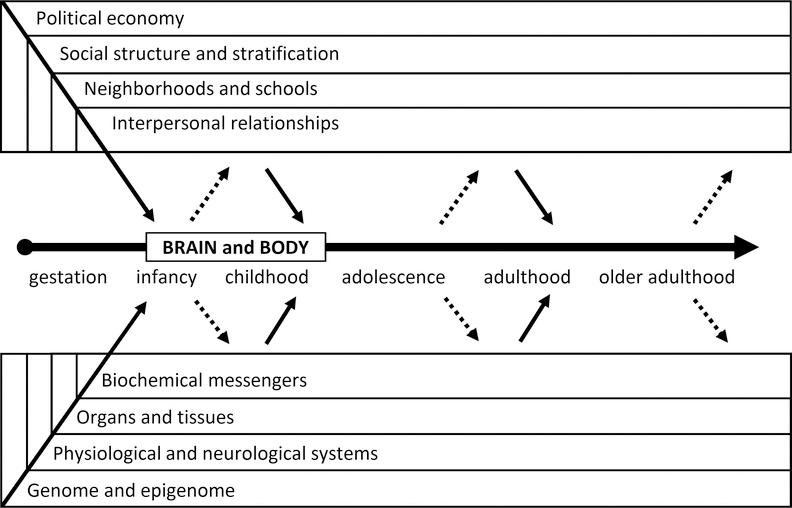
Social and biological phenomena are widely recognized as determinants of human development, health, and socioeconomic attainments across the life course, but our understanding of the underlying pathways and processes remains limited. To address this gap, we define the "biosocial approach" as one that conceptualizes the biological and social as mutually constituting, and that draws on models and methods from the biomedical and social/behavioral sciences. By bringing biology into the social sciences, we can illuminate mechanisms through which socioeconomic, psychosocial, and other contextual factors shape human development and health. Human biology is a social biology, and biological measures can therefore identify aspects of social contexts that are harmful, as well as beneficial, with respect to well-being. By bringing social science concepts and study designs to biology and biomedicine, we encourage an epistemological shift that foregrounds social/contextual factors as important determinants of human biology and health. The biosocial approach also underscores the importance of the life course, as assessments of both biological and social features throughout human development over time, and across generations, are needed to achieve a full understanding of social and physical well-being. We conclude with a brief review of the papers in the volume, which showcase the value of a biosocial approach to understanding the pathways linking social stratification, biology, and health across the life course.
Keywords: health disparities; human development; social genomics; socioeconomic status.
Figures
References
-
- Adler NE, Boyce T, Chesney MA, Cohen S, Folkman S, Kahn RL, & Syme SL (1994). Socioeconomic status and health: The challenge of the gradient. American Psychologist, 49(1), 15–24. - PubMed
-
- Almond D (2006). Is the 1918 Influenza Pandemic Over? Long-Term Effects of In Utero Influenza Exposure in the Post-1940 U.S. Population. Journal of Political Economy, 114(4), 672–712. doi: 10.1086/507154 - DOI
Grants and funding
LinkOut - more resources
Full Text Sources
Miscellaneous