


A federated EHR network data completeness tracking system
- PMID: 30925587
- PMCID: PMC6586954
- DOI: 10.1093/jamia/ocz014
A federated EHR network data completeness tracking system
Abstract
Objective: The study sought to design, pilot, and evaluate a federated data completeness tracking system (CTX) for assessing completeness in research data extracted from electronic health record data across the Accessible Research Commons for Health (ARCH) Clinical Data Research Network.
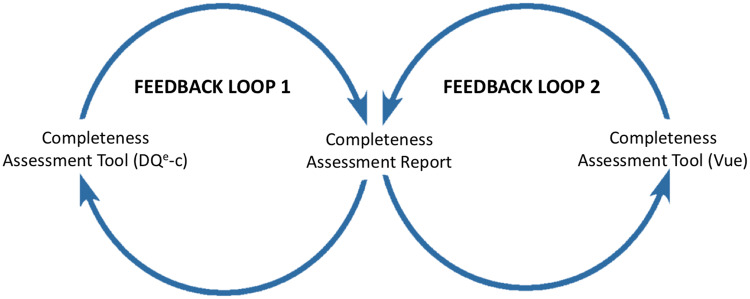
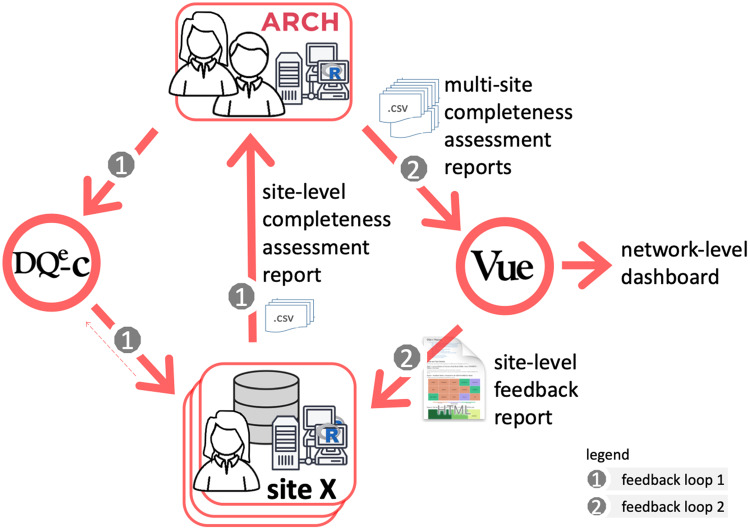
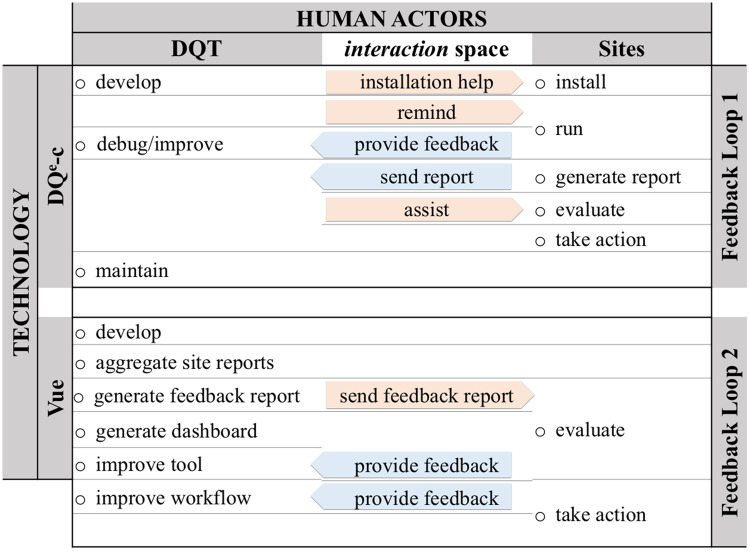
Materials and methods: The CTX applies a systems-based approach to design workflow and technology for assessing completeness across distributed electronic health record data repositories participating in a queryable, federated network. The CTX invokes 2 positive feedback loops that utilize open source tools (DQe-c and Vue) to integrate technology and human actors in a system geared for increasing capacity and taking action. A pilot implementation of the system involved 6 ARCH partner sites between January 2017 and May 2018.
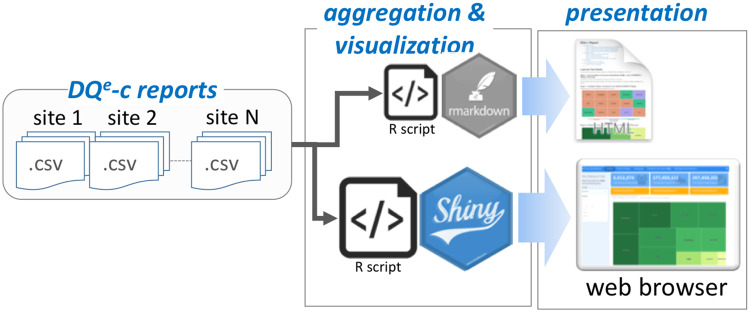
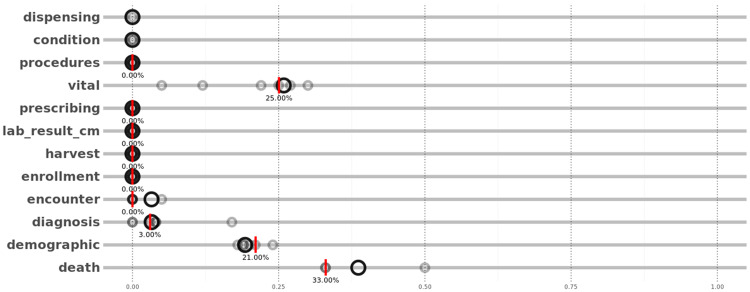
Results: The ARCH CTX has enabled the network to monitor and, if needed, adjust its data management processes to maintain complete datasets for secondary use. The system allows the network and its partner sites to profile data completeness both at the network and partner site levels. Interactive visualizations presenting the current state of completeness in the context of the entire network as well as changes in completeness across time were valued among the CTX user base.
Discussion: Distributed clinical data networks are complex systems. Top-down approaches that solely rely on technology to report data completeness may be necessary but not sufficient for improving completeness (and quality) of data in large-scale clinical data networks. Improving and maintaining complete (high-quality) data in such complex environments entails sociotechnical systems that exploit technology and empower human actors to engage in the process of high-quality data curating.
Conclusions: The CTX has increased the network's capacity to rapidly identify data completeness issues and empowered ARCH partner sites to get involved in improving the completeness of respective data in their repositories.
Keywords: data completeness; data quality; electronic health records; systems thinking.
© The Author(s) 2019. Published by Oxford University Press on behalf of the American Medical Informatics Association.
Figures
References
-
- Hsiao C-J, Hing E, Socey TC, Cai B.. Electronic health record systems and intent to apply for meaningful use incentives among office-based physician practices: United States, 2001-2011. NCHS Data Brief 2011; 79: 1–8. - PubMed
-
- Murdoch T, Detsky A.. The inevitable application of big data to health care. J Am Med Inform Assoc 2013; 30913: 1351–2. - PubMed
-
- Liaw ST, Rahimi A, Ray P, et al. Towards an ontology for data quality in integrated chronic disease management: a realist review of the literature. Int J Med Inform 2013; 821: 10–24. - PubMed
Publication types
MeSH terms
Grants and funding
- R25 MD007589/MD/NIMHD NIH HHS/United States
- U54 MD007588/MD/NIMHD NIH HHS/United States
- UL1 TR002378/TR/NCATS NIH HHS/United States
- R01 HG009174/HG/NHGRI NIH HHS/United States
- U01 HG008685/HG/NHGRI NIH HHS/United States
- U54 MD008149/MD/NIMHD NIH HHS/United States
- U54 MD008173/MD/NIMHD NIH HHS/United States
- UL1 TR000371/TR/NCATS NIH HHS/United States
- UL1 TR001105/TR/NCATS NIH HHS/United States
- UL1 TR001857/TR/NCATS NIH HHS/United States
- U01 TR002393/TR/NCATS NIH HHS/United States
- R01 LM011829/LM/NLM NIH HHS/United States
