


Nine genes abundantly expressed in the epididymis are not essential for male fecundity in mice
- PMID: 30927342
- PMCID: PMC6688925
- DOI: 10.1111/andr.12621
Nine genes abundantly expressed in the epididymis are not essential for male fecundity in mice
Abstract
Background: Spermatozoa become competent for fertilization during transit through the epididymis. As spermatozoa from the proximal caudal epididymis can fertilize eggs, proteins from the caput and corpus epididymis are required for sperm maturation.
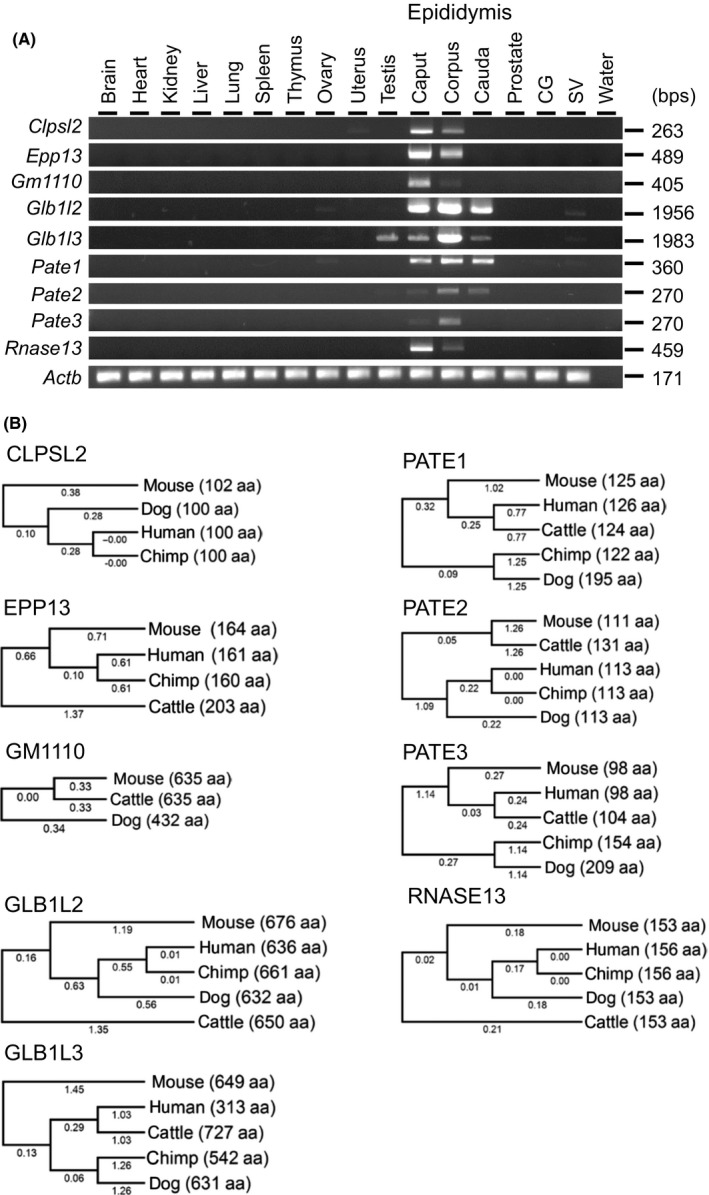
Objectives: Microarray analysis identified that more than 17,000 genes are expressed in the epididymis; however, few of these genes demonstrate expression restricted to the epididymis. To analyze epididymis-enriched gene function in vivo, we generated knockout (KO) mutations in nine genes that are abundantly expressed in the caput and corpus region of the epididymis.
Materials and methods: KO mice were generated using the CRISPR/Cas9 system. The histology of the epididymis was observed with hematoxylin and eosin staining. KO males were caged with wild-type females for 3-6 months to check fertility.
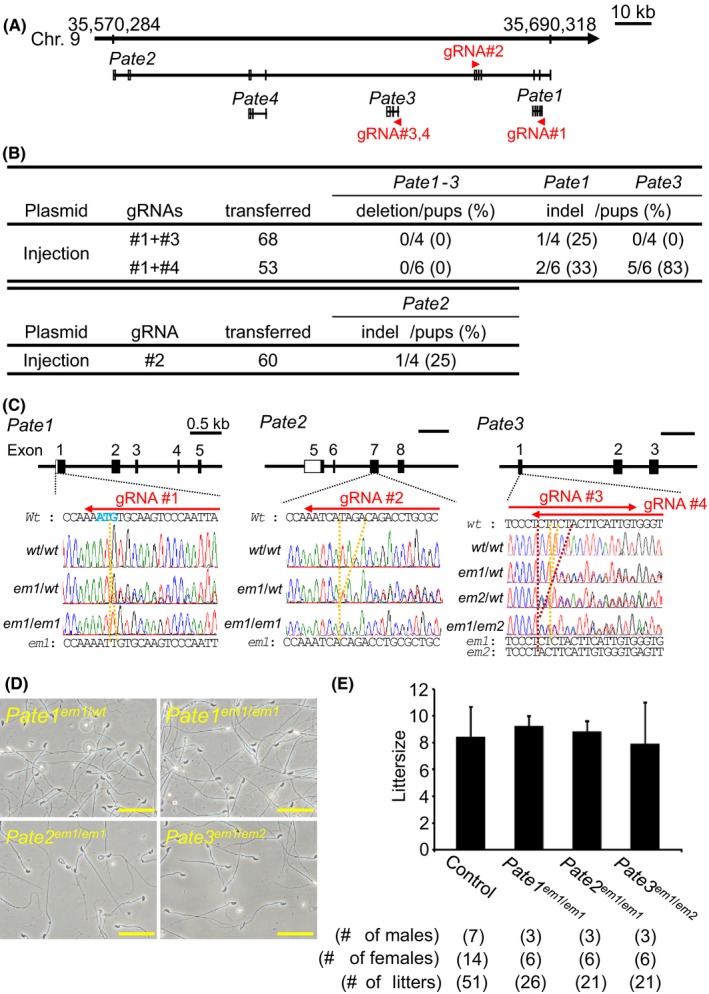
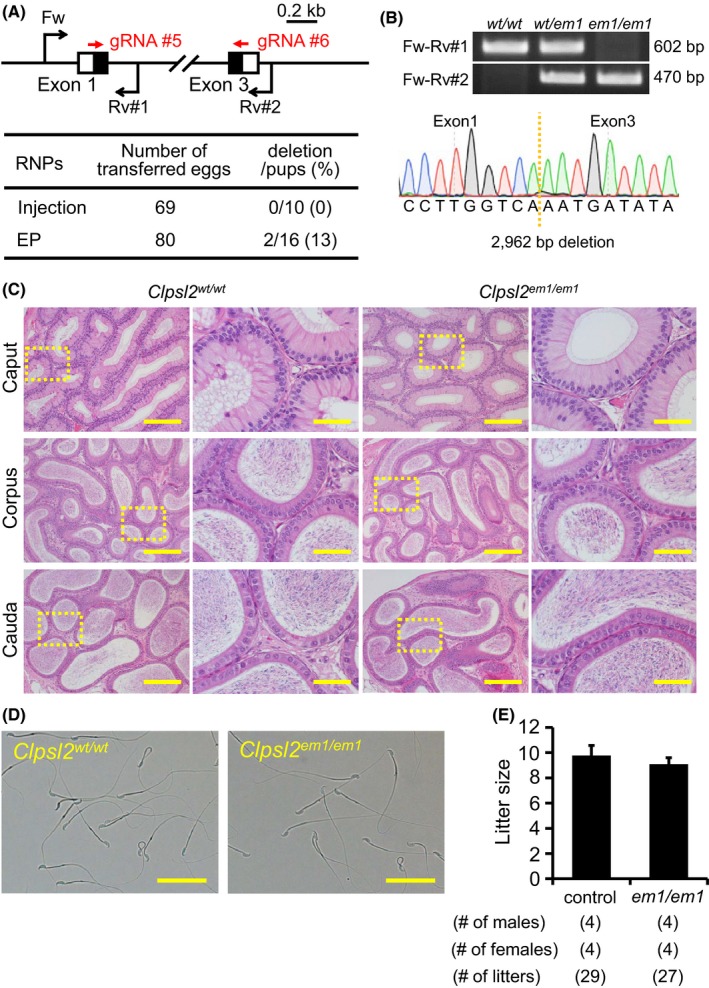
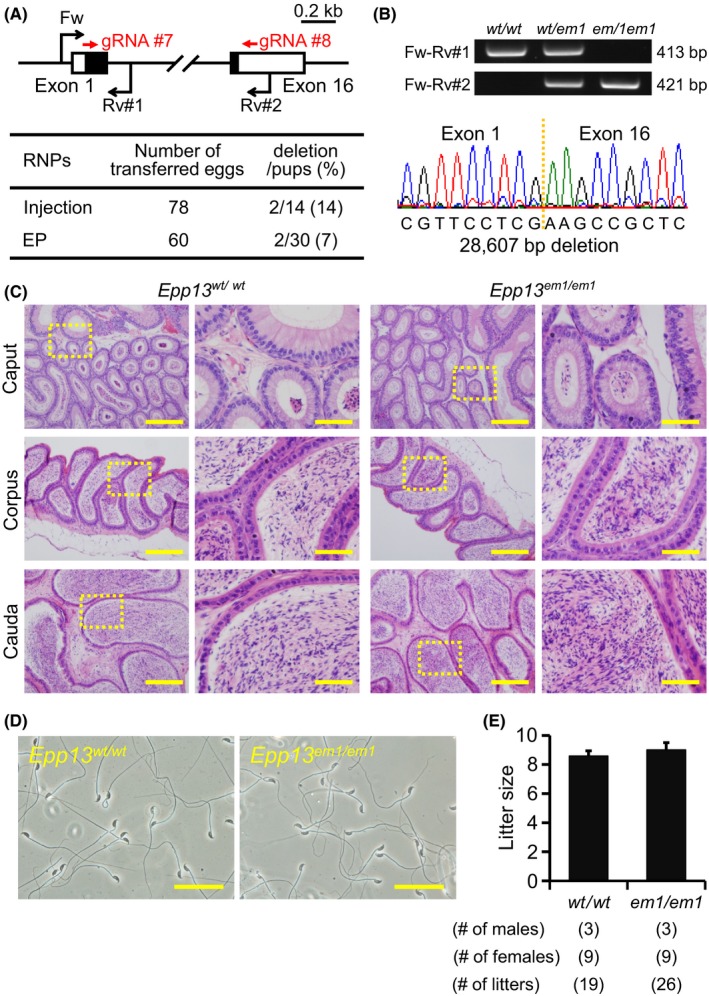
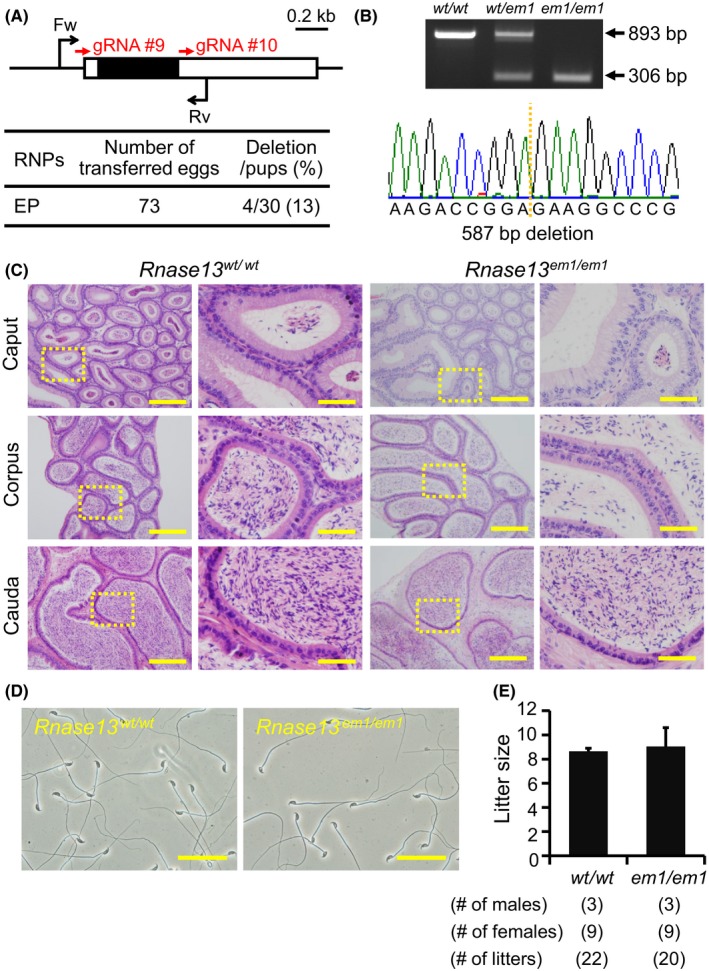
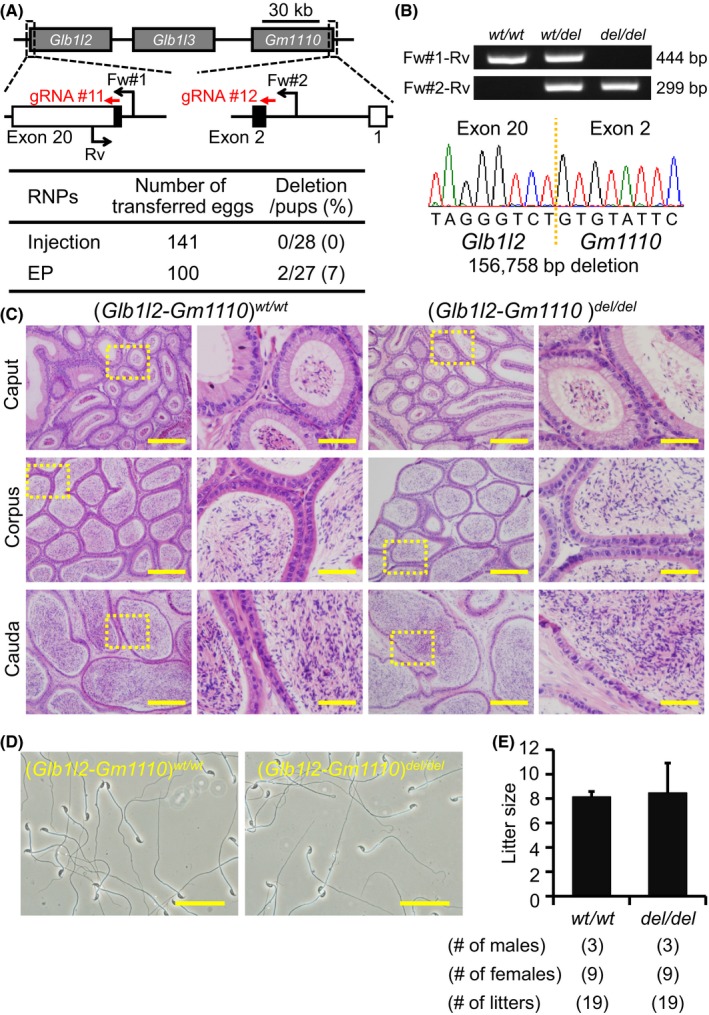
Results: We generated individual mutant mouse lines having indel mutations in Pate1, Pate2, or Pate3. We also deleted the coding regions of Clpsl2, Epp13, and Rnase13, independently. Finally, the 150 kb region encoding Gm1110, Glb1l2, and Glb1l3 was deleted to generate a triple KO mouse line. Histology of the epididymis and sperm morphology of all KO lines were comparable to control males. The females mated with these KO males delivered pups at comparable numbers as control males.
Discussion and conclusion: We revealed that nine genes abundantly expressed in the caput and corpus epididymis are dispensable for sperm function and male fecundity. CRISPR/Cas9-mediated KO mice generation accelerates the screening of epididymis-enriched genes for potential functions in reproduction.
Keywords: genetically modified mice; genome editing; sperm maturation.
© 2019 The Authors. Andrology published by John Wiley & Sons Ltd on behalf of American Society of Andrology and European Academy of Andrology.
Conflict of interest statement
The authors declare no conflict of interest.
Figures
References
-
- Cho S, Beintema JJ & Zhang J. (2005) The ribonuclease A superfamily of mammals and birds: identifying new members and tracing evolutionary histories. Genomics 85, 208–220. - PubMed
-
- Johnston DS, Jelinsky SA, Bang HJ, DiCandeloro P, Wilson E, Kopf GS & Turner TT. (2005) The mouse epididymal transcriptome: transcriptional profiling of segmental gene expression in the epididymis. Biol Reprod 73, 404–413. - PubMed
-
- Levitin F, Weiss M, Hahn Y, Stern O, Papke RL, Matusik R, Nandana SR, Ziv R, Pichinuk E, Salame S, Bera T, Vincent J, Lee B, Pastan I & Wreschner DH. (2008) PATE gene clusters code for multiple, secreted TFP/Ly‐6/uPAR proteins that are expressed in reproductive and neuron‐rich tissues and possess neuromodulatory activity. J Biol Chem 283, 16928–16939. - PMC - PubMed
Publication types
MeSH terms
Substances
Grants and funding
- P01 HD087157/HD/NICHD NIH HHS/United States
- T32 GM120011/GM/NIGMS NIH HHS/United States
- Takeda Science Foundation/International
- JP17H01394/Japan Society for the Promotion of Science/International
- R01 HD088412/HD/NICHD NIH HHS/United States
- JP18gm5010001/Japan Agency for Medical Research and Development/International
- JP18K14612/Japan Society for the Promotion of Science/International
- JP25112007/Japan Society for the Promotion of Science/International
- OPP1160866/GATES/Bill & Melinda Gates Foundation/United States
- 20170633/Japan Society for the Promotion of Science/International
- Ministry of Education, Culture, Sports, Science and Technology/International
LinkOut - more resources
Full Text Sources
Molecular Biology Databases
Research Materials
