


Cardiac fibrosis: potential therapeutic targets
- PMID: 30930180
- PMCID: PMC6545256
- DOI: 10.1016/j.trsl.2019.03.001
Cardiac fibrosis: potential therapeutic targets
Abstract
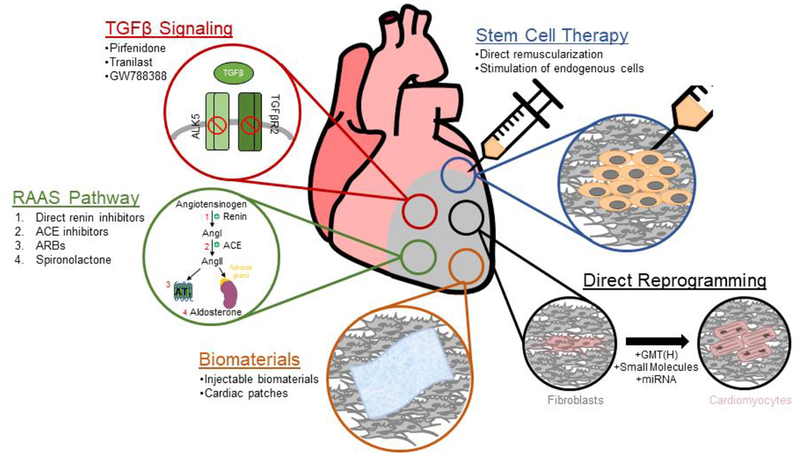
Cardiovascular disease is a leading cause of mortality in the world and is exacerbated by the presence of cardiac fibrosis, defined by the accumulation of noncontractile extracellular matrix proteins. Cardiac fibrosis is directly linked to cardiac dysfunction and increased risk of arrhythmia. Despite its prevalence, there is a lack of efficacious therapies for inhibiting or reversing cardiac fibrosis, largely due to the complexity of the cell types and signaling pathways involved. Ongoing research has aimed to understand the mechanisms of cardiac fibrosis and develop new therapies for treating scar formation. Major approaches include preventing the formation of scar tissue and replacing fibrous tissue with functional cardiomyocytes. While targeting the renin-angiotensin-aldosterone system is currently used as the standard line of therapy for heart failure, there has been increased interest in inhibiting the transforming growth factor-β signaling pathway due its established role in cardiac fibrosis. Significant advances in cell transplantation therapy and biomaterials engineering have also demonstrated potential in regenerating the myocardium. Novel techniques, such as cellular direct reprogramming, and molecular targets, such as noncoding RNAs and epigenetic modifiers, are uncovering novel therapeutic options targeting fibrosis. This review provides an overview of current approaches and discuss future directions for treating cardiac fibrosis.
Copyright © 2019 Elsevier Inc. All rights reserved.
Conflict of interest statement
CONFLICTS OF INTEREST
All authors have read the journal’s policy on disclosure of potential conflicts of interest. The authors have no conflicts of interest to declare.
Figures
References
-
- Nicoletti A, Michel J-B. Cardiac fibrosis and inflammationinteraction with hemodynamic and hormonal factors. Cardiovascular Research. 1999;41(3):532–543. - PubMed
-
- Dumont Ewald AWJ, Hofstra L, van Heerde Waander L, et al. Cardiomyocyte Death Induced by Myocardial Ischemia and Reperfusion. Circulation. 2000;102(13):1564–1568. - PubMed
Publication types
MeSH terms
Substances
Grants and funding
LinkOut - more resources
Full Text Sources
Other Literature Sources
