


Measurement and Clinical Significance of Lipid Peroxidation as a Biomarker of Oxidative Stress: Oxidative Stress in Diabetes, Atherosclerosis, and Chronic Inflammation
- PMID: 30934586
- PMCID: PMC6466575
- DOI: 10.3390/antiox8030072
Measurement and Clinical Significance of Lipid Peroxidation as a Biomarker of Oxidative Stress: Oxidative Stress in Diabetes, Atherosclerosis, and Chronic Inflammation
Abstract
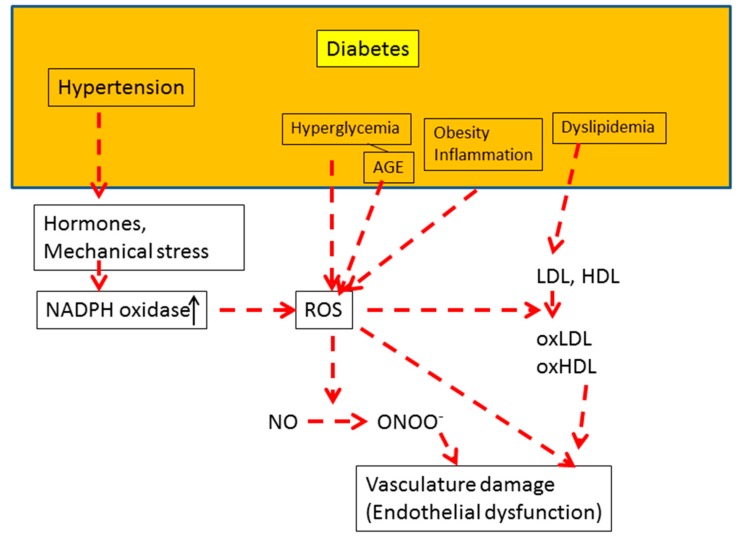
Endothelial dysfunction is one of the initial steps in the pathogenesis of atherosclerosis and development of cardiovascular disease in patients with diabetes mellitus. Several risk factors are associated with endothelial dysfunction and atherosclerosis, such as hypertension, dyslipidaemia, inflammation, oxidative stress, and advanced glycation-end products. Among these risk factors, oxidative stress is the largest contributor to the formation of atherosclerotic plaques. Measurement of reactive oxygen species (ROS) is still difficult, and assays for the measurement of ROS have failed to show a consistent correlation between pathological states and oxidative stress. To solve this problem, this review summarizes the current knowledge on biomarkers of oxidative stress, especially lipid peroxidation, and discusses the roles of oxidative stress, as measured by indices of lipid peroxidation, in diabetes mellitus, atherosclerosis, and chronic inflammation.
Keywords: 8-isoprostaglandin F2α; Fe-ROMs test; atherosclerosis; cardiovascular disease; chronic inflammation; diabetes mellitus; endothelial dysfunction; lipid peroxidation; malondialdehyde; oxidative stress; oxidative stress biomarkers; oxidized high-density lipoprotein.
Conflict of interest statement
The authors declare no conflict of interest.
Figures
References
Publication types
Grants and funding
LinkOut - more resources
Full Text Sources
