


Clinical and Epidemiological Patterns of Scrub Typhus, an Emerging Disease in Bhutan
- PMID: 30934849
- PMCID: PMC6631561
- DOI: 10.3390/tropicalmed4020056
Clinical and Epidemiological Patterns of Scrub Typhus, an Emerging Disease in Bhutan
Abstract
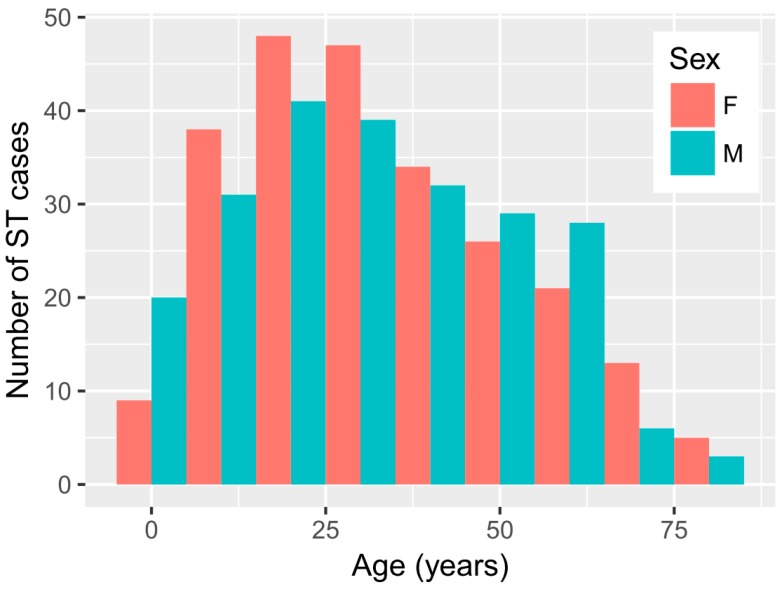
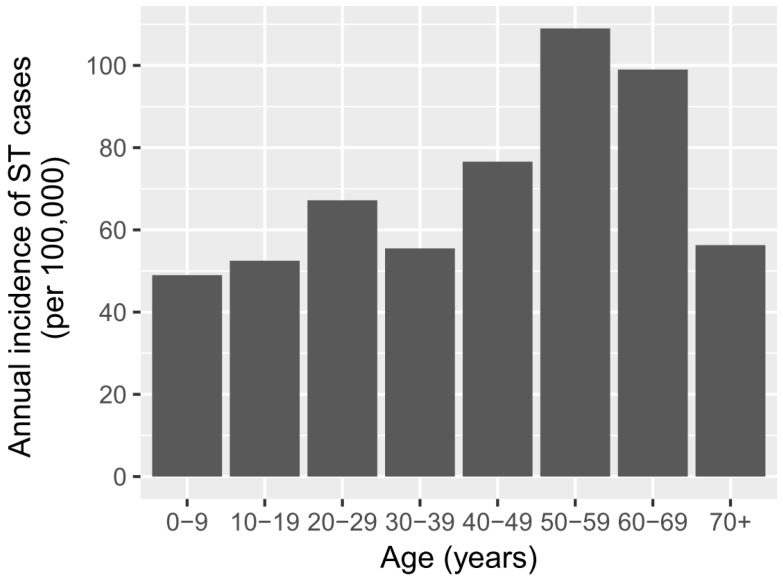
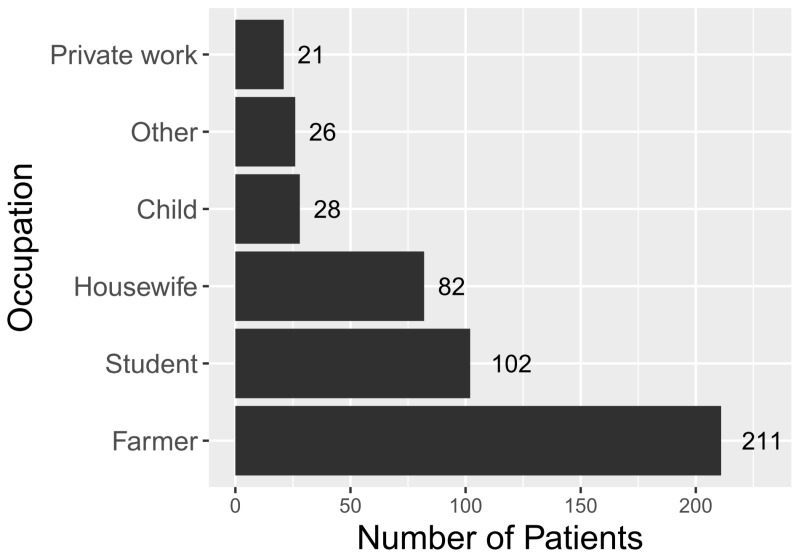
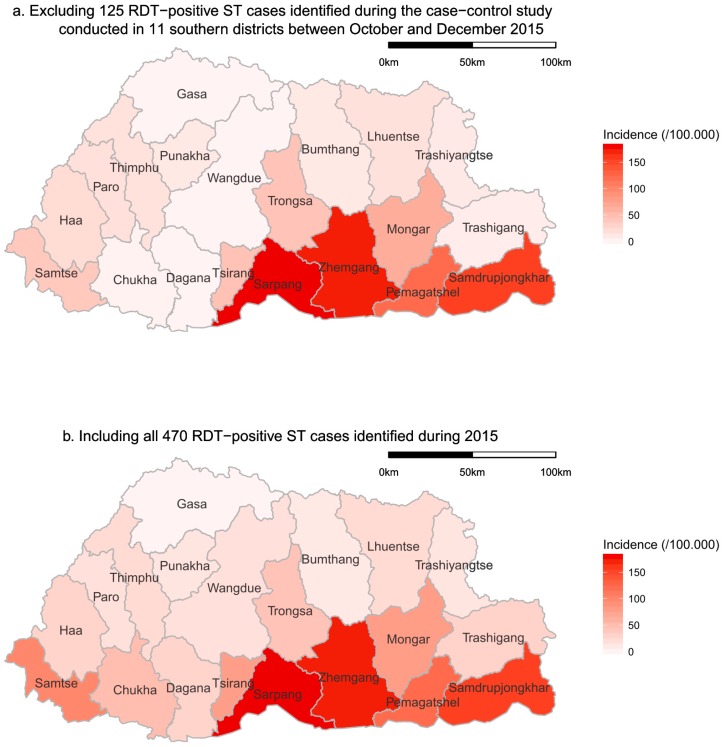
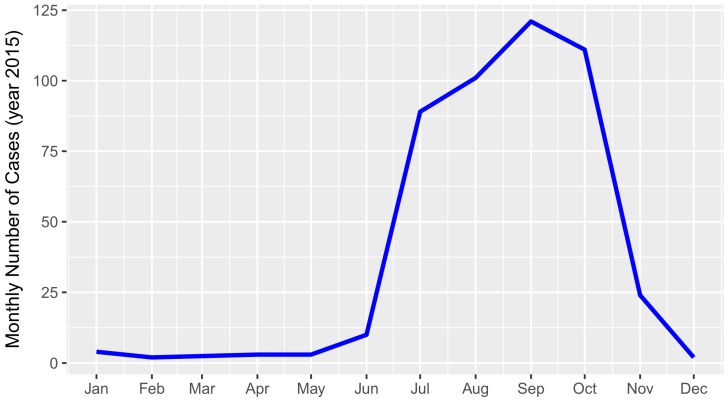
Scrub typhus (ST) is a vector-borne rickettsial infection causing acute febrile illness. The re-emergence of ST in the Asia-Pacific region represents a serious public health threat. ST was first detected in Bhutan in 2008. However, the disease is likely to be under-diagnosed and under-reported, and the true impact is difficult to estimate. At the end of 2014, the SD Bioline Tsutsugamushi TestTM rapid diagnostic test (RDT) kits became available in all hospitals to assist clinicians in diagnosing ST. We conducted a retrospective descriptive study, reviewing records from all hospitals of Bhutan to identify all RDT-positive clinical cases of ST in Bhutan in 2015. The aim was to evaluate the burden of ST in Bhutan, describe the demographic, spatial and temporal patterns of disease, and identify the typical clinical presentations. The annual incidence of RDT-positive cases of ST reporting to Bhutanese hospitals in 2015 was estimated to be 62 per 100,000 population at risk. The incidence of disease was highest in the southern districts with a subtropical climate and a high level of agricultural production. The highest proportion of cases (87%) was rural residents, with farmers being the main occupational category. The disease was strongly seasonal, with 97% of cases occurring between June and November, coinciding with the monsoon and agricultural production seasons. Common ST symptoms were not specific, and an eschar was noted by clinicians in only 7.4% of cases, which is likely to contribute to an under-diagnosis of ST. ST represents an important and neglected burden, especially in rural communities in Bhutan. The outcomes of this study will inform public health measures such as timely-awareness programmes for clinicians and the public in high-risk areas, to improve the diagnosis, treatment and clinical outcomes of this disease.
Keywords: One Health; clinical pattern; descriptive epidemiology; emerging disease; incidence; scrub typhus; vector-borne disease.
Conflict of interest statement
The authors declare there are no conflicts of interest.
Figures
References
-
- Newton P.N., Day N.P. 63—Scrub Typhus. In: Magill A.J., Hill D.R., Solomon T., Ryan E.T., editors. Hunter’s Tropical Medicine and Emerging Infectious Disease. 9th ed. W.B. Saunders; London, UK: 2013. pp. 542–545.
Grants and funding
LinkOut - more resources
Full Text Sources
