


Osteosarcopenic Obesity: Current Knowledge, Revised Identification Criteria and Treatment Principles
- PMID: 30935031
- PMCID: PMC6520721
- DOI: 10.3390/nu11040747
Osteosarcopenic Obesity: Current Knowledge, Revised Identification Criteria and Treatment Principles
Abstract
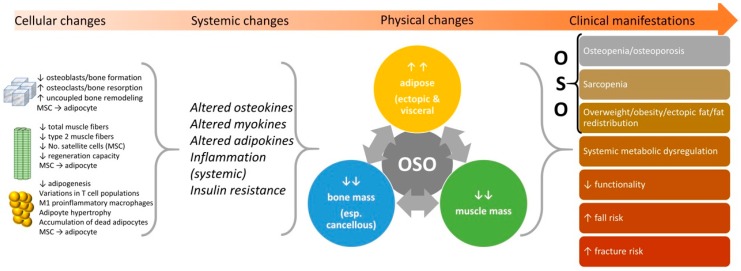
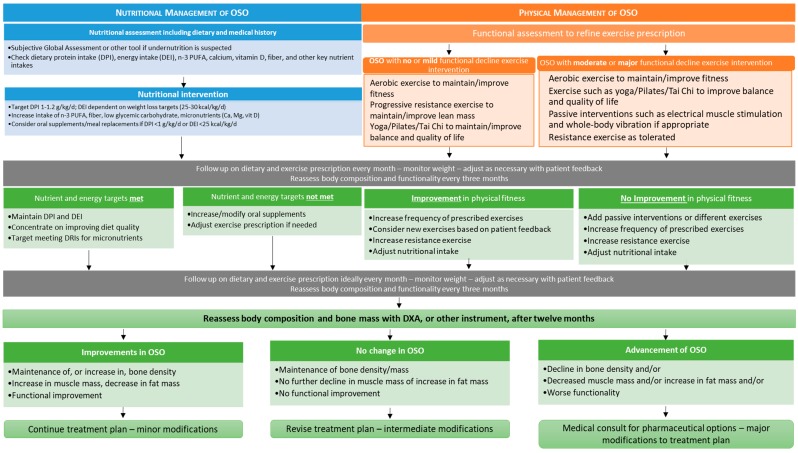
Osteosarcopenic obesity (OSO) syndrome describes the simultaneous deterioration of bone, muscle and excess fat, resulting in reduced functionality and systemic metabolic dysregulation. The key component contributing to this may be ectopic fat in the viscera, bone and muscle. OSO research to date is summarized, and the revised criteria for its identification for research purposes are reviewed and proposed, including new criteria to assess visceral fat in males and females. Finally, nutritional and physical activity recommendations are consolidated into a treatment algorithm, which can be validated in future studies and which may also be applied to preventative management.
Keywords: exercise; nutrition; osteosarcopenic obesity; treatment; visceral fat.
Conflict of interest statement
OJK, JG and JZI declare no potential conflicts of interest. OJK and JG are employees of Abbott Nutrition. DB is employee of BioTekna®. Authors personally covered all publication fees. Any opinions, conclusions or recommendations expressed in this manuscript are those of the authors and do not reflect the views or position of Abbott Nutrition.
Figures
References
Publication types
MeSH terms
LinkOut - more resources
Full Text Sources
Medical
