


Rapid evolution of a retro-transposable hotspot of ovine genome underlies the alteration of BMP2 expression and development of fat tails
- PMID: 30940097
- PMCID: PMC6445056
- DOI: 10.1186/s12864-019-5620-6
Rapid evolution of a retro-transposable hotspot of ovine genome underlies the alteration of BMP2 expression and development of fat tails
Abstract
Background: Sheep have developed the ability to store fat in their tails, which is a unique way of reserving energy to survive a harsh environment. However, the mechanism underlying this adaptive trait remains largely unsolved.
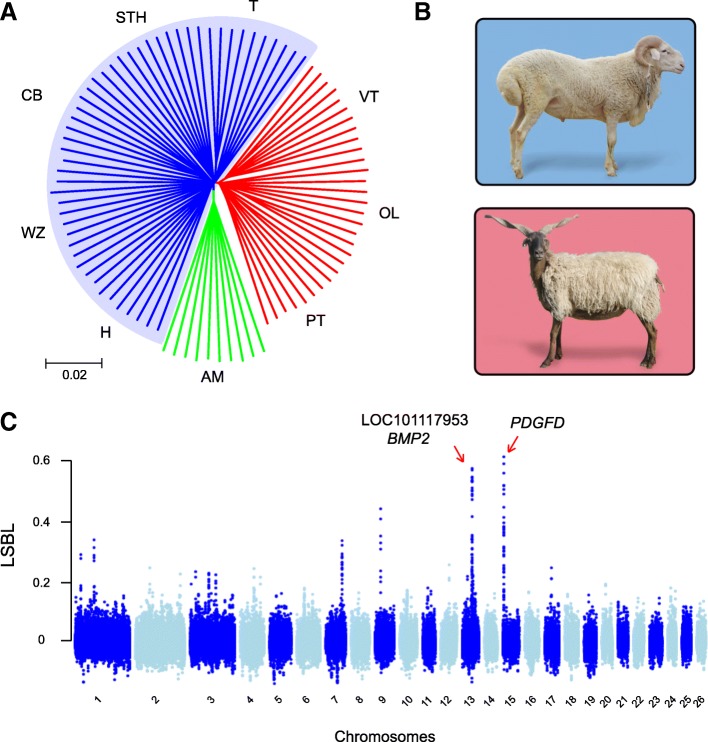
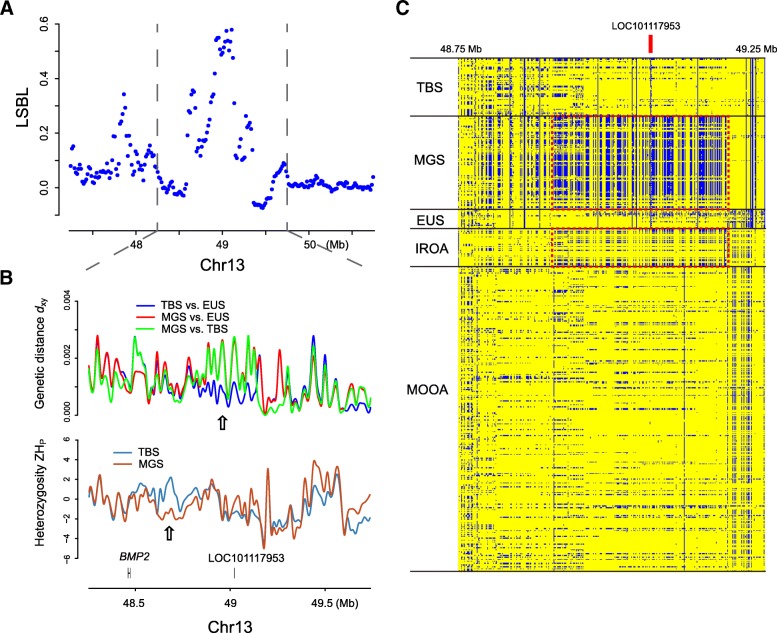
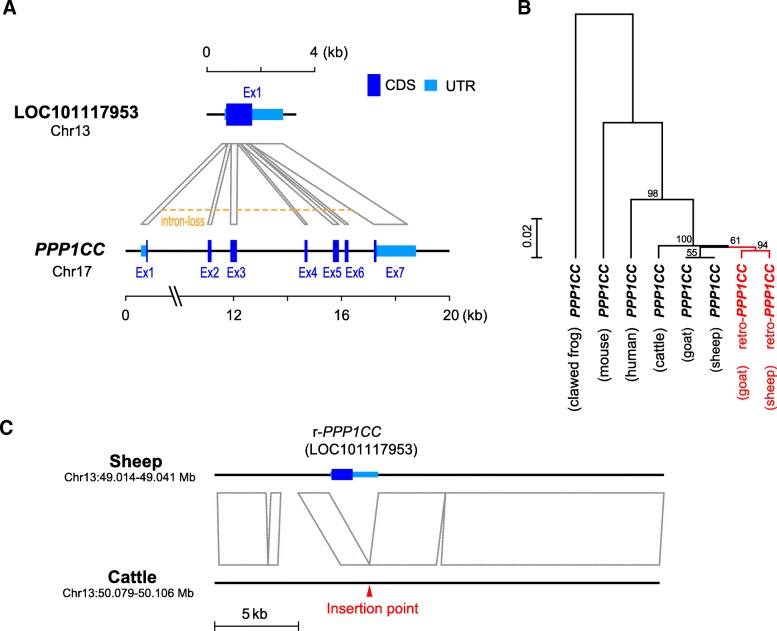
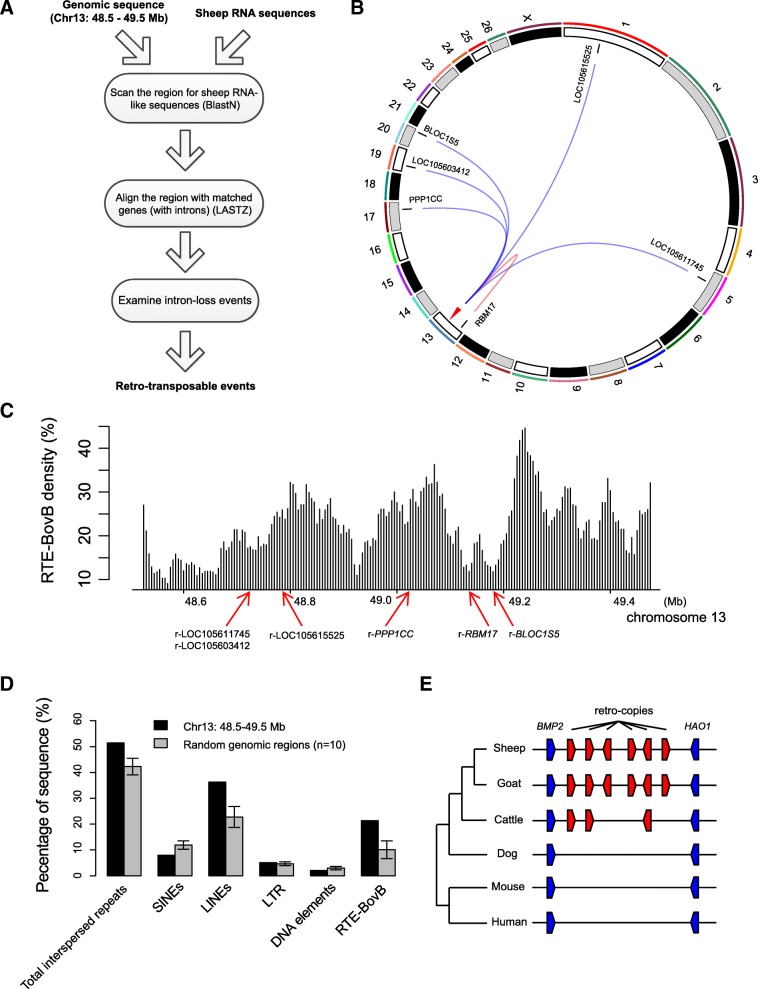
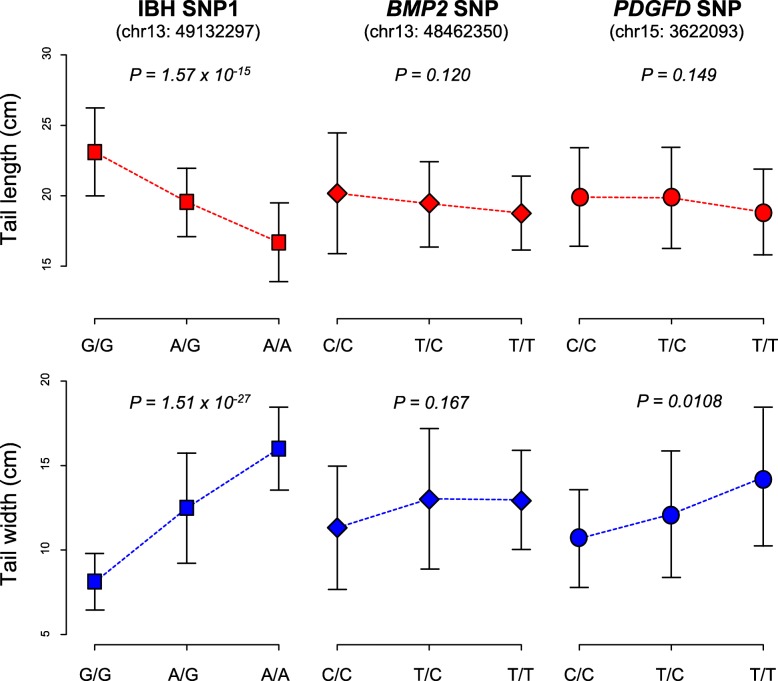
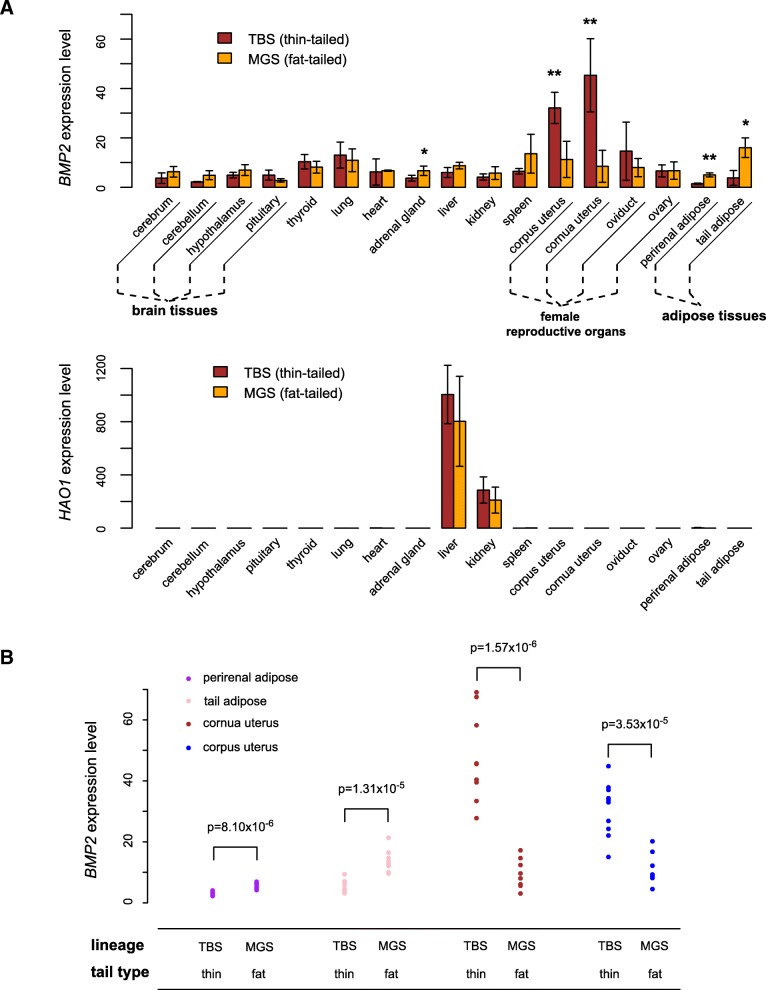
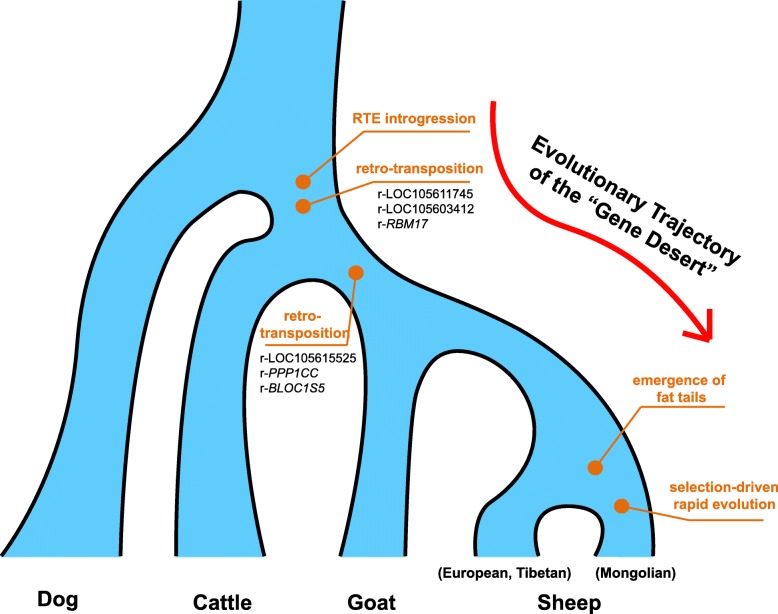
Results: In the present study, we provide evidence for the genetic determinants of fat tails, based on whole genome sequences of 89 individual sheep. A genome-wide scan of selective sweep identified several candidate loci including a region at chromosome 13, a haplotype of which underwent rapid evolution and spread through fat-tailed populations in China and the Middle East. Sequence analysis revealed an inter-genic origin of this locus, which later became a hotspot of ruminant-specific retro-transposon named BovB. Additionally, the candidate locus was validated based on a fat- and thin-tailed cross population. The expression of an upstream gene BMP2 was differentially regulated between fat-tailed and thin-tailed individuals in tail adipose and several other tissue types.
Conclusions: Our findings suggest the fixation of fat tails in domestic sheep is caused by a selective sweep near a retro-transposable hotspot at chromosome 13, the diversity of which specifically affects the expression of BMP2. The present study has shed light onto the understanding of fat metabolism.
Keywords: BMP2; Evolution; Fat tail; Retro-transposable hotspot; Sheep.
Conflict of interest statement
Ethics approval and consent to participate
All the experimental procedures mentioned in the present study were approved by the Science Research Department (in charge of animal welfare issue) of the Institute of Animal Sciences, Chinese Academy of Agricultural Sciences (IAS-CAAS) (Beijing, China). Ethical approval on animal survival was given by the animal ethics committee of IAS-CAAS (No. IASCAAS-AE-03, 12 December 2016). Consent was obtained from the owners of the animals used in this study.
Consent for publication
Not applicable.
Competing interests
The authors declare that they have no competing interests.
Publisher’s Note
Springer Nature remains neutral with regard to jurisdictional claims in published maps and institutional affiliations.
Figures
References
-
- Davidson A. Oxford companion to food. Oxford: Oxford University Press; 1999. pp. 290–293.
-
- Zhong T, Han JL, Guo J, Zhao QJ, Fu BL, He XH, Jeon JT, Guan WJ, Ma YH. Genetic diversity of Chinese indigenous sheep breeds inferred from microsatellite markers. Small Ruminant Res. 2010;90(1–3):88–94. doi: 10.1016/j.smallrumres.2010.02.001. - DOI
-
- Tu YR. The sheep and goat breeds in China. Shanghai science and technology press. 1989. pp. 6–19.
MeSH terms
Substances
Grants and funding
- ASTIP-IAS13/Agricultural Science and Technology Innovation Program of China
- CARS-38/Earmarked Fund for China Agriculture Research System
- 2013BAI101B09/National Key Technology Support Program
- LYDX2016BS068/Doctor Foundation of Linyi University
- ZR2018BC045/Natural Science Foundation of Shandong Province
- 31772580/National Natural Science Foundation of China (CN)
- 2012YQ03026108/National Key Scientific Instrument and Equipment Development Project
- 2011CB910204, 2011CB510102/National Basic Research Program of China
- 2017325/Youth Innovation Promotion Association CAS
- 31802031/National Natural Science Foundation of China
LinkOut - more resources
Full Text Sources
