Temozolomide Treatment Induces lncRNA MALAT1 in an NF-κB and p53 Codependent Manner in Glioblastoma
- PMID: 30940658
- PMCID: PMC6522287
- DOI: 10.1158/0008-5472.CAN-18-2170
Temozolomide Treatment Induces lncRNA MALAT1 in an NF-κB and p53 Codependent Manner in Glioblastoma
Abstract
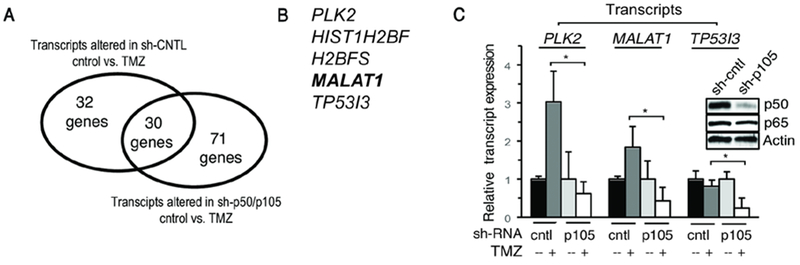
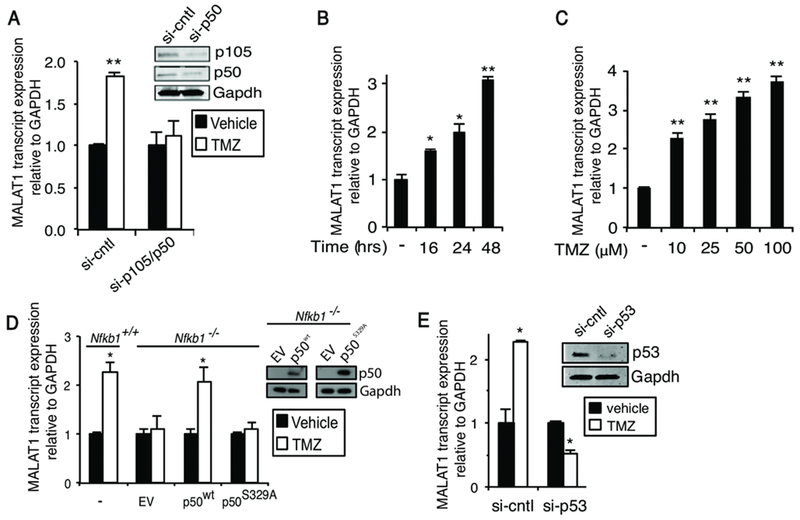
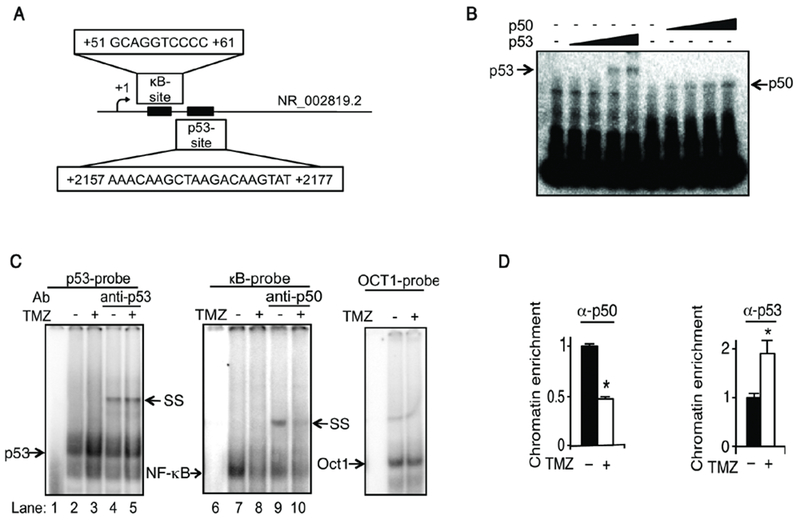
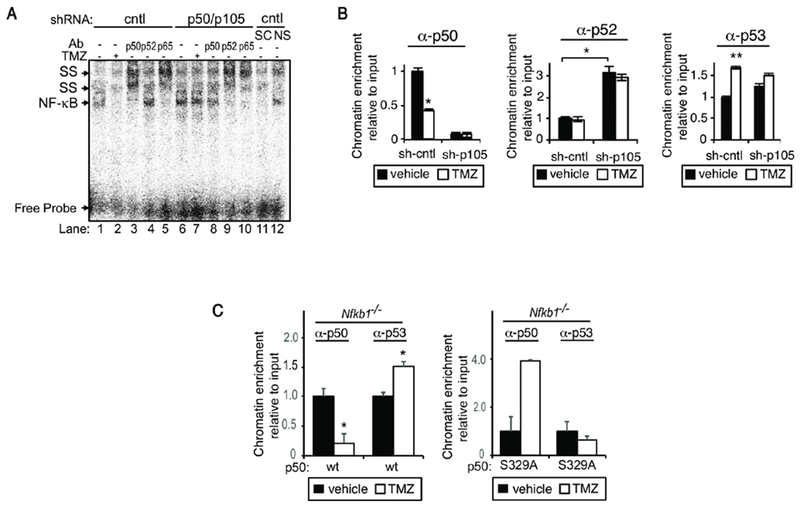
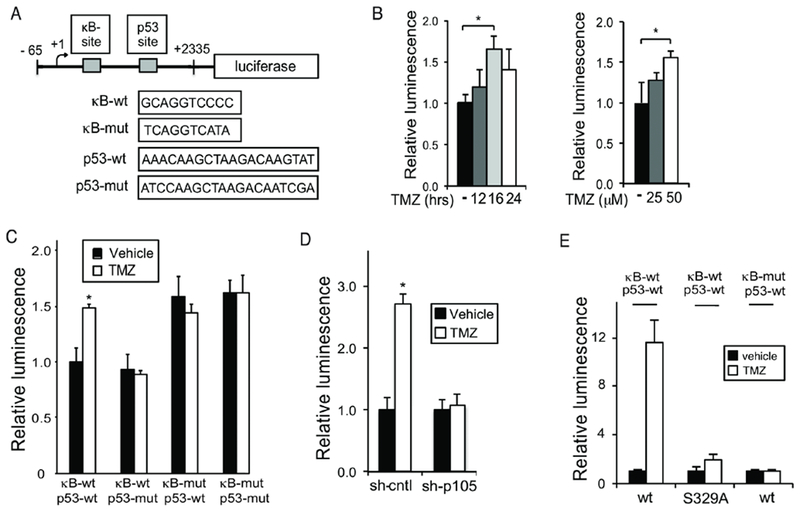
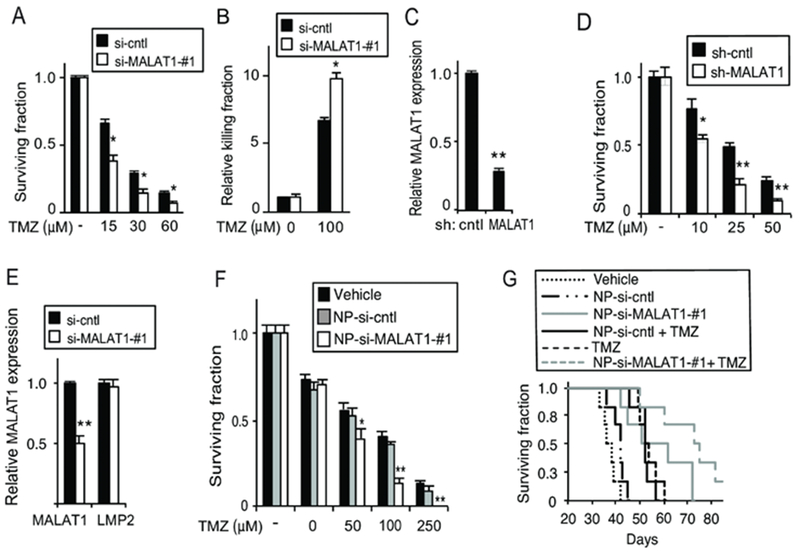
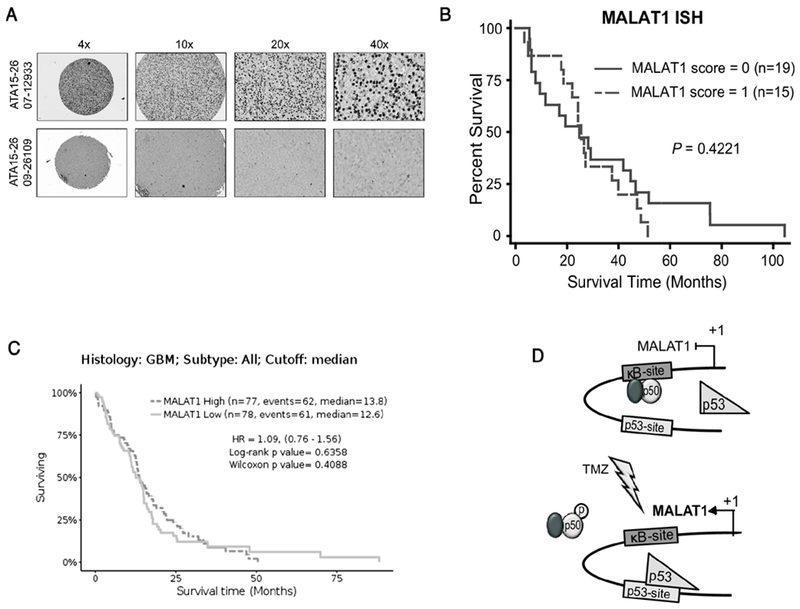
Alkylating chemotherapy is a central component of the management of glioblastoma (GBM). Among the factors that regulate the response to alkylation damage, NF-κB acts to both promote and block cytotoxicity. In this study, we used genome-wide expression analysis in U87 GBM to identify NF-κB-dependent factors altered in response to temozolomide and found the long noncoding RNA (lncRNA) MALAT1 as one of the most significantly upregulated. In addition, we demonstrated that MALAT1 expression was coregulated by p50 (p105) and p53 via novel κB- and p53-binding sites in the proximal MALAT1 coding region. Temozolomide treatment inhibited p50 recruitment to its cognate element as a function of Ser329 phosphorylation while concomitantly increasing p53 recruitment. Moreover, luciferase reporter studies demonstrated that both κB and p53 cis-elements were required for efficient transactivation in response to temozolomide. Depletion of MALAT1 sensitized patient-derived GBM cells to temozolomide cytotoxicity, and in vivo delivery of nanoparticle-encapsulated anti-MALAT1 siRNA increased the efficacy of temozolomide in mice bearing intracranial GBM xenografts. Despite these observations, in situ hybridization of GBM specimens and analysis of publicly available datasets revealed that MALAT1 expression within GBM tissue was not prognostic of overall survival. Together, these findings support MALAT1 as a target for chemosensitization of GBM and identify p50 and p52 as primary regulators of this ncRNA. SIGNIFICANCE: These findings identify NF-κB and p53 as regulators of the lncRNA MALAT1 and suggest MALAT1 as a potential target for the chemosensitization of GBM.
©2019 American Association for Cancer Research.
Conflict of interest statement
Figures
References
-
- Hegi ME, Diserens A-C, Gorlia T, Hamou M-F, de Tribolet N, Weller M, et al. MGMT gene silencing and benefit from temozolomide in glioblastoma. N Engl J Med [Internet]. 2005;352:997–1003. - PubMed
-
- Perkins ND. The diverse and complex roles of NF-кB subunits in cancer. Nat Rev Cancer. 2012;12:121–32. - PubMed
-
- Raychaudhuri B, Han Y, Lu T, Vogelbaum MA. Aberrant constitutive activation of nuclear factor kappaB in glioblastoma multiforme drives invasive phenotype. J Neurooncol. 2007;85:39–47. - PubMed
-
- Yamini B, Yu X, Dolan ME, Wu MH, Darga TE, Kufe DW, et al. Inhibition of nuclear factor-kappaB activity by temozolomide involves O6-methylguanine induced inhibition of p65 DNA binding. Cancer Res [Internet]. 2007;67:6889–98. - PubMed
Publication types
MeSH terms
Substances
Grants and funding
LinkOut - more resources
Full Text Sources
Other Literature Sources
Medical
Molecular Biology Databases
Research Materials
Miscellaneous