Effects of rapid maxillary expansion on upper airway volume: A three-dimensional cone-beam computed tomography study
- PMID: 30942607
- PMCID: PMC8109167
- DOI: 10.2319/101218-738.1
Effects of rapid maxillary expansion on upper airway volume: A three-dimensional cone-beam computed tomography study
Abstract
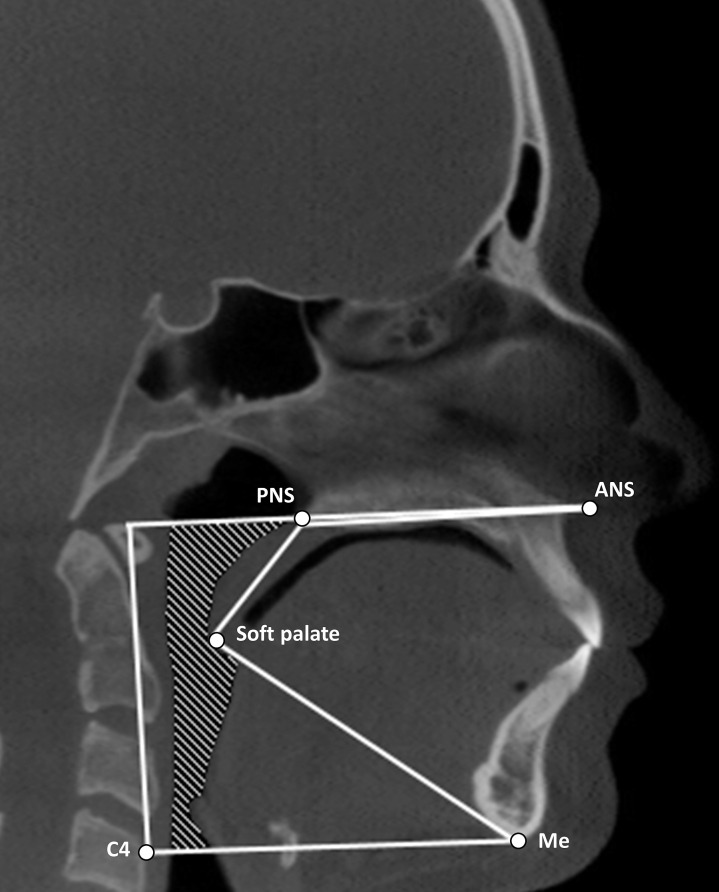
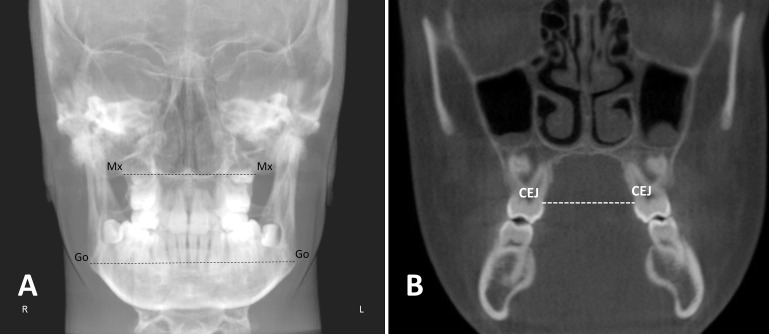
Objective: To compare changes in pharyngeal airway volume and minimal cross-sectional area (MCA) between patients undergoing rapid maxillary expansion (RME) and a matched control group and to identify markers for predicting airway changes using cone-beam computed tomography (CBCT).
Materials and methods: Pre- and posttreatment CBCT scans were selected of children who had RME (14 girls and 12 boys; mean age, 12.4 years) along with scans of a control group (matched for chronological age, skeletal age, gender, mandibular inclination) who underwent orthodontic treatment for minor malocclusions without RME. Changes in airway volume and MCA were evaluated using a standardized, previously validated method and analyzed by a mixed-effects linear regression model.
Results: Upper airway volume and MCA increased significantly over time for both the RME and matched control groups (P < .01 and P = .05, respectively). Although the RME group showed a greater increase when compared with the matched controls, this difference was not statistically significant. A reduced skeletal age before treatment was a significant marker for a positive effect on the upper airway volume and MCA changes (P < .01).
Conclusions: Tooth-borne RME is not associated with a significant change in upper airway volume or MCA in children when compared with controls. The younger the skeletal age before treatment, the more positive the effect on the upper airway changes. The results may prove valuable, especially in RME of young children.
Keywords: CBCT; Children; Maxillary expansion; Upper airway volume.
Figures
Comment in
-
Letter to the Editor.Angle Orthod. 2020 Mar;90(2):314. doi: 10.2319/0003-3219-90.2.314. Angle Orthod. 2020. PMID: 32097052 Free PMC article. No abstract available.
-
Response to the Letter.Angle Orthod. 2020 Mar;90(2):315. doi: 10.2319/0003-3219-90.2.315. Angle Orthod. 2020. PMID: 32097053 Free PMC article. No abstract available.
-
Letter to the Editor.Angle Orthod. 2020 Mar;90(2):316. doi: 10.2319/0003-3219-90.2.316. Angle Orthod. 2020. PMID: 32097055 Free PMC article. No abstract available.
-
Response to the Letter.Angle Orthod. 2020 Mar;90(2):317. doi: 10.2319/0003-3219-90.2.317. Angle Orthod. 2020. PMID: 32097056 Free PMC article. No abstract available.
References
-
- McNamara JA., Jr Influence of respiratory pattern on craniofacial growth. Angle Orthod. 1981;51:269–300. - PubMed
-
- Magliocca KR, Helman JI. Obstructive sleep apnea: diagnosis, medical management and dental implications. J Am Dent Assoc. 2005;136:1121–1129. - PubMed
-
- McNamara JA. Early intervention in the transverse dimension: is it worth the effort? Am J Orthod Dentofacial Orthop. 2002;121:572–574. - PubMed
-
- Işeri H, Tekkaya AE, Öztan Ö, Bilgic S. Biomechanical effects of rapid maxillary expansion on the craniofacial skeleton, studied by the finite element method. Eur J Orthod. 1998;20:347–356. - PubMed
-
- Bishara SE, Staley RN. Maxillary expansion: clinical implications. Am J Orthod Dentofacial Orthop. 1987;91:3–14. - PubMed
MeSH terms
LinkOut - more resources
Full Text Sources