


Evaluating the effects of the novel GLP-1 analogue liraglutide in Alzheimer's disease: study protocol for a randomised controlled trial (ELAD study)
- PMID: 30944040
- PMCID: PMC6448216
- DOI: 10.1186/s13063-019-3259-x
Evaluating the effects of the novel GLP-1 analogue liraglutide in Alzheimer's disease: study protocol for a randomised controlled trial (ELAD study)
Erratum in
-
Correction to: Evaluating the effects of the novel GLP-1 analogue liraglutide in Alzheimer's disease: study protocol for a randomised controlled trial (ELAD study).Trials. 2020 Jul 19;21(1):660. doi: 10.1186/s13063-020-04608-4. Trials. 2020. PMID: 32684162 Free PMC article.
Abstract
Background: Liraglutide is a glucagon-like peptide-1 (GLP-1) analogue currently approved for type 2 diabetes and obesity. Preclinical evidence in transgenic models of Alzheimer's disease suggests that liraglutide exerts neuroprotective effects by reducing amyloid oligomers, normalising synaptic plasticity and cerebral glucose uptake, and increasing the proliferation of neuronal progenitor cells. The primary objective of the study is to evaluate the change in cerebral glucose metabolic rate after 12 months of treatment with liraglutide in participants with Alzheimer's disease compared to those who are receiving placebo.
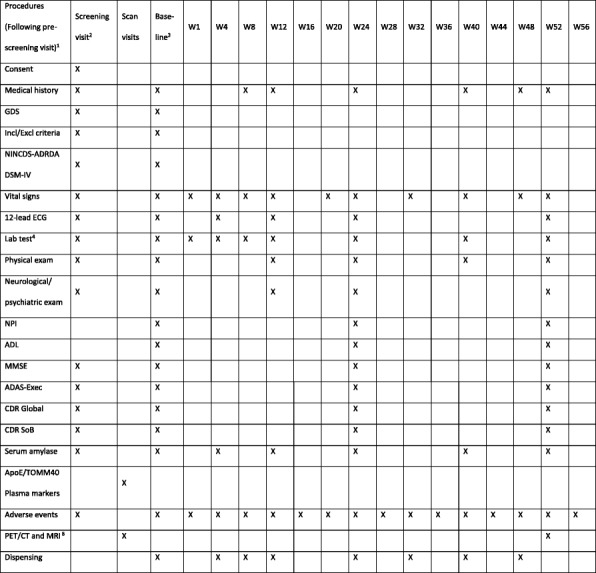
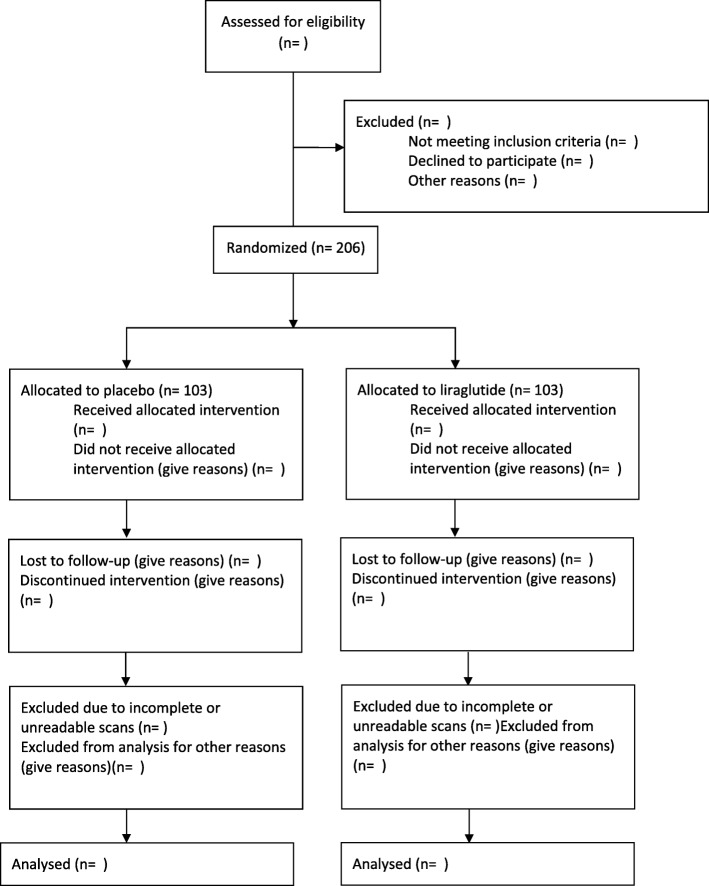
Methods/design: ELAD is a 12-month, multi-centre, randomised, double-blind, placebo-controlled, phase IIb trial of liraglutide in participants with mild Alzheimer's dementia. A total of 206 participants will be randomised to receive either liraglutide or placebo as a daily injection for a year. The primary outcome will be the change in cerebral glucose metabolic rate in the cortical regions (hippocampus, medial temporal lobe, and posterior cingulate) from baseline to follow-up in the treatment group compared with the placebo group. The key secondary outcomes are the change from baseline to 12 months in z scores for clinical and cognitive measures (Alzheimer's Disease Assessment Scale-Cognitive Subscale and Executive domain scores of the Neuropsychological Test Battery, Clinical Dementia Rating Sum of Boxes, and Alzheimer's Disease Cooperative Study-Activities of Daily Living) and the incidence and severity of treatment-emergent adverse events or clinically important changes in safety assessments. Other secondary outcomes are 12-month change in magnetic resonance imaging volume, diffusion tensor imaging parameters, reduction in microglial activation in a subgroup of participants, reduction in tau formation and change in amyloid levels in a subgroup of participants measured by tau and amyloid imaging, and changes in composite scores using support machine vector analysis in the treatment group compared with the placebo group.
Discussion: Alzheimer's disease is a leading cause of morbidity worldwide. As available treatments are only symptomatic, the search for disease-modifying therapies is a priority. If the ELAD trial is successful, liraglutide and GLP-1 analogues will represent an important class of compounds to be further evaluated in clinical trials for Alzheimer's treatment.
Trial registration: ClinicalTrials.gov, NCT01843075 . Registration 30 April 2013.
Keywords: Alzheimer’s disease; Cerebral glucose metabolic rate; Dementia; Liraglutide; Randomised controlled trial.
Conflict of interest statement
Ethics approval and consent to participate
This study was approved by the local and regional regulatory ethics committees (London Riverside Research Ethics Committee – study reference number 13/LO/0699, and Health Research Authority, UK), and the Medicines and Healthcare products Regulatory Agency (MHRA – EudraCT number 2013–000962-13). Approval for administration of radioactivity was given by the Administration of Radioactive Substances Advisory Committee (ARSAC).
All participants and study partners signed an Informed Consent Form prior to entry into the study.
Consent for publication
NA.
Competing interests
Dr Edison was funded by the Medical Research Council and now by the Higher Education Funding Council for England (HEFCE). He has also received grants from Alzheimer’s Research, UK, Alzheimer’s Drug Discovery Foundation, Alzheimer’s Society, UK, Novo Nordisk, GE Healthcare, Astra Zeneca, Pfizer, Eli Lilly and Piramal Life Sciences. The other authors have nothing to declare.
Publisher’s Note
Springer Nature remains neutral with regard to jurisdictional claims in published maps and institutional affiliations.
Figures
References
-
- Prince M, Wimo A, Guerchet M, Ali G, Wu Y, Prina M. World Alzheimer Report 2015—the global impact of dementia: an analysis of prevalence, incidence, cost and trends. 2015.
-
- Qi L, Ke L, Liu X, Liao L, Ke S, Liu X, Wang Y, Lin X, Zhou Y, Wu L, et al. Subcutaneous administration of liraglutide ameliorates learning and memory impairment by modulating tau hyperphosphorylation via the glycogen synthase kinase-3beta pathway in an amyloid beta protein induced alzheimer disease mouse model. Eur J Pharmacol. 2016;783:23–32. doi: 10.1016/j.ejphar.2016.04.052. - DOI - PubMed
-
- Gejl M, Gjedde A, Egefjord L, Moller A, Hansen SB, Vang K, Rodell A, Braendgaard H, Gottrup H, Schacht A, et al. In Alzheimer’s disease, 6-month treatment with GLP-1 analog prevents decline of brain glucose metabolism: randomized, placebo-controlled, double-blind clinical trial. Front Aging Neurosci. 2016;8:108. doi: 10.3389/fnagi.2016.00108. - DOI - PMC - PubMed
Publication types
MeSH terms
Substances
Associated data
Grants and funding
LinkOut - more resources
Full Text Sources
Other Literature Sources
Medical
Research Materials
Miscellaneous
